Hackaday Prize 2023: Abuse A Reference Chip For A Cheap Instrument

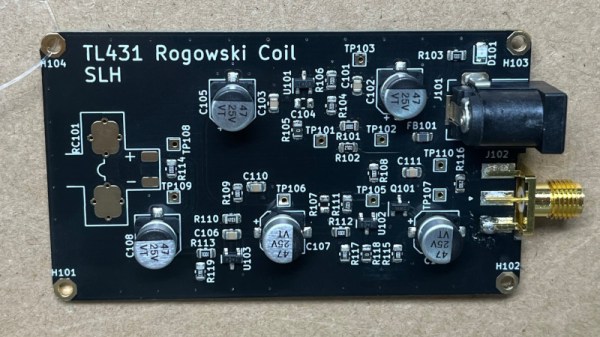
A Rogowski coil is a device for measuring AC current that differs from a conventional current transformer in that it has no need to encircle the conductor whose current it measures. They’re by no means cheap though, so over time we’ve seen some interesting variations on making one without the pain in the wallet. We particularly like [Stephen]’s one, because he eschews exotic devices for an interesting hack on a familiar chip. He’s taken the venerable TL431 voltage reference chip and turned it into an op-amp.

We had to look at the TL431 data sheet for this one and shamefacedly admit that since we’d only ever used the chip as a voltage reference, we hadn’t appreciated this capability. In this mode, it’s a op-amp with the inverting input connected to a fixed rail, so it can accept a feedback network to its non-inverting input just like any other. He’s using it as both integrator and amplifier, as well as, of course, in a more conventional power supply.

We like the instrument, and the use of the TL431 in an unexpected manner is the cherry on the cake. Here’s a previous Rogowski circuit using more conventional parts. You can dive a bit more into the theory, too.


Hackaday Prize 2023: Computer Vision Guides This Farm Mower

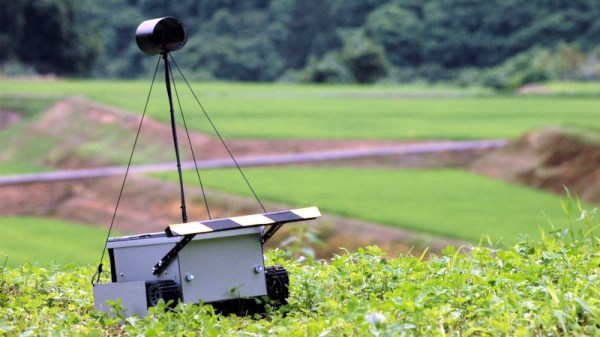
It’s a problem common to small-scale mixed agriculture worldwide, that of small areas of grass and weeds that need mowing. If you have a couple of sheep and enough electric fence there’s one way to do it, otherwise, if you rely on machinery, there’s a lot of hefting and pushing a mower in your future. Help is at hand, though, thanks to [Yuta Suito], whose pylon-guided mower is a lightweight device that mows an area defined by a set of orange traffic cones. Simply set the cones around the edge of the plot, place the mower within them, and it does the rest.

At its heart is a computer vision system that detects the cones and estimates distance from them by their perceived size. It mows in a spiral pattern by decreasing the cone height at which it turns, thus covering the whole area set out. Inside is a Raspberry Pi doing the heavy lifting, and because it’s designed for farmland rather than lawns, it has an adaptive track system to deal with obstacles. In its native Japan there is an ageing rural population, so it is particularly suitable for being operated by an older person. See it in action in the video below the break.

A robotic mower aimed at farms is certainly unusual here, but we’ve seen a lot of more conventional lawnmowers.

Continue reading “Hackaday Prize 2023: Computer Vision Guides This Farm Mower”

Hackaday Prize 2023: A 3D Printed Vertical Wind Turbine

We feature a lot of off-grid power projects here at Hackaday, whether they’re a micropower harvester or something to power a whole house. Somewhere in the middle lies [esposcar90]’s 3D-printed vertical wind turbine, which it is claimed can deliver 100 watts from its diminutive tabletop package.

It’s designed to be part of a package with another turbine but makes a very acceptable stand-alone generator. The arms have large scoop-like 3D-printed vanes and drive a vertical shaft up the centre of the machine. This drives a set of satellite gears connected to a pair of DC permanent magnet motors, which do the work of generating. For different wind situations, there are even some differing STL gear choices to speed up the motors. The motors are 12V devices, so we’re guessing the output voltage will be in that ballpark. However, it’s not made entirely clear in the write-up.

Continue reading “Hackaday Prize 2023: A 3D Printed Vertical Wind Turbine”

Normal Users Don’t Code On Their Mac, But Apple Keeps Trying

Most people use their computer to run pre-packaged programs: usually a web browser, games, or office applications. Whether the machine is a PC or a Mac, they don’t generally write their own software. For them, the computer is an appliance, and they do what their computer allows them to do.

It shouldn’t have to be that way, if only programming were easier. The Eclectic Light Company has a fascinating article looking at the various attempts that Apple has made to lure their users into creative programming.

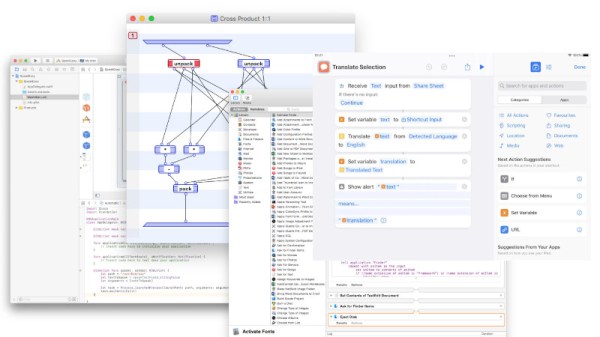
Probably the most familiar of them all is AppleScript, with its origins in late 1993. Or maybe you’re thinking of Hypertalk, the scripting component of 1987’s Hypercard. That would go on to be a mainstay of mid-1990s multimedia software, but while it’s fallen by the wayside it’s AppleScript which still has support in the latest MacOS.

The biggest surprise for us lies in the forgotten products. 1989’s Prograph graphical language looks amazing. Was it simply before its time? In the modern era, Apple describes the reach of Shortcuts diplomatically: “its impact has so far been limited”.

Maybe the most forward-thinking line on programming from Apple came in 2007, even if it wasn’t recognized as such. The original iPhone didn’t have any third-party apps, and instead developers were supposed to write web apps to take advantage of the always-connected device. Would that be such a bad piece of advice to give a non-developer writing software for their Mac today?

Chromebooks Now Get Ten Years Of Software Updates

It’s an acknowledged problem with the mobile phone industry and particularly within the Android ecosystem, that the operating system support on a typical device can persist for far too short a time, leaving the user without critical security updates. With the rise of the Chromebook, this has moved into larger devices, with schools and other institutions left with piles of what’s essentially e-waste.

Now in a rare show of sense from a tech company, Google have announced that Chromebooks are to receive ten years of updates from next year. Even better, it seems that this will be retroactively applied to at least some older machines, allowing owners to opt in to further updates for the remainder of the decade following the machine’s launch.

Of course, a Chrome OS upgrade on an older machine won’t make it any quicker. We’re guessing many users will feel the itch up upgrade their hardware long before their decade of software support is up. But anything which saves e-waste has to be applauded, and since this particular scribe has a five-year-old ASUS Transformer just out of support, we’re hoping for a chance to jump back on that train.

There’s another question though, and it relates to the business model behind Chromebooks. We doubt that the hardware manufacturers are thrilled at their customers’ old machines receiving a new lease of life and we doubt Google are doing this through sheer altruism, so we’re guessing that the financial justification comes from an extra five years of making money from the users’ data.

A Die-Cast Car Subframe, Pushing The Limit Too Far?

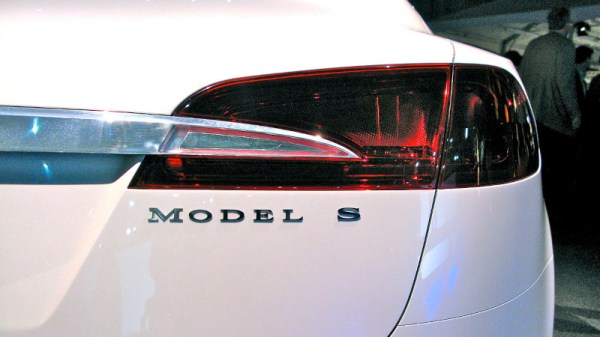
A piece of manufacturing news from Tesla Motors caught our eye, that Elon Musk’s car company plans to die-cast major underbody structures — in effect the chassis — for its cars. All the ingredients beloved of the popular tech press are there, a crazy new manufacturing technology coupled with the Musk pixie dust. It’s undeniably a very cool process involving a set of huge presses and advanced 3D-printing for the sand components of the mould, but is it really the breakthrough it’s depicted as? Or has the California company simply scored another PR hit?

We produced an overview of die casting earlier in the year, and the custom sand moulding in the Tesla process sounds to us a sort of half-way house between traditional die casting and more conventional foundry moulding. I don’t doubt that the resulting large parts will be strong enough for the job as the Tesla engineers and metallurgists will have done their work to a high standard, but I’m curious as to how this process will give them the edge over a more traditional car manufacturer building a monocoque from pressed steel. The Reuters article gushes about a faster development time which is no doubt true, but since the days of Henry Ford the automakers have continuously perfected the process of making mass-market cars as cheaply as possible. Will these cast assemblies be able to compete with pressed steel when applied to much lower-margin small cars? I have my doubts.

Aside from the excessive road noise of the Tesla we had a ride in over the summer, if I had a wish list for their engineers it would include giving their cars some longevity.

Header: Steve Jurvetson, CC BY 2.0.

New LoRA Distance Record: 830 Miles!

The LoRa radio communication system is useful for low-bandwidth communication, and as many readers will be aware its special skill lies in delivering long range. For most of us that range tops out at a few miles, but pushing the limits of what is possible for LoRa has resulted in some significant records falling. Most recently this has reached an impressive distance of 1336 kilometres, or 830 miles.

The record in question was set from near the Portuguese coast, from where LoRa beacons on a fishing boat and its buoys were able to open up a gateway on the Spanish Canary islands. The conductive surface of the sea makes an excellent aid to propagation, and from amateur radio experience we’d guess that tropospheric conditions aided by the summer weather would have something to do with it too.

Radio amateurs on those coasts and islands chase those conditions and live in hope of making a rare UHF contact across the ocean to the Americas or the Caribbean. The difference in their respective frequency allocations notwithstanding, we wonder whether the same might be possible using LoRa given a fortuitous atmosphere. We’re not quite sure whether a set of dual-band LoRa gateways could be made to test this idea though.

This record breaks a previous one set between Germany and Poland. If you think you’ve seen a far greater LoRa record here before you’d be correct, but only in the modulation scheme and not the frequency.