id Software’s iconic 1993 first-person shooter game Doom was the game to play on your 486 (or fast 386) and was for many their first introduction to immersive 3D environments in gaming. Its eventual release as open-source gave it a new life, and now it’s a rite of passage for newly-reverse-engineered devices: Will it run Doom?
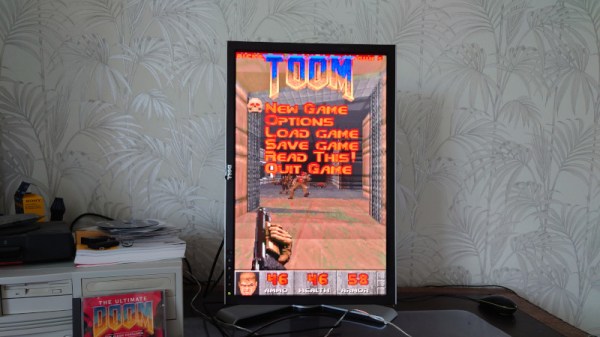
One type of platform that never ran Doom though was the classic arcade cabinet with its portrait-aligned screen. This is something [Matt Phillips] has addressed with Toom, a PC Doom port that — finally — runs on a portrait screen.
To enter the world of a UAC space marine in glorious portrait mode, simply take an installation of Doom 1.9 for DOS, and copy the Toom files from the GitHub repository over the top of it. The minimum spec is a 486 so period hardware will be fine, all you’ll need is a monitor that can be tipped on its side.
Doom consumed far too many hours for gamers of a certain age, and while it may look quaint to modern eyes it can’t be overstated what a giant step it was compared to what had gone before. If any of you install Toom and give it a go, prepare to see its monsters when you close your eyes.
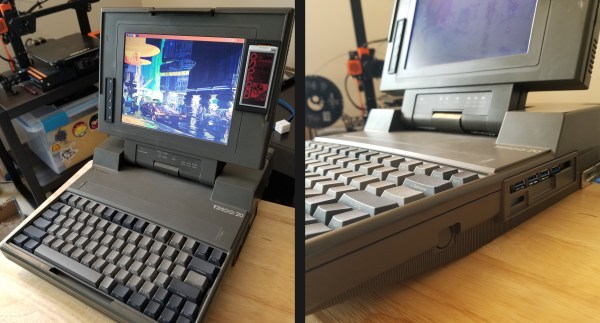
Cyberdecks, the portable computers notable for a freely expressed form factor, owe much to post-apocalyptic sci-fi. But they are not always the most practical devices. There’s a reason that all laptops share a very similar form factor: it’s a convenient and functional way to make a computer to take anywhere. So for the ideal compromise, why not make a cyberdeck from a vintage laptop? That’s exactly what [Valrum] has done with a non-functioning Toshiba 3100/20, upgrading the display and slipping in a Raspberry Pi 4, along with a handy removable USB e-ink supplementary screen (The red/black rectangle to the right of the main screen).
These older machines were so bulky that once their original hardware is removed there is plenty of space for upgrades. Even the screen enclosure is big enough to hide the LCD driver board behind a modern panel. It follows a well-worn path for Raspberry Pi builds of using a Teensy as a USB keyboard controller, but unexpectedly the stock keyboard has been entirely replaced with a hand-wired one, which is nicely executed to appear superficially as though it was original. In an amusing twist this machine has no battery, not because it wouldn’t be possible but because the original Toshiba didn’t have one either. The USB ports are brought out to the space where the floppy would once have been.
With a plentiful supply of unexceptional or non functional older laptops to be had it’s clear that there’s a rich vein to be mined in this type of build. It’s something we’ve seen done before, in a more famous Toshiba laptop.
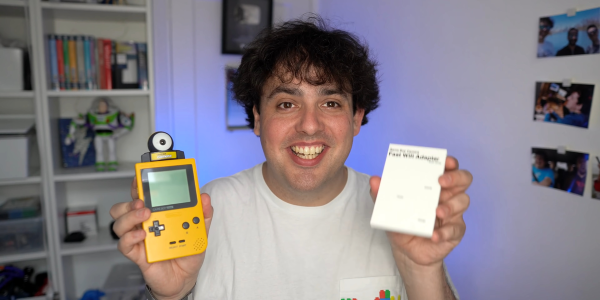
The Game Boy Camera is probably one of the most limited-specification digital cameras to have been mass-marketed, yet it occupies a special position in the hearts of many because despite being a toy with a paltry 128×128 monochrome sensor it was for many the first camera they owned. [Matt Grey] was among those people, and was always frustrated by the device’s inability to export pictures except to the Game Boy printer. So after having bodged together an interface a decade ago but not being happy with it, he returned to the project and made a wireless carrier for the camera that allows easy transfer through WiFi to his mobile phone.
Inside the slab-like 3D-printed enclosure lies a GBxCart RW Game Boy cartridge reader, whose USB port is wired to a Raspberry Pi Zero on which are a set of scripts to read the camera and make its photos available for download via a web browser. At last the camera is a stand-alone unit, allowing the easy snapping and retrieval of as many tiny black and white images as he likes. There’s a video showing the device in action, which we’ve placed for your enjoyment below the break.
This camera has appeared in so many projects on these pages over the years, but we’re guessing that the work on whose shoulders this one stands would be the moment its workings were reverse engineered.
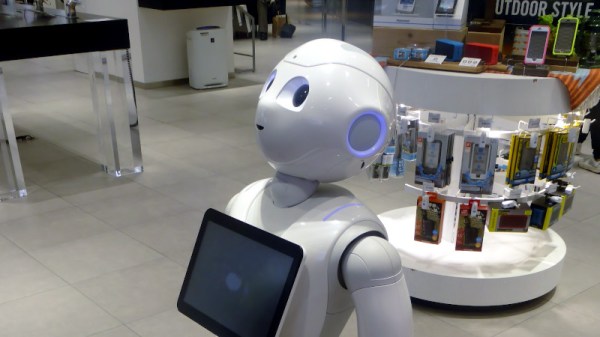
Earlier this week it was widely reported that Softbank’s friendly-faced almost-humanoid Pepper robot was not long for this world, as the Japanese company’s subsidiary in France that had been responsible for the robotic darling of the last decade was being downsized, and that production had paused. Had it gone the way of Sony’s Aibo robotic puppy or Honda’s crouching-astronaut ASIMO? It seems not, because the company soon rolled back a little and was at pains to communicate that reports of Pepper’s untimely death had been greatly exaggerated. It wasn’t so long ago that Pepper was the face of future home robotics, so has the golden future become a little tarnished? Perhaps it’s time to revisit our plastic friend.
A Product Still Looking For A Function
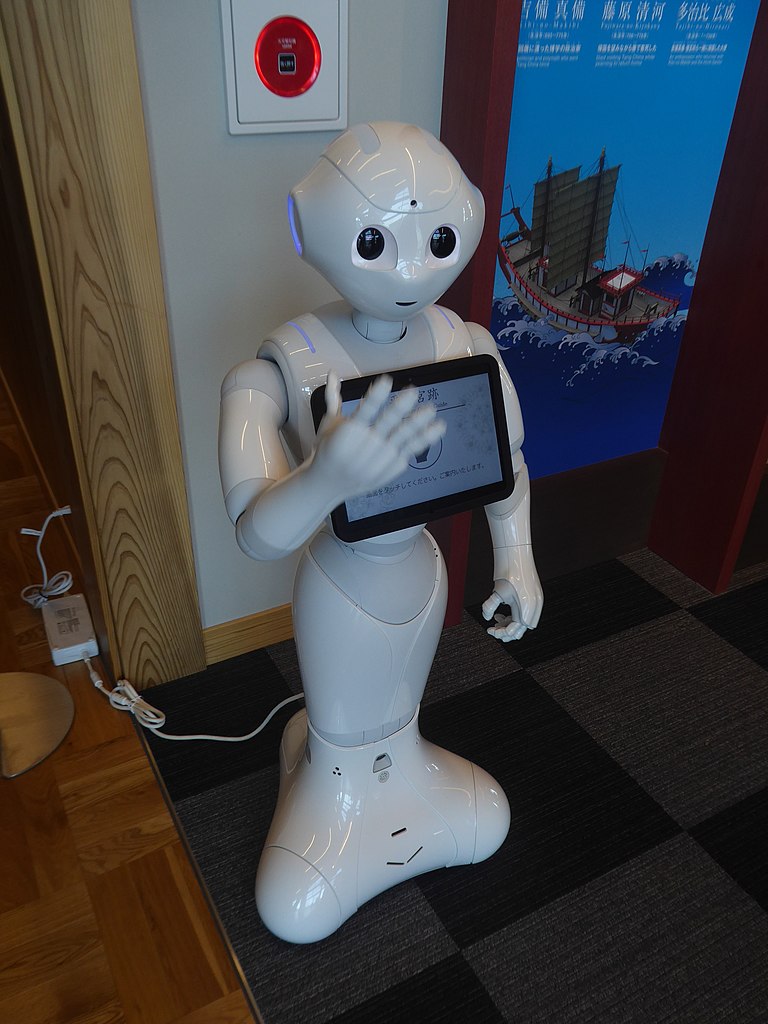
A Pepper earning an honest crust as a tourist guide at the Heijo Palace museum. Tokumeigakarinoaoshima, CC BY-SA 4.0.
Pepper made its debut back in 2014, a diminutive and child-like robot with basic speech recognition and conversation skills, the ability to recognize some facial expressions, and a voice to match those big manga-style eyes. It was a robot built for personal interaction rather than work, as those soft tactile hands are better suited to a handshake than holding a tool. It found its way into Softbank stores as well as a variety of other retail environments, it was also used in experiments to assess whether it could work as a companion robot in medical settings, and it even made an appearance as a cheerleading squad. It didn’t matter that it was found to be riddled with insecurities, it very soon became a favourite with media tech pundits, but it remained at heart a product that was seeking a purpose rather than one ready-made to fit a particular function.
I first encountered a Pepper in 2016, at the UK’s National Museum of Computing. It was simply an exhibit under the watchful eye of a museum volunteer rather than being used to perform a job, and it shared an extremely busy gallery with an exhibit of Acorn classroom computers from the 1980s and early ’90s. It was an odd mix of the unexpected and the frustrating, as it definitely saw me and let me shake its hand but stubbornly refused to engage in conversation. Perhaps it was taking its performance as a human child seriously and being shy, but the overwhelming impression was of something that wasn’t ready for anything more than experimental interaction except via its touch screen. As a striking contrast in 2016 the UK saw the first release of the Amazon Echo, a disembodied voice assistant that might not have had a cute face but which could immediately have meaningful interactions with its owner.
How Can A Humanoid Robot Compete With A Disembodied Voice?
In comparing the Pepper with an Amazon Echo it’s possible that we’ve arrived at the root of the problem. Something that looks cool is all very well, but without immediate functionality, it will never capture the hearts of customers. Alexa brought with it the immense power of Amazon’s cloud computing infrastructure, while Pepper had to make do with whatever it had on board. It didn’t matter to potential customers that a cloud-connected microphone presents a huge privacy issue, for them a much cheaper device the size of a hockey puck would always win the day if it could unfailingly tell them the evening’s TV schedule or remind them about Aunty’s birthday.
Over the next decade we will see the arrival of affordable and compact processing power that can do more of the work for which Amazon currently use the cloud. Maybe Pepper will never fully receive that particular upgrade, but it’s certain that if Softbank don’t do it then somebody else will. Meanwhile there’s a reminder from another French company that being first and being cute in the home assistant market is hardly a guarantee of success, who remembers the Nabaztag?
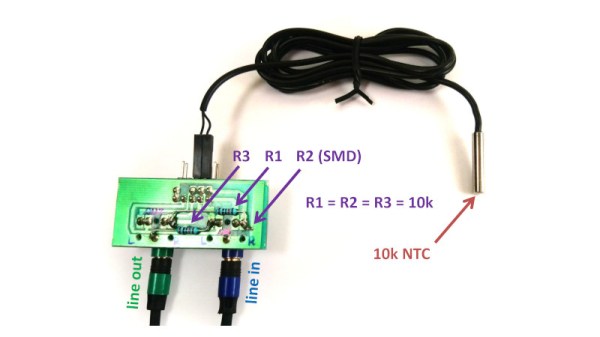
The commoditised PC is the most versatile tool many of us will own, and since it has been around for a very long time it is also something that can be found for free or very cheaply if the latest components aren’t a concern. It’s not without limitations though, while it’s designed for expansion it no longer has any ports that can easily be repurposed as GPIOs for reading sensors. A solution for some sensors comes courtesy of [Ruslan Nagimov], who shows us how the PC sound card can become a measurement interface.
The idea is that simple resistive or capacitive sensors can be read through their AC characteristics by sending out a sine wave on one channel of the card and reading the result on the other from a divider circuit. He goes extensively into the code, both for the resistive example and for reactive components, and we can see that it forms a handy extension to the PC capabilities.
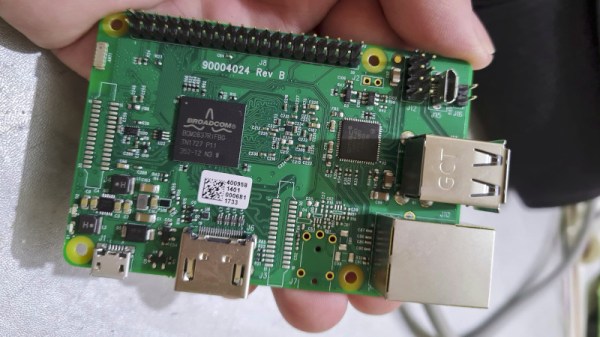
Since the first Raspberry Pi came to market back in 2012 there have been a variety of models released. Some of them are rarer than others, and unusual boards can even be rather sought-after. This one spotted at a Thai junk vendor won’t be in the hands of many collectors though, and investigating it sheds a bit of light on some of the most unusual boards from the company.
The board is recognisably very similar to a Pi 3 with a BCM2837 SoC, but despite all that it has no Pi logo. On the underside there is an eMMC in place of the SD socket, and one pair of USB sockets has been replaced by a micro USB socket and a header. The source is reported to have been a washing machine, but given that this SoC is exclusive to the the Pi Foundation there’s no way it could easily have been manufactured by anyone else. The answer comes in the 2015 launch of a customisation service for industrial customers, which allowed manufacturers to have their own versions made of the fruity SBC.
From the point of view of an experimenter this board offers nothing that a standard device can’t do. But it’s an interesting glimpse of an unseen side to the Pi story, and it holds the prospect of other special versions being unearthed. If you find one on your travels, let us know!
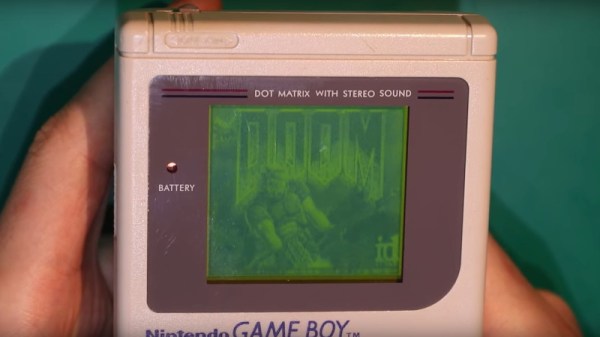
Explain a Game Boy to a child in 2021 and they’ll have little idea of how much impact that chunky grey brick had back in the day. Search for a YouTube video to demonstrate, and you might find the one we’ve put below the break. It starts with the classic Tetris on the Game Boy, then moves on to Super Mario World before treating us to Sonic the Hedgehog, and finally Doom. All seminal games of the Game Boy’s heyday, with one small problem. The last three were never Game Boy titles, and certainly wouldn’t have run on the device’s limited hardware. Most of you will by now not be surprised to find that the narrator is none other than [Sprite_tm], and his Game Boy has one of the nicest Raspberry Pi conversions we’ve ever seen.
Given his previous work we expected the cartridges to have an ESP32 on board that somehow mapped into Game Boy display memory, but in fact he’s swapped the original Nintendo motherboard with a replacement carrying an ICE40 FPGA on one side to handle the Nintendo hardware and a Pi Zero on the other to do the heavy lifting. Insert a Game Boy cartridge and it emulates the original to the point you’d never suspect it wasn’t the real thing, but insert one of the non Game Boy cartridges and it passes an identifier to the Pi which launches a script to run the appropriate Pi code. So the Mario and Sonic games are running in Pi-based emulators, and Doom is running natively on the Pi. It gives the appearance of a seamless gaming experience, wherein lies its charm.