What The FDA’s 2026 Wellness Device Update Means For Wearables

With more and more sensors being crammed into the consumer devices that many of us wear every day, the question of where medical devices begin and end, and how they should be regulated become ever more pertinent. When a ‘watch’ no longer just shows the time, but can keep track of a dozen vital measurements, and the line between ‘earbud’ and ‘hearing aid’ is a rather fuzzy one, this necessitates that institutions like the US FDA update their medical device rules, as was done recently in its 2026 update.

This determines how exactly these devices are regulated, and in how far their data can be used for medical purposes. An important clarification made in the 2026 update is the distinction between ‘medical information’ and ‘signals/patterns’. Meaning that while a non-calibrated fitness tracker or smart watch does not provide medically valid information, it can be used to detect patterns and events that warrant a closer look, such as indications of arrhythmia or low blood oxygen saturation.

As detailed in the IEEE Spectrum article, these consumer devices are thus  ‘general wellness’ devices, and should be marketed as such, without embellished claims. Least of all should they be sold as devices that can provide medical information.

Continue reading “What The FDA’s 2026 Wellness Device Update Means For Wearables”

How Volunteers Saved A Victorian-Era Pumping Station From Demolition

D-engine of the Claymills Pumping Station. (Credit: John M)

Although infrastructure like a 19th-century pumping station generally tends to be quietly decommissioned and demolished, sometimes you get enough people looking at such an object and wondering whether maybe it’d be worth preserving. Such was the case with the Claymills Pumping Station in Staffordshire, England. After starting operations in the late 19th century, the pumping station was in active use until 1971. In a recent documentary by the Claymills Pumping Station Trust, as the start of their YouTube channel, the derelict state of the station at the time is covered, as well as its long and arduous recovery since they acquired the site in 1993.

After its decommissioning, the station was eventually scheduled for demolition. Many parts had by that time been removed for display elsewhere, discarded, or outright stolen for the copper and brass. Of the four Woolf compounding rotative beam engines, units A and B had been shut down first and used for spare parts to keep the remaining units going. Along with groundwater intrusion and a decaying roof, it was in a sorry state after decades of neglect. Restoring it was a monumental task.

Continue reading “How Volunteers Saved A Victorian-Era Pumping Station From Demolition”

Inside A Fake Mean Well DIN-rail PSU

Looks just like the real deal in a dark cabinet. (Credit: Big Clive, YouTube)

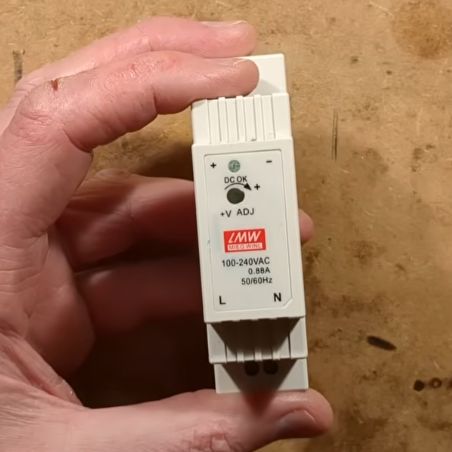
These days, you can get fakes, bootlegs, and similar for just about anything. While a fake handbag isn’t such a big deal, in the case of a DIN-rail power supply, you’d better make sure that you got the real deal. Case in point, the fake ‘Mean Well’ DIN-rail PSU that [Big Clive] got his mitts on for a detailed analysis and teardown.

Even without taking a PSU apart there are often clear clues that you might be dealing with a fake, starting with the logo and the rest of the markings. Here it’s clear that the logo is designed to only appear to be the MW one at a quick glance, with the rest of the label being poorly copied English gibberish containing copious “unnecessary” double “quotes”.

So what do you get for £3-5 in this +12VDC, 1.25A rated PSU? Shockingly, the insides are actually quite decent and probably close to the genuine MW, with basic noise filtering, proper isolation, and apparently a real class-Y safety capacitor. Similarly, the chosen DK124 control IC is more than capable of the task, with a good circuit for the adjustable voltage control.

Continue reading “Inside A Fake Mean Well DIN-rail PSU”

Removing The BIOS Administrator Password On A ThinkPad Takes Timing

This would be a bad time to slip. (Credit: onionboots, YouTube)

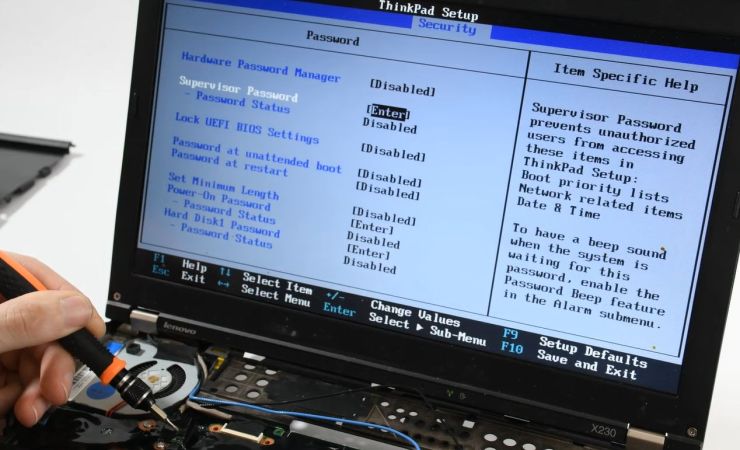
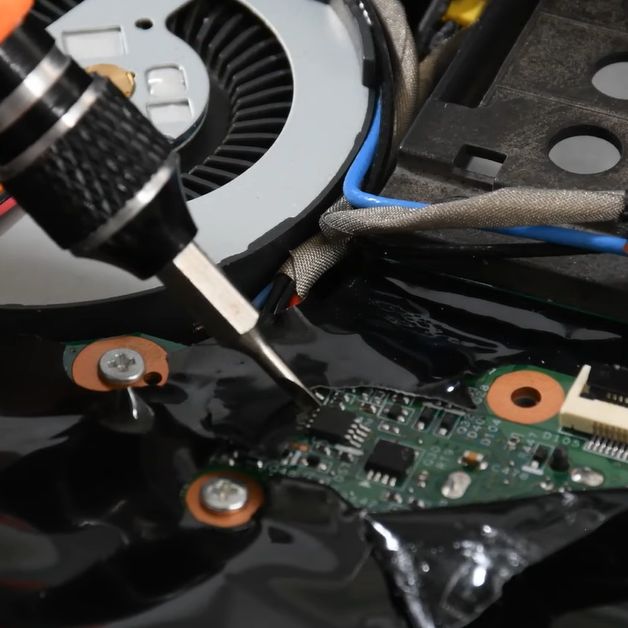
In the olden days, an administrator password on a BIOS was a mere annoyance, one quickly remedied by powering off the system and pulling its CMOS battery or moving a jumper around. These days, you’re more likely to find a separate EEPROM on the mainboard that preserves the password. This, too, is mostly just another annoyance, as [onionboots] knew. All it takes is shorting out this EEPROM at the right time to knock it offline, with the ‘right time’ turning out to be rather crucial.

While refurbishing this laptop for a customer, he thought it’d be easy: the guide he found said he just had to disassemble the laptop to gain access to this chip, then short out its reset pin at the right time to make it drop offline and keep it shorted. Important here is that you do not short it when you are still booting the system, or it won’t boot. This makes for some interesting prodding of tiny pins with a metal tool.

Continue reading “Removing The BIOS Administrator Password On A ThinkPad Takes Timing”

Software Development On The Nintendo Famicom In Family BASIC

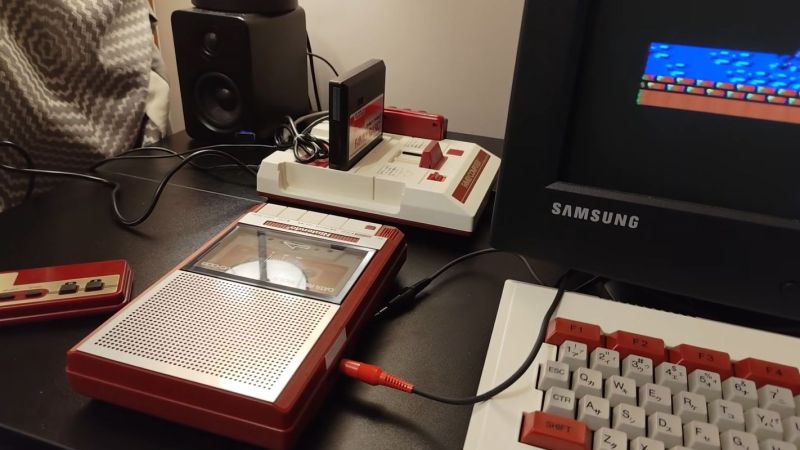
Back in the 1980s, your options for writing your own code and games were rather more limited than today. This also mostly depended on what home computer you could get your hands on, which was a market that — at least in Japan — Nintendo was very happy to slide into with their ‘Nintendo Family Computer’, or ‘Famicom’ for short. With the available peripherals, including a tape deck and keyboard, you could actually create a fairly decent home computer, as demonstrated by [Throaty Mumbo] in a recent video.

Continue reading “Software Development On The Nintendo Famicom In Family BASIC”

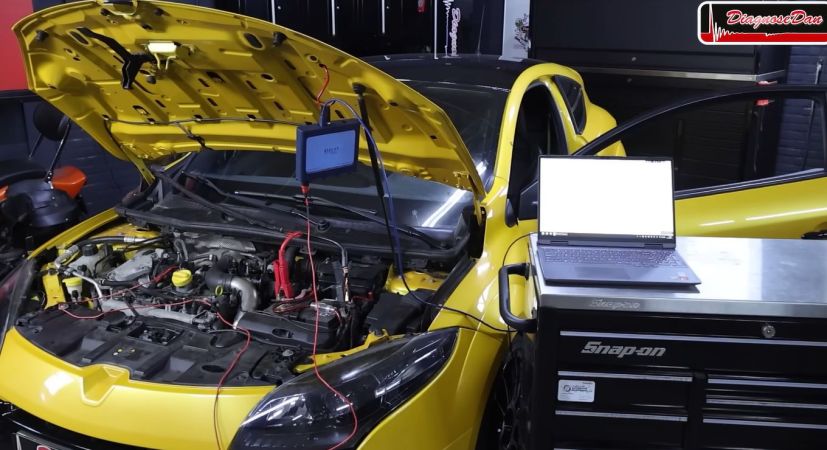
Can A Scan Tool Kill A Car?

It’s no real secret that modern-day cars are basically a collection of computers on wheels, which also means that we get all the joys of debugging complex computer systems and software with cars these days. Rather than a quick poke under the hood to rebuild a carburetor and adjust the engine timing by hand, you’ll be pulling out a scan tool to gain access to the computer and figure out why the darn thing won’t start after someone else used a scan tool on it, as happened to [DiagnoseDan].

The question was whether the third-party scan tool that was used by the owner had done something to the software settings that would prevent the engine of this 2012 Renault Megane RS from starting, such as erasing keys, or if it was something more subtle. With no stored fault codes and the engine having healthy fuel, spark, and cam sensor readings, the conclusion was that the ECU was not doing its fuel injector things for some reason.

Ultimately, the root cause was that the ECU had been modded, with a re-mapping performed in 2020, meaning that the scan tool that [Dan] was using couldn’t properly interact with the ECU. Reflashing the ECU with the original manufacturer’s firmware was thus the next step, which is pretty involved in itself.

Reinstalling the OS on the car proved to be the solution. Likely, the modded firmware had stored some fault codes, as the ECU normally doesn’t start the engine if there are active codes stored. The third-party scan tool was thus likely blameless, but the inability to just clear fault codes was the real issue.

Continue reading “Can A Scan Tool Kill A Car?”

Real-Time 3D Room Mapping With ESP32, VL53L5CX Sensor And IMU

ST’s VL53L5CX is a very small 8×8 grid ranging sensor that can perform distance measurements at a distance of up to 4 meters.  [Henrique Ferrolho] demonstrated that this little sensor can also be used to perform a 3D scan of a room. The sensor data can be combined with an IMU to add orientation information to the scan data. These data streams are then combined by an ESP32 MCU that streams the data as JSON to a connected computer.

Of course, that’s just the heavily abbreviated version, with the video covering the many implementation details that crop up when implementing the system, including noise filtering, orientation tracking using the IMU and a variety of plane fitting algorithms to consider.

Note that ST produces a range of these Time-of-Flight sensors that are more basic, such as the VL53VL0X, which is a simple distance meter limited to 2 meters. The VL53L5CX features the multizone array, 4-meter distance range, and 60 Hz sampling speed features that make it significantly more useful for this 3D scanning purpose.


Continue reading “Real-Time 3D Room Mapping With ESP32, VL53L5CX Sensor And IMU”