Gravity Wave Detector Is Galactic Sized

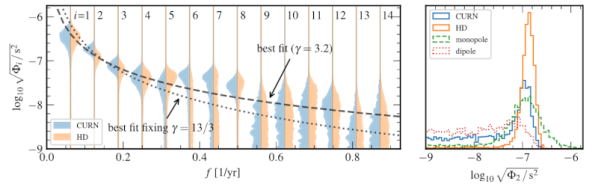
Detecting gravity waves isn’t easy. But what if you had a really big detector for a long time? That’s what researchers did when they crunched 15 years’ worth of data from the NANOGrav data set. The data was collected from over 170 radio astronomers measuring millisecond pulsars as a way to potentially detect low-frequency gravity waves.

Millisecond pulsars spin fast and make them ideal for the detection of low-frequency gravity waves, which are difficult to detect. The bulk of the paper is about the high-powered data analysis for a very large data set.

Continue reading “Gravity Wave Detector Is Galactic Sized”

Planar Speaker Build Uses Hard Drive Magnets

We like to see people building things that are a little unusual, and we really like it when said unusual thing uses salvaged parts. This project from [JGJMatt] ticks all our boxes — the build creates a planar speaker that uses salvaged magnets from a hard drive.

A planar speaker, according to the post, uses wires and magnets to manipulate a flat film that acts as the transducer. The speaker housing is 3D printed and looks great but is otherwise unremarkable. The fun starts when a Dremel with a diamond disk cuts the magnets in half. Cutting neodymium poses several challenges. For example, if you heat the material up too much while cutting, it can lose its magnetism.

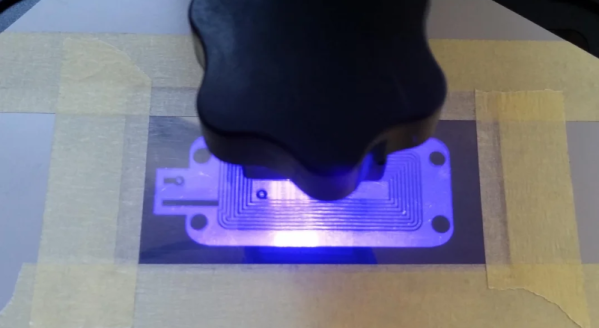
With the proper magnets, you can move to the tedious method of creating the coils. The post shows three different methods. But the part we really liked was using a resin 3D printer as a UV source to expose a resist mask which transfers to a copper or aluminum foil that will be the sound-generating film. [JGJMatt] used a similar technique to put resist on PC board blanks, too. Unfortunately, there were some issues so the finished speakers didn’t use the foil prepared using this method. Instead, a quick modification to the resin printer allowed a thin film of resin to rest on the foil, which was then exposed.

Once you have the pieces, there isn’t much left to do but put them together. Honestly, this is one of those things you probably won’t do yourself unless you are obsessed with speakers. But there were a lot of interesting techniques here that might come in handy, even if you don’t care about audio reproduction.

[JGJMatt] showed us a ribbon speaker before. We have seen some speakers that are practically all 3D printed.

Ask Hackaday: Learn Assembly First, Last, Or Never?

A few days ago, I ran into an online post where someone pointed out the book “Learn to Program with Assembly” and asked if anyone had ever learned assembly language as a first programming language. I had to smile because, if you are a certain age, your first language may well have been assembly, even if it was assembly for machines that never existed.

Of course, that was a long time ago. It is more likely, these days, if you are over 40, you might have learned BASIC first. Go younger, and you start skewing towards Java, Javascript, or even C. It got me thinking, though: should people learn assembly, and if so, when?

Continue reading “Ask Hackaday: Learn Assembly First, Last, Or Never?”

How Duck Tape Became Famous

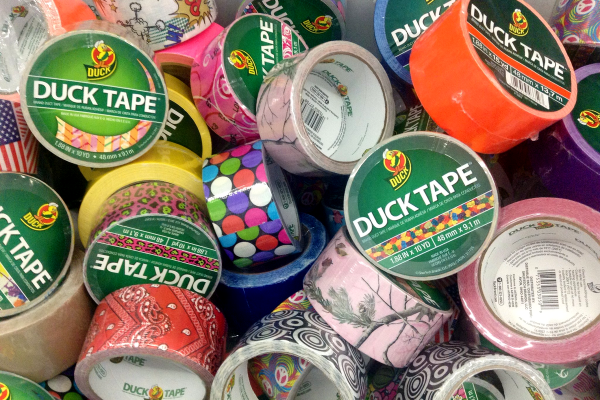
If you hack things in the real world, you probably have one or more rolls of duck tape. Outside of the cute brand name, many people think that duck tape is a malapropism, but in truth it is the type of cloth traditionally used in our favorite tape: cotton duck. However, as we’ll see, it’s not entirely wrong to call it duct tape either. Whatever you call it, a cloth material has an adhesive backing and is coated with something like polyethylene.

Actually, the original duck tape wasn’t adhesive at all. It was simply strips of cotton duck used for several purposes, including making shoes and wrapping steel cables like the ones placed in 1902 at the Manhattan Bridge. By 1910, the tape was made with adhesive on one side and soaked in rubber, found use in hospitals for binding wounds. In May 1930, Popular Mechanics advised melting rubber from an old tire and adding rosin to create a compound to coat cotton tape, among other things.

Continue reading “How Duck Tape Became Famous”

No Acid: Open ICs With A Tesla Coil

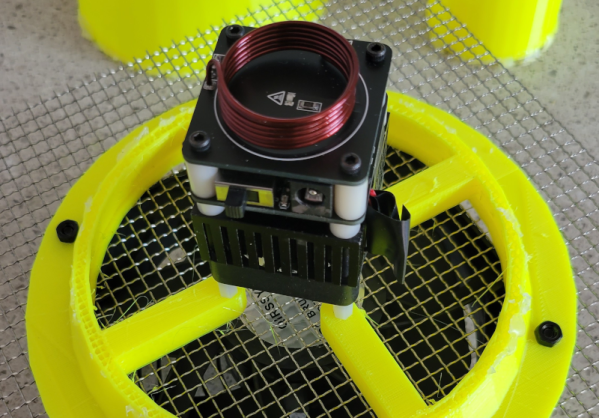
We’ve taken ICs apart before, but if they are in an epoxy package, it requires some lab gear and a lot of safety. Typically, you’ll heat the part and use fuming nitric acid (nasty stuff) in a cavity milled into the part to remove the epoxy over the die. While [100dollarhacker] doesn’t provide much detail, he appears to have used a Tesla coil to do it — no hot acid required.

Initial results were promising but took a long time to work. In addition, the coil gets very hot, and there is a chance of flames. The next attempt used a 3D printed cone with a fan to push the plasma over the chip. The first attempt shorted something out, and so far, each attempt eventually burns out the MOSFET driver.

We are always interested in the practical uses of Tesla coils and what’s inside ICs, so this project naturally appealed to us. We hope to see more success reported on the Hackaday.io page soon. Meanwhile, if you have a coil and an old IC lying around, try it. Maybe you’ll figure out how to make it work well and if you do, let us know.

The easiest chips to open are ceramic packages with a gold lid. Just use a hobby knife. There are less noxious chemicals you can use. If you want to use fuming nitric, be sure you know what you are doing and maybe make some yourself.

CP/M Porting In A Few Hours

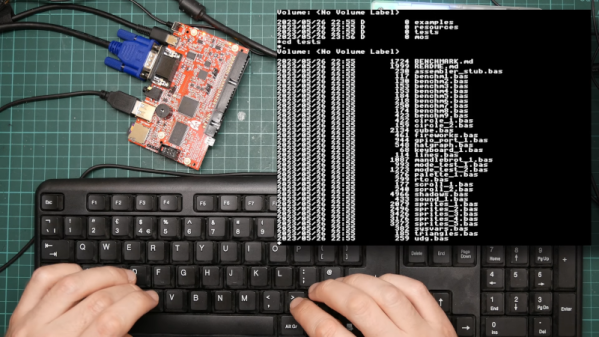
If you’ve ever wanted to watch someone bring CP/M up on a new system and you have a couple of hours to spare, check out the recorded live stream of [Poking Technology]. The system in question is an Agon Light, a modern board with a Z-80-derived CPU. If you want to get right to the porting part, you might want to skip about 31 minutes of the nearly 2.5-hour video.

The first half hour is more about the built-in assembler and the board in general. If you’ve ever ported CP/M before, you know it isn’t as hard as bootstrapping a modern operating system. There are two major things you need: A BIOS, which is specific to your machine, and a BDOS, which is usually taken verbatim from the operating system sources. Your programs typically call one of the 40 or so functions in the BDOS.

Continue reading “CP/M Porting In A Few Hours”

Proper Decoupling Capacitors

If you’ve been building circuits for any length of time, you probably know you need decoupling capacitors to keep your circuits stable. But even though it’s a favorite technique of ours, just scattering some around your PCB and hoping for the best isn’t necessarily the best approach. If you want to dig deeper into the why and how of decoupling, check out [Stephen Fleeman’s] post on the topic.

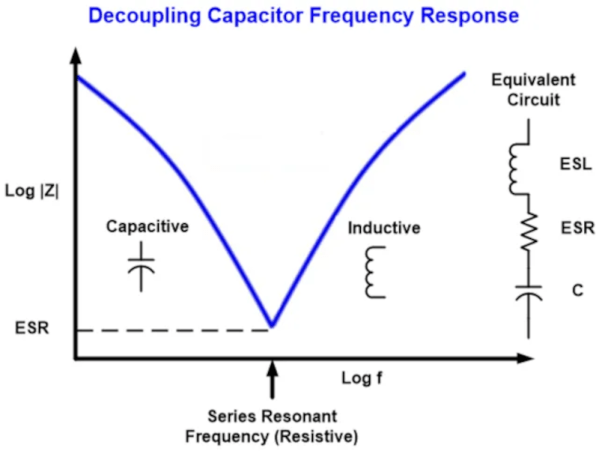
It is easy to think of capacitors as open circuits at DC and short circuits at high frequencies, shunting noise to ground. But the truth is more complex than that. Stray resistance and inductance mean that your simple decoupling capacitor will have a resonant frequency. This limits the high frequency protection so you often see multiple values used in parallel to respond to different frequencies.

Because the stray resistance and inductance plays a part, you may want to use fatter traces — less resistance — and shorter runs for less inductance. Of course, you can also use power and ground planes on the PCB as a form of decoupling. At the end of the post, [Stephen] talks a little about the importance of digital and analog ground that interact in a specific way.

If you want to do some empirical testing, you can build a test rig and do the work. Or check with [Bil Herd] about PCB inductance.