Tearing Down And Improving A Professional Power Supply

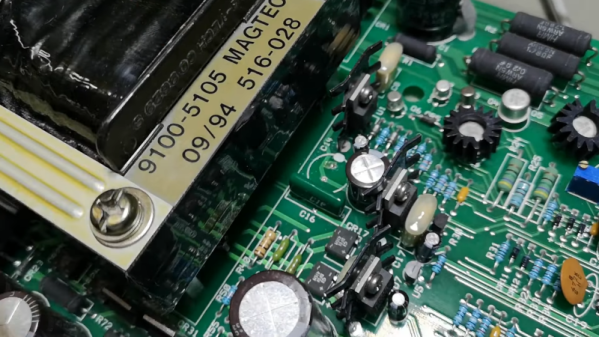
[OZ2CPU] has an HP power supply that is about 30 years old. It looks brand new, though, and has three outputs and includes tracking for the adjustable positive and negative supply. After a quick demo of the unit’s features, he tears it all down so we can see inside. You can catch the video below.

Some similar supplies offer a 10-turn adjustment knob, but this one doesn’t. Inside is a beefy transformer and quite a few through-hole components. There was room to change the main adjusted pot to a 10-turn unit, so he made the mod.

Continue reading “Tearing Down And Improving A Professional Power Supply”

Linux Device Drivers In Only A Few Years

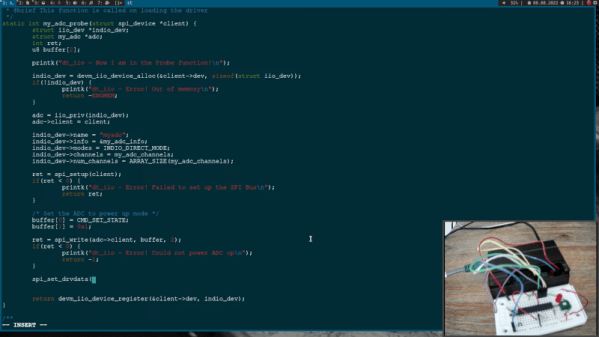
[Johannes 4GNU_Linux] has been filming a video series on how to write Linux device drivers for a couple of years now, but luckily, you won’t need that long to watch them or to create your own driver. He’s added some recent videos to the series, like the one below, but might want to rewind a few years and start at the beginning.

If you build your own hardware for Linux, you’ll probably eventually want to write a driver which runs as a privileged program. While there are many things you can do in user space, for the ultimate control and performance, you can’t beat a driver.

One problem, though, is that drivers can really crash your system in a big way. In the old days, it was common to have a dedicated system for driver development. Today, for many drivers, you can get away with running a virtual machine that you can crash and reload without much trouble.

The videos cover diverse topics like interrupts, completions, polling, and threads. He even uses a Raspberry Pi, which will be very useful for many embedded projects. Of course, the trend these days is to have one driver — like the USB driver — and have it provide user-space access so that everyone doesn’t have to write their own drivers. But, as usual, that only goes so far.

We aren’t sure how many more videos there will be, but if you make it through the first 31, maybe more will be waiting for you. It has been a while since we looked at SPI drivers in Linux. As an example of why you might want to roll your own, consider a custom FPGA driver.

Continue reading “Linux Device Drivers In Only A Few Years”

Retrotechtacular: Better Living Through A-Bombs

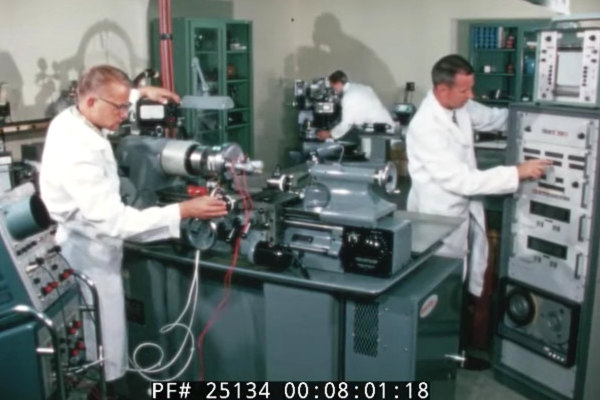
Usually, if you are listening to people debate about nuclear issues, it is one of two topics: how to deal with nuclear weapon stockpiles or if we want nuclear power plants in our backyard. But there was a time when the US and the USSR had more peaceful plans for nuclear bombs. While peaceful plans for nuclear bombs might sound like an oxymoron, there was somewhat of a craze for all things nuclear at some point, and it wasn’t clear that nuclear power and explosives wouldn’t take over many industries as the transistor did, or the vacuum tube before it.

You may have heard about Project (or Operation) Plowshare, the US effort to find a peaceful use for all those atom bombs. The Atomic Energy Commission video below touts the benefits “for all nations.” What benefits? Mostly moving earth, including widening the Panama Canal or creating a new canal, cutting highways through mountains, assisting mining and natural gas production, and creating an artificial harbor. There was also talk of using atomic blasts to create new materials and, of course, furthering the study of the atom.

Continue reading “Retrotechtacular: Better Living Through A-Bombs”

Kim-1: Memory Problem Resolved

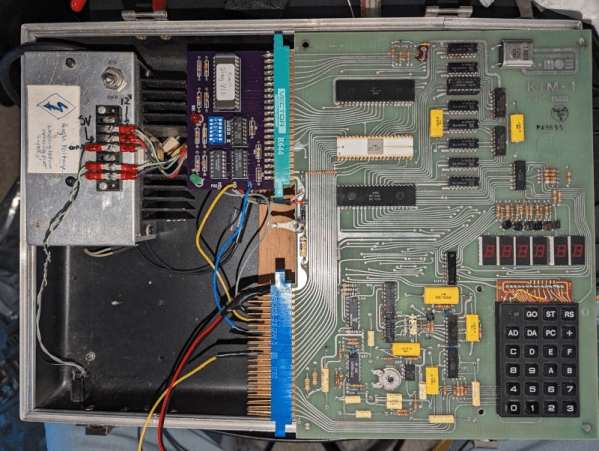
At the very start of the personal computer revolution, there were relatively inexpensive boards with little more than a CPU, some memory, a display, and switches or a keypad. Some of these had expansion ports meant to allow you to build up, and some were just “trainers” to learn about computers. While you could argue that the Altair fell into this category, it had a case and a proper bus. The computers we are thinking about were usually just on a single board and — with luck — had an edge connector for expansion. Perhaps the most famous of these was the KIM-1 and [Old VCR] shows us how he brought one back to life.

These were highly popular mainly because of the low price of $245 back in 1976. For that price you got a calculator-style keyboard and LED display, 1K of RAM, and 2K of ROM. [Old VCR] has several and noticed that one was developing memory problems.

Continue reading “Kim-1: Memory Problem Resolved”

A Quick Look At The Hilbert Transform

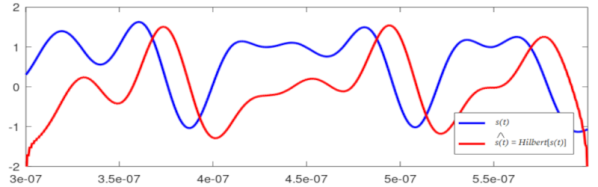
While the Fourier transform gets all the attention, there are other transforms that engineers and mathematicians use to transform signals from one form to another. Sometimes you use a transform to make a signal more amenable to analysis. Other times, you do it because you want to manipulate it, and the transform is easier to change than the original signal. [Electroagenda] explains the Hilbert transform, which is often used to generate single-sideband signals.

The math behind the transformation is pretty hairy. However, if you understand the Fourier transformer, you can multiply the Fourier transform by -i sgn(ω), but that isn’t really going to help you much in a practical sense. If you don’t want to bog down in the math, skip immediately to section two of the post. That’s where it focuses more on the practical effect of the transform. You can think of the transform as a function that produces a 90 degree phase shift with a constant gain. For negative frequencies, the rotation is 90 degrees and for positive frequencies, the shift is negative.

Continue reading “A Quick Look At The Hilbert Transform”

Roll Your Own Simple Tube Tester

You can easily get carried away when trying to test things. For example, if you want to know if your car is working, you could measure the timing of the ignition and put the car on a dynamometer. Or you could just start it and figure that if it runs and moves when you put it in drive, it is probably fine.

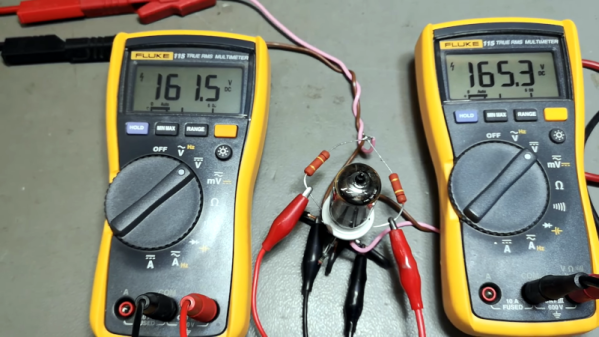
When [Thomas Scherrer] wanted to test some tubes, he made the same kind of assumption. While tubes can develop wacky failure modes, the normal difference between a working tube and a failing tube is usually not very subtle. He made a simple test rig to test tubes at DC and one operating point. Not comprehensive, but good enough most of the time. Have a look at what he did in the video below.

The tester is just a few resistors, a tube socket, and some bench power supplies. Of course, you may have to adapt it to whatever tube you are testing. If we had a lot of tubes to do, we might make the rig a bit more permanent, but for an afternoon of testing, what he has would be fine.

In addition to the power supplies, you’ll need at least one, preferably two, volt meters. He was able to validate his results with a proper tube tester. The results matched up well. While this won’t solve all your tube testing problems, it will give you a quick start.

You can build your own modern tube tester, of course. Or pick up a vintage one. Our favorite one uses punched cards.

Continue reading “Roll Your Own Simple Tube Tester”

Watch Those 1% Resistors

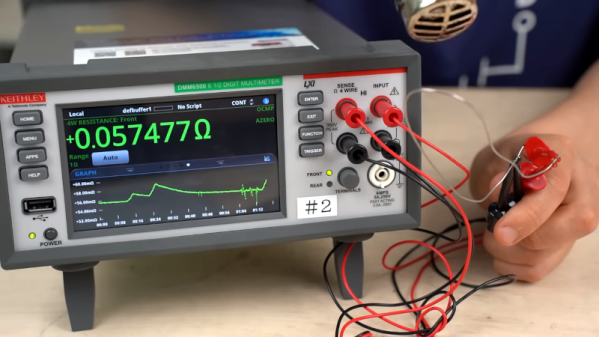
Decades ago, electronic components were not as easy to acquire as they are today. Sure, you could get some things at Radio Shack. But you might not have many choices, and the price would be on the high side. TV repair components were another option, but, again, big bucks. Some places sold surplus parts, which could be cheap. These often came from manufacturing runs where a company bought 10,000 components and made 8,000 products. But today, you can order parts inexpensively and get them on your doorstep in a day or, sometimes, even less. Are these inexpensive parts really any good? [Denki Otaku] likes to find out. In a recent video, he checks out some Amazon-supplied 1% resistors to find out how good they are. You can watch his results below.

Continue reading “Watch Those 1% Resistors”