3D Modelling In English With AI

By now, you’ve surely seen the AI tools that can chat with you or draw pictures from prompts. OpenAI now has Point-E, which takes text or an image and produces a 3D model. You can find a few runnable demos online, but good luck having them not too busy to work.

We were not always impressed with the output. Asking for “3d printable starship Enterprise,” for example, produced a point cloud that looked like a pregnant Klingon battle cruiser. Like most of these tools, the trick is finding a good prompt. Simple things like “a chair” seemed to work somewhat better.

Continue reading “3D Modelling In English With AI”

Virtualizing IPhoneOS 1.0

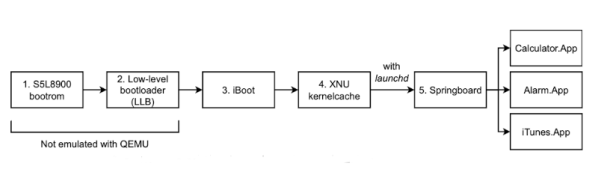
Virtualizing computers is nothing new. However, Apple devices always present challenges. Just ask anyone who has built a Hackintosh. At least computer hardware is usually exposed, but on phones, the challenge is even harder due to mysterious devices. [Martijn] managed to reverse engineer the iPod Touch 1G enough to run iPhoneOS 1.0 on it and has several blog posts explaining how he did it.

The emulator is the ubiquitous QEMU. He has emulation for the critical hardware, including the cryptographic modules, the hardware clock, and the timer, along with memory and display and interface hardware. However, Wifi, some USB, audio, the light sensor, and some graphics hardware are still absent. That doesn’t stop the OS from booting, however.

Continue reading “Virtualizing IPhoneOS 1.0”

Harmonic Vs Cycloidal Show Down

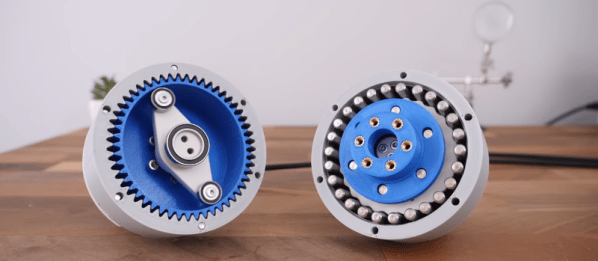
What’s better? Harmonic or cycloidal drive? We aren’t sure, but we know who to ask. [How To Mechatronics] 3D printed both kinds of gearboxes and ran them through several tests. You can see the video of the testing below.

The two gearboxes are the same size, and both have a 25:1 reduction ratio. The design uses the relatively cheap maker version of SolidWorks. Watching the software process is interesting, too. But the real meat of the video is the testing of the two designs.

Continue reading “Harmonic Vs Cycloidal Show Down”

Your Own Santa? Thermal Camera Roundup

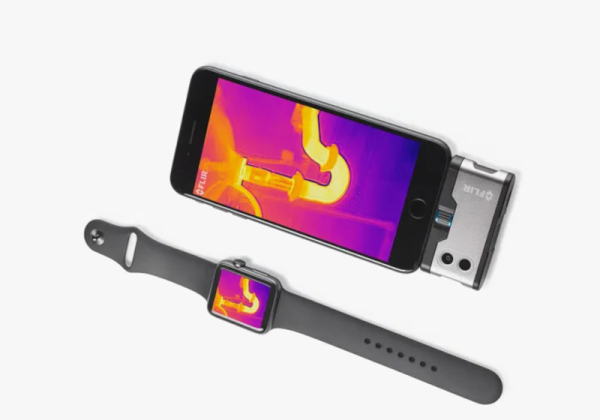
With Christmas and other end-of-year celebrations, there are gifts. The problem is that your loved ones don’t really know what to get you. Who can blame them? Do you want an Arduino, a Raspberry Pi, or a Blue Pill? Is that 3D printer on sale better than the one you have? Do you even want a second printer? They don’t know. In the best case, they’ll give you gift cards. But sometimes you just have to buy yourself something nice. [Wired] has a suggestion: a phone-based thermal camera. Which one? They have four suggestions ranging from about $150 to $200.

Different people have different reasons for wanting a thermal camera. You can see hot spots in electronics, for example. Or pick out hot water pipes behind walls. The resolution is limited. The highest in the [Wired] review is only 206×136. For the digital camera buffs, that’s 0.028 megapixels! Some cameras have even less resolution. For example, one of the cameras has an 80×60 resolution but uses an optical camera to give the illusion of a higher resolution.

Continue reading “Your Own Santa? Thermal Camera Roundup”

Another Magnetron Teardown

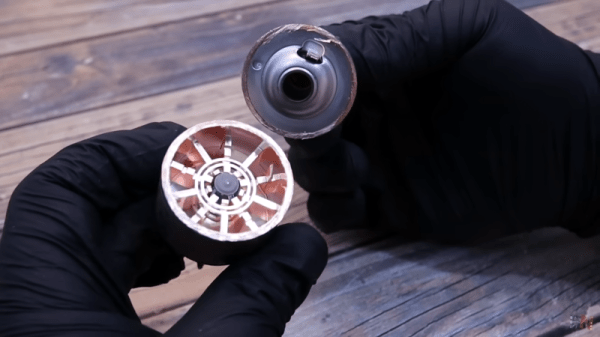
[Electronoobs] has a healthy respect for the voltages and ceramics inside a microwave oven. But he still found the courage to tear one apart and show us the insides and characterize some of the components. You can see the video of the teardown below.

The danger of the voltage is obvious. However, there is also a ceramic insulator inside. Some of them are made from aluminum oxide, but others are made with beryllium oxide. You probably don’t want to inhale either one, but beryllium oxide, if powdered, can cause serious health problems. Obviously, you need to be careful if you decide to rip your oven open.  Of course, the other danger is if you put the oven back together and try to use it. You need to ensure all the shielding is back in the proper place.

The video shows the operation of several of the components using test equipment and, in some cases, some surrogate components. The animation of an LC oscillator is very easy to understand. However, when he actually cuts into the magnetron with a rotary tool, you can really see how the device works. Some animations make it even clearer.

We haven’t seen a magnetron teardown for a few years. You can do many things with a magnetron from radar to vacuum deposition of films.

Continue reading “Another Magnetron Teardown”

BBC World Service Turns 90

If you’ve ever owned a shortwave radio, you’ve probably listened at least a little to the BBC World Service. After all, they are a major broadcasting force, and with the British Empire or the Commonwealth spanning the globe, they probably had a transmitter close to your backyard. Recently, the BBC had a documentary about their early years of shortwave broadcasting. It is amazing both because it started so simply and when you think how far communications have progressed in just a scant 100 years.

Today, the BBC World Service broadcasts in over 40 languages distributing content via radio, TV, satellite, and the Internet. Hard to imagine it started with four people who were authorized to spend 10 pounds a week.

Continue reading “BBC World Service Turns 90”

Chumby Gets New Kernel… Soon

If you missed the Chumby, we’re sorry.  They were relatively inexpensive Linux appliances that acted as a clock, Internet radio, and feed reader. The company went belly up, although there was some functionality remaining thanks to one of the founders and now, for a subscription fee, you can still keep your Chumby operating. However, [Doug Brown] bought one with the goal of using it for his own applications. But the 2.6.28 kernel is showing its age. So he decided to push a new kernel on the device.

If you are a Chumby enthusiast, don’t get too excited. The goal isn’t to provide the existing Chumby apps with a new kernel, [Doug] says that’s probably impossible. Instead, he wants a modern booting infrastructure and kernel on the device for his own software.

Continue reading “Chumby Gets New Kernel… Soon”