Designing To Remove Supports

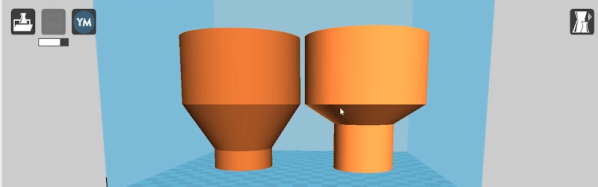
If you want to 3D print arbitrary shapes with an FDM printer, you often find you need supports. If you have dissolvable support material, that might not be a big issue, but if you use the same material for support as you print in, removing it can be difficult, depending on the location of the support and your slicer. At the very least, it is going to require more time and filament to print and at least some post-processing. [Slant 3D] asserts that you can always redesign the part using chamfers and fillets to avoid needing support to start with. Watch the video, below.

Of course, sometimes you just need to flip the part around. For example, the part in question — which is just an example — could just be rotated to avoid support, but that isn’t the point, of course. A fillet, however, still might need support, so you wind up having to do a double fillet to really avoid support.

Continue reading “Designing To Remove Supports”

Dirty TRS-80 Has A Surprise Hack

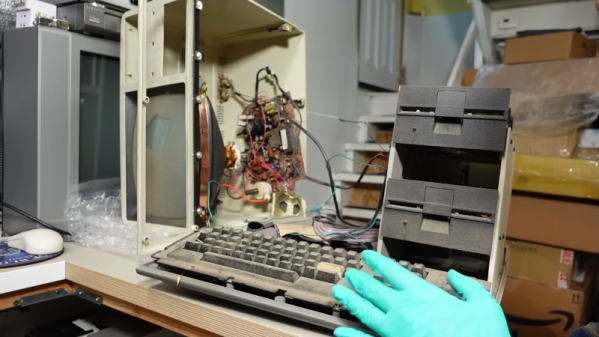
[Adrian] had a TRS-80 model IV that looks like it was stored in a mulch pile. However, it seemed to have some surprises. The first hint that something was up was that the keyboard looks like a model III and there are two mystery knobs in the back.

So what’s going on? You” have to watch [Adrian’s] video below to find out. At about the six-minute mark, you’ll find that things are not at all what you might think.

Continue reading “Dirty TRS-80 Has A Surprise Hack”

Miracle Of Science: Scotch Tape Improves Generator

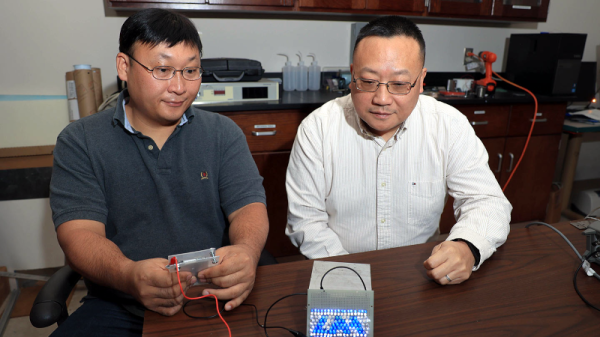
We were always amused that one of the biggest scientific discoveries of the recent past — graphene — was started with pencil lead and Scotch tape. Now, researchers at the University of Alabama in Huntsville have determined that double-sided Scotch tape can improve triboelectric power generators. Triboelectric generation, of course, is nothing new. These energy harvesters take mechanical and thermal energy and turn them into tiny amounts of electricity. What’s new here is that PET plastic, aluminum, and double-sided tape can make an inexpensive generator that works well.

Keep in mind we are talking about little bits of power. In the best scenario with the device stimulated at 20 Hz, the generator peaked at 21.2 mW. That was better than some designs that only got to 7.6 mW in the same configuration.

Continue reading “Miracle Of Science: Scotch Tape Improves Generator”

The PalmPilot Returns, This Time In Your Browser

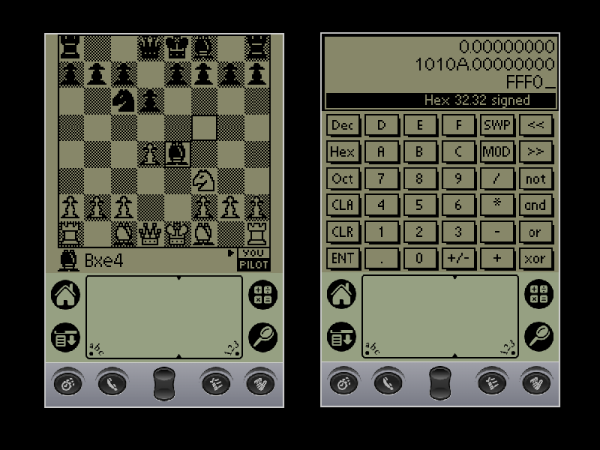
The PalmPilot doesn’t seem to get much retrocomputing love, but maybe it should. After all, it might not have been the very first handheld, but it was probably the most successful, and that ultimately led to the era of the smartphone. Whether you miss your old Palm applications, or never got to experience them the first time around, fear not. You can now relive them in all their glory in your browser thanks to the Internet Archive project.

There are over 500 applications and games all running in a browser-based emulator. Some of the programs don’t seem to work well, and some don’t make sense in the context of a virtual environment. But many work fine, and if you want the classic apps, just open up anything and press the home button. If you want a review of the Palm IIIe PDA from 1999, check out [VWestlife’s] video, below.

The Grafitti handwriting recognition system was state-of-the-art for the day. The key was the system could more easily recognize printing if it were mostly single strokes that always worked the same way. For example, the “A” had no crossbar and the “F” was missing the bottom horizontal line. As much as possible, you make letters with a single stroke and there was only one way to form each letter. Good times!

What was high tech back then you can now build out of spare parts. If you happen to have a Palm, you might consider giving it a much-needed backlight.

Continue reading “The PalmPilot Returns, This Time In Your Browser”

Better Coding Through Sketching

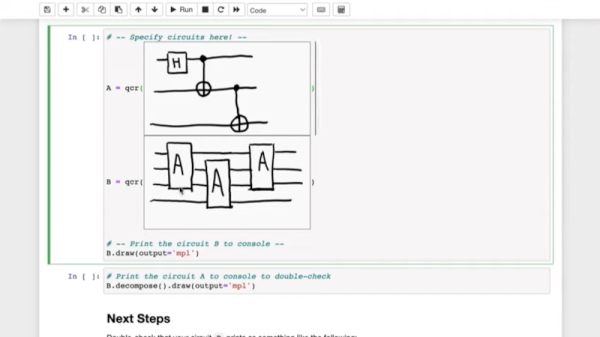
Back in the late 1970s and early 1980s, engineering students would take a few semesters of drafting and there would usually be a week or two of “computer-aided drafting.” In those days, that meant punching cards that said RECTANGLE 20,30 or something like that and getting the results on a plotter. Then we moved on to graphical  CAD packages, but lately, some have gone back to describing rather than drawing complex designs. Cornell University researchers are trying to provide the same options for coding. They’ve built a Juypter notebook extension called Notate that allows you to sketch and handwrite parts of programs that interact with traditional computer code. You can see a video about the work below.

The example shows quantum computing, but the idea could be applied to anything. The example has sketches that generate quantum circuits. Naturally, there is machine learning involved.

Continue reading “Better Coding Through Sketching”

Car Batteries: More Than Just Wet Lead

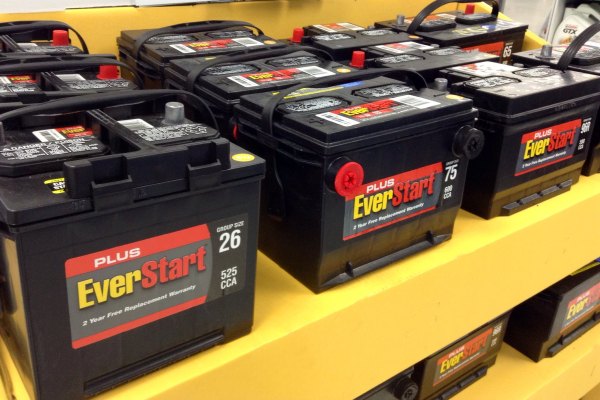
Working on car electrical systems used to be easy. The battery simply provided power for the car’s starter motor when starting or to run the small number of accessories when the engine wasn’t running. The rest of the time, the alternator charged the battery and provided power for the rest of the vehicle and the ignition system. While very early cars didn’t have batteries, and some old cars had 6 V positive ground systems, most of us have lived our entire lives where car batteries come in several sizes (controlled by Battery Council International) and cars have a 12 V, negative ground system.

Times have changed. Cars don’t have distributors anymore, they have computers. They also have lots of gadgets from GPS to backup cameras and cellphone chargers. Batteries have had to get beefier and the modern trend is to also require less maintenance So, today, you’ll find that there isn’t just one kind of car battery. But how do these other batteries work and what was wrong with the good old lead acid wet cell?

For the purposes of this post, I’m not talking about electric car batteries which is a whole different topic — and most of them have a regular car battery, too. Continue reading “Car Batteries: More Than Just Wet Lead”

DIY Self-Assembling 4D Printing

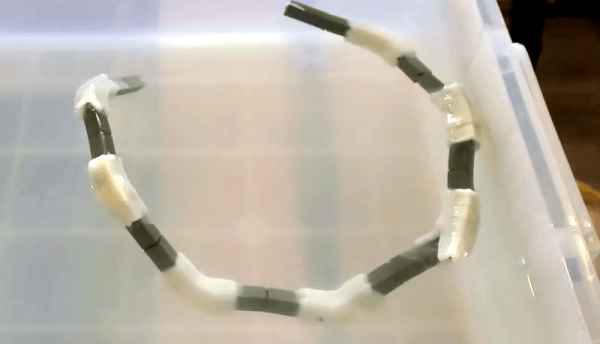
A 4D printed object is like a 3D printed object, but it changes shape or self-assembles when its environment changes. [Teaching Tech] has been reading about this technology and decided to try to replicate it using his conventional 3D printer.

His attempts to make a joint that changes when submerged in the water looked at several options: material that can absorb water, material that expands with temperature, and — the selected option — a dissolvable locking mechanism. Essentially, a hinge is held open by a water-soluble lock. When water dissolves the lock, the hinge can spring to its natural position.

Like most experiments, this one had a few false starts. But you always learn something each time. The final design had a TPU hinge and spring with PLA structural beams. The TPU required flat printing, so various pieces have to be rotatable so they can be placed in their final orientation after printing.

Usually, multi-material setups are for printing different colors of the same kind of plastic, it’s possible to use different plastics, but it can be tricky. As a compromise, [Teaching Tech] did one print using PLA and TPU, but printed the PVA locks in a separate pass and installed them on the print at the end. The first finished 4D print wasn’t entirely successful. The hot water slowly dissolved the PVA, but it also deformed the PLA. A redesign of the lock made a big difference.

We aren’t sure this is practical yet, but we are sure someone has a need for this technique and it could be made very practical with a little work. The last time we saw 4D printing, there were magnets involved. We think this is an exciting time where people aren’t just trying to get conventional printing to work well, but are pushing the envelope with new techniques like conical slicing, for example.

Continue reading “DIY Self-Assembling 4D Printing”