StarLink Terminal Unit Firmware Dumped

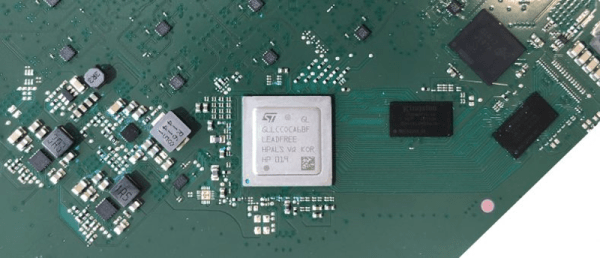
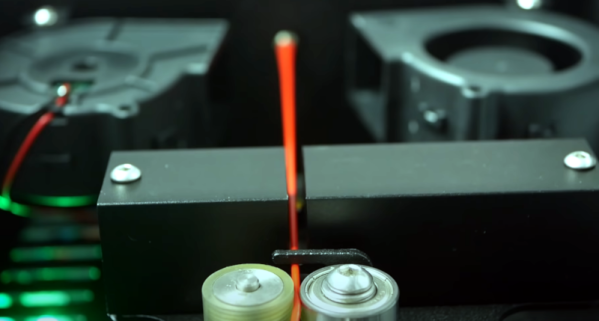
There’s a lot of expense in what telephone companies call “the last mile” — delivering service from the main trunks to your home or business. StarLink wants to avoid that cost by connecting you via an array of low-orbit satellites and some users are already using the service. In Belgium, [Lennert Wouters] managed to dump the terminal’s firmware and has some interesting observations.

The teardown is actually more than just a firmware dump. His “level 1” teardown involves exposing the board. This can be tricky because there are apparently different versions of the terminal out already, so advice from one source might not match your hardware, and that was the case here.

Continue reading “StarLink Terminal Unit Firmware Dumped”

Linux Fu: PDF For Penguins

PostScript started out as a programming language for printers. While PostScript printers are still a thing, there are many other ways to send data to a printer. But PostScript also spawned the Portable Document Format or PDF and that has been crazy successful. Hardly a day goes by that you don’t see some kind of PDF document come across your computer screen. Sure, there are other competing formats but they hold a sliver of market share compared to PDF. Viewing PDFs under Linux is no problem. But what about editing them? Turns out, that’s easy, too, if you know how.

GUI Tools
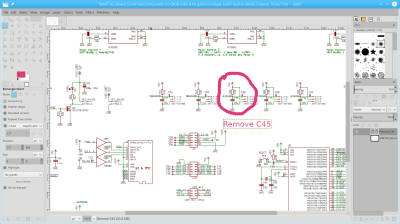
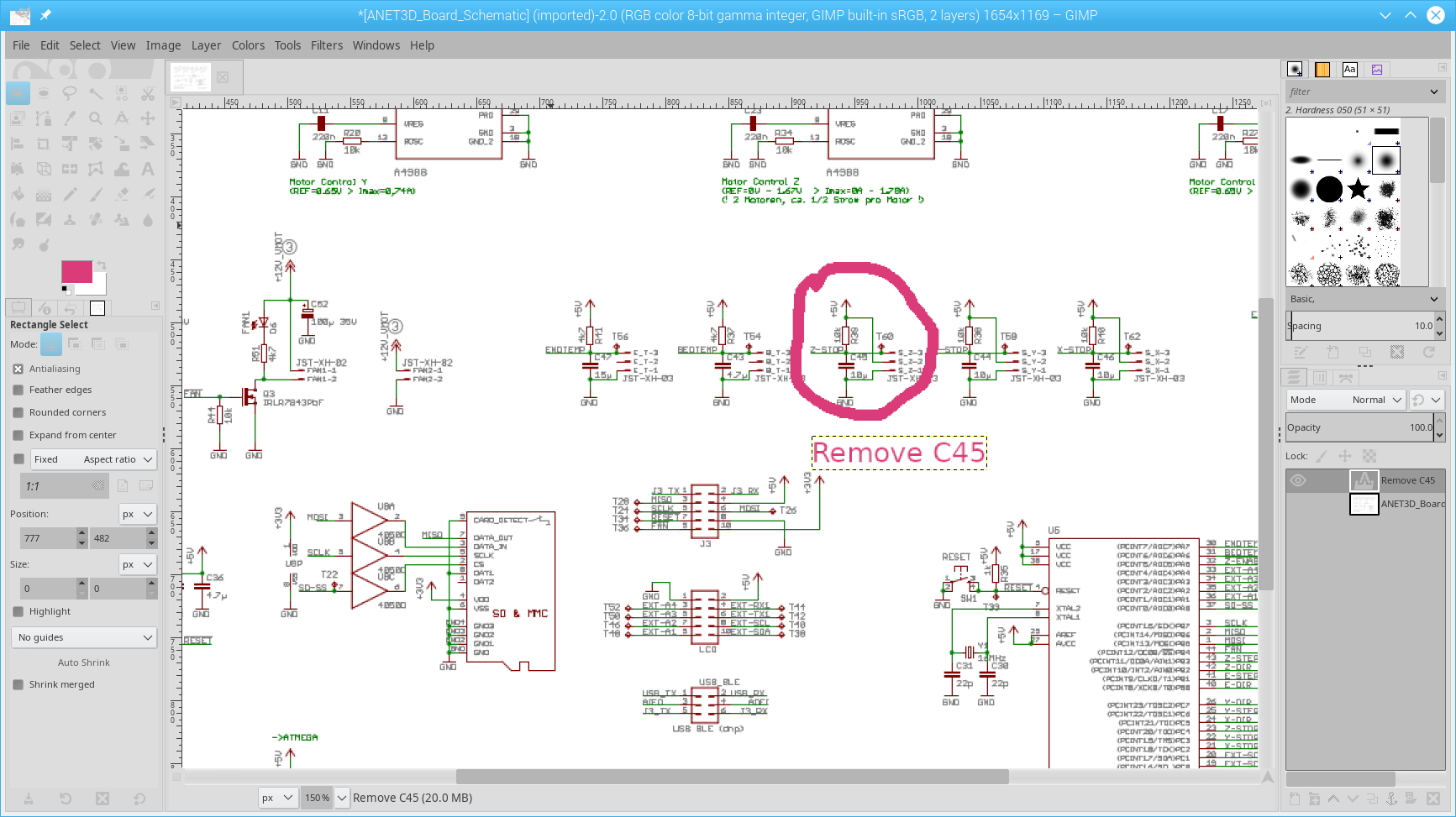
You can use lots of tools to edit PDF files, but the trick is how good the results will look. Anything will work for this: LibreOffice Draw, Inkscape, or even GIMP. If all you want to do is remove something with a white box or make an annotation, these tools are usually great, but for more complicated changes, or pixel-perfect output, they may not be the right tool.

The biggest problem is that most of these tools deal with the PDF as an image or, at least, a collection of objects. For example, columns of text will probably turn into a collection of discrete lines. Changing something that causes a line to wrap will require you to change all the other lines to match. Sometimes text isn’t even text at all, but images. It largely depends on how the creator made the PDF to begin with. Continue reading “Linux Fu: PDF For Penguins”

Lightwave Multimeter Teardown

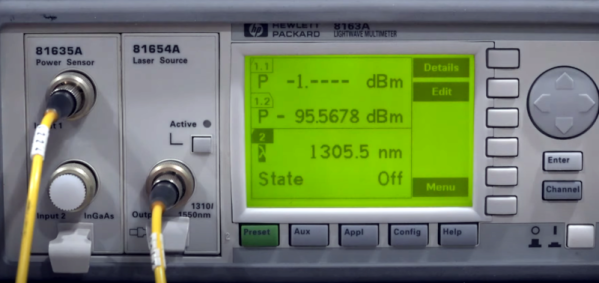
You tend to think of test equipment in fairly basic terms: a multimeter, a power supply, a signal generator, and an oscilloscope. However, there are tons of highly-specialized test equipment for very specific purposes. One of these is the 8163A “lightwave multimeter” and [Signal Path] tears one part for repair in a recent video that you can see below.

If you’ve never heard of a lightwave multimeter, don’t feel bad. The instrument is a measuring system for fiber optics and, depending on the plugins installed, can manage a few tests that you’d usually use an optical power meter, a laser or light source, and some dedicated test jigs to perform. Continue reading “Lightwave Multimeter Teardown”

Iron Becomes SMD Hot Plate

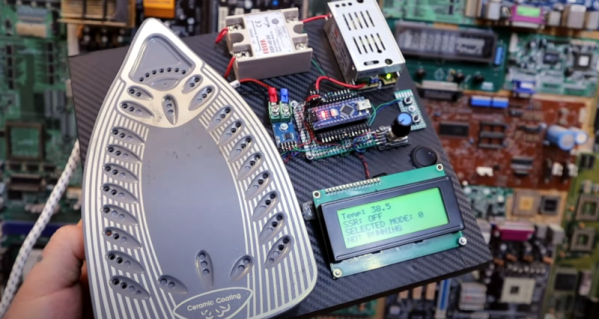
Few things have changed our workshops more than surface mount components. In 1980 it would have been strange to see a hobby bench with a microscope, hot air equipment, tweezers, and all the other accouterments that are a necessity today. [Electronoobs] wanted a reflow hot plate and decided that he could repurpose a consumer laundry iron for the job. You can see the results in the video below.

Opening the iron revealed surprisingly simple circuitry, so the build has some additional parts along with a controller and an LCD, of course. The power requirement for the heating element is significant — 13 amps — so the plate uses a solid state relay to turn things on and off.

Continue reading “Iron Becomes SMD Hot Plate”

Machine Extrudes Filament

We’ve seen a lot of homebrew filament extruders, but [Stefan] at CNC Kitchen shows off a commercial desktop filament extruder in his latest video, which you can see below. The 3DEVO extruder is pretty slick but at around $7,000-$8,000 we probably won’t rush out and buy one. We might, though, get some ideas from it for our next attempt to build something similar.

In concept, any machine that creates filament is pretty straightforward. Melt pellets and push them out of a nozzle. Cool the filament and wind it up. Easy, right? But, of course, the problems are all in the details. Die swell, for example, means you can’t just assume the nozzle’s hole size will give you the right size filament. Continue reading “Machine Extrudes Filament”

This Arduino Isn’t Color Blind

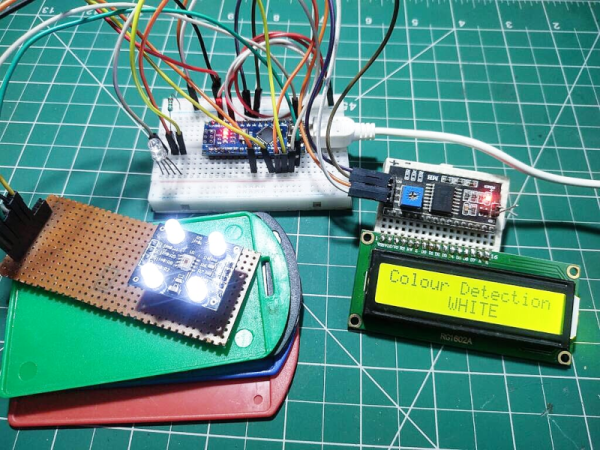
You can sense a lot of things with the right sensor, and [Nikhil Nailwal] is here to show us how to sense colors using a TCS230. The project is a simple demo. It displays the color and lights up an LED to correspond to the detected color.

If you haven’t seen the TCS230 before, it is a chip with an array of photosensors, for different light wavelengths. The controlling chip — an Arduino, in this case — can read the intensity of the selected color.

Continue reading “This Arduino Isn’t Color Blind”

Internet Chess On A Real Chessboard

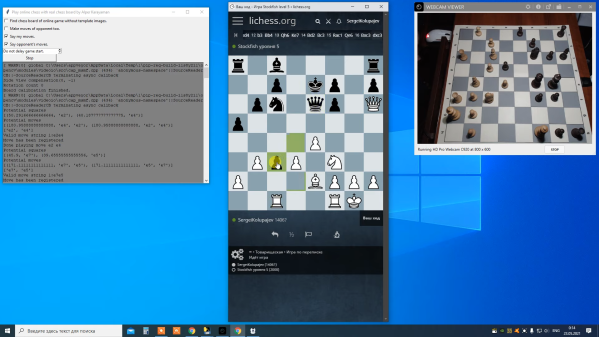
The Internet teaches us that we can accept stand-ins for the real world. We have an avatar that looks like us. We have virtual mailboxes to read messages out of make-believe envelopes. If you want to play chess, you can play with anyone in the world, but on a virtual board. Or, you can use [karayaman’s] software to play virtual games on real boards.

The Python program uses a webcam. You point it at an empty board and calibrate. After that, the program will track your moves on the real board in the online world. You can see a video of a test game below.

Continue reading “Internet Chess On A Real Chessboard”