Ptychography Shows Atoms At Amazing Resolution

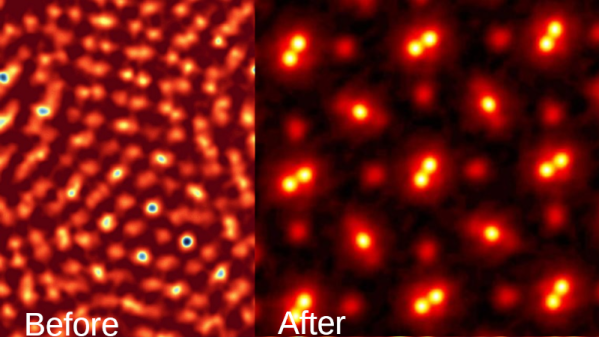
Cornell University enhanced electron microscopy using a technique known as ptychography in 2018. At the time, it allowed an electron microscope to resolve things three times smaller than previously possible. But that wasn’t enough. The team has now doubled that resolution by improving on their previous work.

The team says that the images are so precise that the only blurring is due to the thermal motion of the atoms themselves. This could mean that you won’t see a further improvement in resolution in the future.

Continue reading “Ptychography Shows Atoms At Amazing Resolution”

Getting Started With Aluminum Extrusions

T-slot extrusions used to be somewhat mysterious, but today they are quite common thanks to their use in many 3D printers. However, it is one thing to assemble a kit with some extrusions and another thing to design your own creations with the material. If you ever had a Play-Doh Fun Factory as a kid, then you know about extrusions. You push some material out through a die to make a shape. Of course, aluminum extrusions aren’t made from modeling clay, but usually 6105-T5 aluminum. Oddly, there doesn’t seem to be an official standard, but it is so common that there’s usually not much variation between different vendors.

We use extrusions to create frames for 3D printers, laser cutters, and CNC machines. But you can use it anywhere you need a sturdy and versatile frame. There seems to be a lot of people using them, for example, to build custom fixtures inside vans. If you need a custom workbench, a light fixture, or even a picture frame, you can build anything you like using extrusions. Continue reading “Getting Started With Aluminum Extrusions”

Technical Audacity And The Phone Book

I often think we — or maybe the people who control our money — lack the audacity to take on really big projects. It is hard to imagine laying the transatlantic cable for the first time today, for example. When I want a good example of this effect, I usually say something like: “Can you imagine going to a boardroom of a major company today and saying, ‘We plan to run wire to every house and business in the world and connect them all together.'” Yet that’s what the phone company did. But it turns out, running copper wire everywhere was only one major challenge for the phone company. The other was printing phone directories. In today’s world, it is easy to imagine a computer system that keeps track of all the phone numbers that can spit out a printed version for duplication. But that’s a relatively recent innovation. How did big city phonebooks work before the advent of the computer?

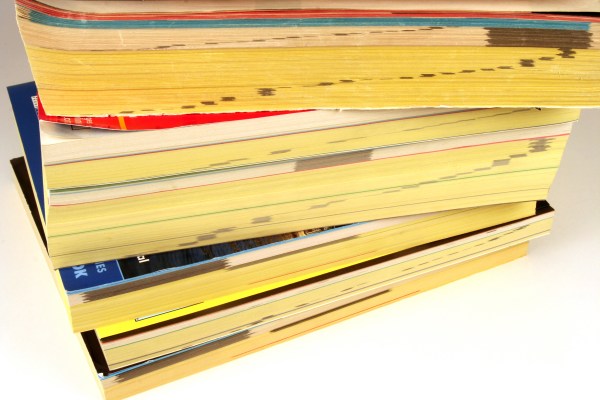
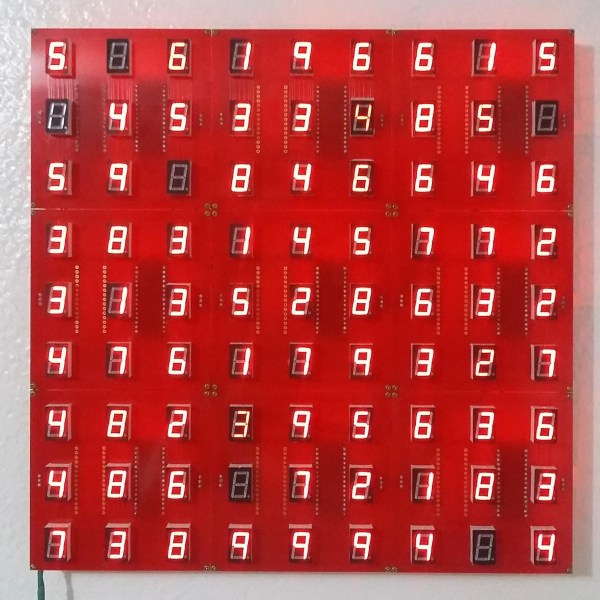
Turns out, the Saturday Evening Post talked about how it all worked in a 1954 article. We aren’t sure there weren’t some computerized records by 1954, but the whole process was still largely manual. By that year, an estimated 60,000,000 directories went out each year in the United States alone. Some of these were small, but the Chicago directory — not including suburban directories — had over 2,100 pages. In New York City, the solution was to print a separate book for each borough. Even then. the Manhattan book was three inches thick and projected to grow to five inches by 1975.

Continue reading “Technical Audacity And The Phone Book”

Affordable Transilluminator Helps Visualize DNA

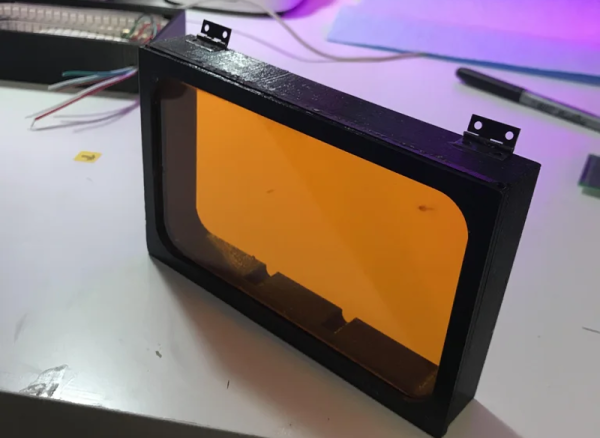
If you want to examine the results of gel electrophoresis — and who doesn’t — you need a transilluminator. These devices can be quite pricey, though, so you might want to check out [Gabriel St-Pierre’s] plans to make an affordable blue-light version. You can see a video about the device below.

Using a UV filter, an Arduino Nano, an LED strip, 3D printing, and some mechanical items, it looks like this is a very easy project if you need such a device. There are a few miscellaneous parts like a hinge and some mirror material, but nothing looks too exotic.

Continue reading “Affordable Transilluminator Helps Visualize DNA”

Portable Drill Press

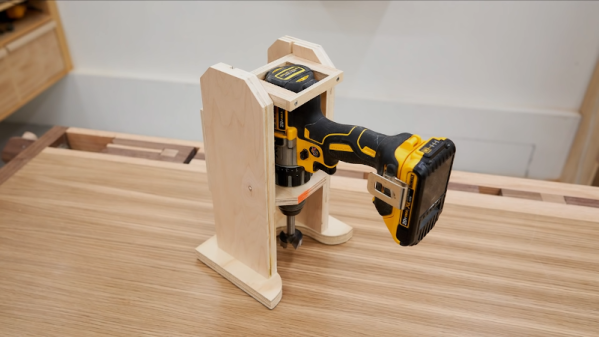
We aren’t sure that [John Heisz’s] build is really what we think of as a drill press, but it is a very portable way to convert a regular drill into something like a drill press. Your drill will probably be different, but you can follow along with his build in the video below.

On the face of it, it doesn’t seem like this would be very hard, but there are a few tricks. Finding the exact center of the drill axis on the back of the drill takes a bit of effort.

Continue reading “Portable Drill Press”

One Instruction To Rule Them All: C Compiler Emits Only MOV

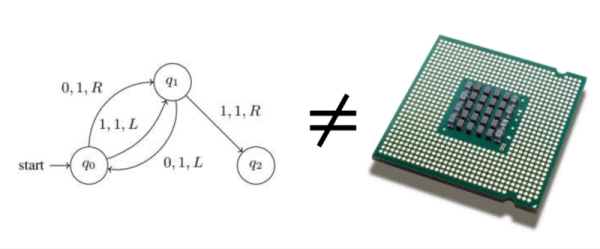
How many instructions do you need to successfully compile C code? Let’s see, you’d need some jump instructions, some arithmetic functions, and — of course — move instructions, right? Turns out you only need the move instruction, which — on x86, at least — is Turing complete.

While the effort is a bit tongue-in-cheek, we have to admit that if you were trying to create your own CPU, this would make for a simple architecture and might have power or complexity advantages, so maybe someone will find a practical use for it after all. If you wanted a C compiler for a simple CPU, this wouldn’t require much to emulate at a byte-code level, either.

Continue reading “One Instruction To Rule Them All: C Compiler Emits Only MOV”

Reading Floppies With An Oscilloscope

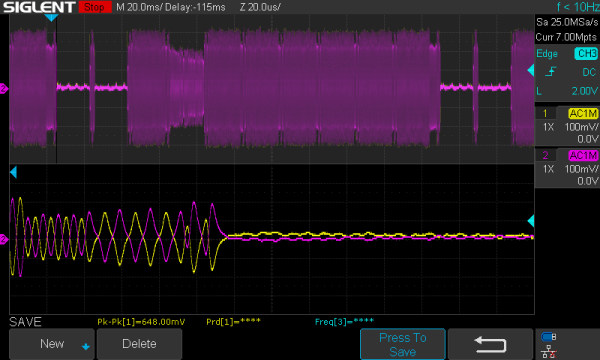
There’s a lot of data on magnetic media that will soon be lost forever, as floppies weren’t really made to sit in attics and basements for decades and still work. [Chris Evans] and [Phil Pemberton] needed to read some disks that reportedly contained source code for several BBC Micro games, including Repton 3. They turned to Greaseweazle, an interface board that can dump just about any kind of floppy disk if it is attached to the right drive. The problem is that Greaseweazle couldn’t read the disks due to CRC errors. Time to break out the oscilloscope and read the disk manually, which is what they did.

Greaseweazle provides a nice display of read sectors and shows timing coming from the floppy read head. The disk in question looked good with reasonably clean timing clocks except in the area of one sector. At that point, the clocks degenerated into noise. Looking on the disk, it was easy to see why. The actual media had a small dent in it.

Continue reading “Reading Floppies With An Oscilloscope”