Real Spectrum Analysis Goes Virtual

One of the hard things about electronics is that you can’t really see the working parts without some sort of tool. If you work on car engines, fashion swords, or sculpt clay, you can see with your unaided eye what’s going on. Electronic components are just abstract pieces and the real action requires a meter or oscilloscope to understand. Maybe that’s what [José] was thinking of when he built a-radio. This “humble experiment” pipes a scan from a software-defined radio into VR goggles, which can be as simple as a smartphone and some cardboard glasses.

The resulting image shows you what the radio spectrum looks like. Granted, so will a spectrum analyzer, but perhaps the immersion will provide a different kind of insight into radio frequency analysis.

Continue reading “Real Spectrum Analysis Goes Virtual”

Linux Fu: VPN For Free With SSH

If you see a lot of banner ads on certain websites, you know that without a Virtual Private Network (VPN), hackers will quickly ravage your computer and burn down your house. Well, that seems to be what they imply. In reality, though, there are two main reasons you might want a VPN connection. You can pay for a service, of course, but if you have ssh access to a computer somewhere on the public Internet, you can set up your own VPN service for no additional cost.

The basic idea is that you connect to a remote computer on another network and it makes it look like all your network traffic is local to that network. The first case for this is to sidestep or enhance security. For example, you might want to print to a network printer without exposing that printer to the public Internet. While you are at the coffee shop you can VPN to your network and print just like you were a meter away from the printer at your desk. Your traffic on the shop’s WiFi will also be encrypted.

The second reason is to hide your location from snooping. For example, if you like watching the BBC videos but you live in Ecuador, you might want to VPN to a network in the UK so the videos are not blocked. If your local authorities monitor and censor your Internet, you might also want your traffic coming from somewhere else.

Continue reading “Linux Fu: VPN For Free With SSH”

Reduce, Reuse, Injection Mold

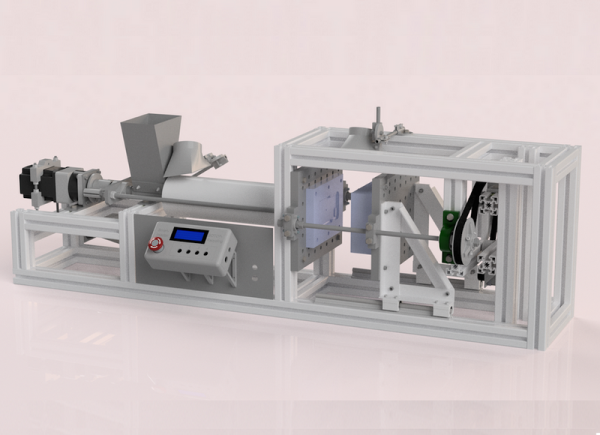
Many people have the means now to create little plastic objects thanks to 3D printing. However, injection molding is far less common. Another uncommon tech is plastic recycling, although we do occasionally see people converting waste plastic into filament. [Manuel] wants to solve both of those problems and created an injection molder specifically for recycling.

The machine — Smart Injector — is automated thanks to an Arduino. It’s pretty complex mechanically, so in addition to CAD models there are several PDF guides and a ton of pictures showing how it all goes together.

Continue reading “Reduce, Reuse, Injection Mold”

3D Printable Cloth Takes Advantage Of Defects

Normally, a 3D printer that under extrudes is a bad thing. However, MIT has figured out a way to deliberately mix full extrusions with under extruded layers to print structures that behave more like cloth than normal 3D printed items. The mesh-like structure apparently doesn’t require any modification to a normal 3D printer, just different software to create special code sequences to create the material.

Called DefeXtiles, [Jack Forman] is producing sheets and complex structures that appear woven. The process is known as “blob-stretch” because of the way the plastic makes blobs connected by fine filaments of plastic.

Continue reading “3D Printable Cloth Takes Advantage Of Defects”

3D Printed Electric Motor Wants To Take Flight

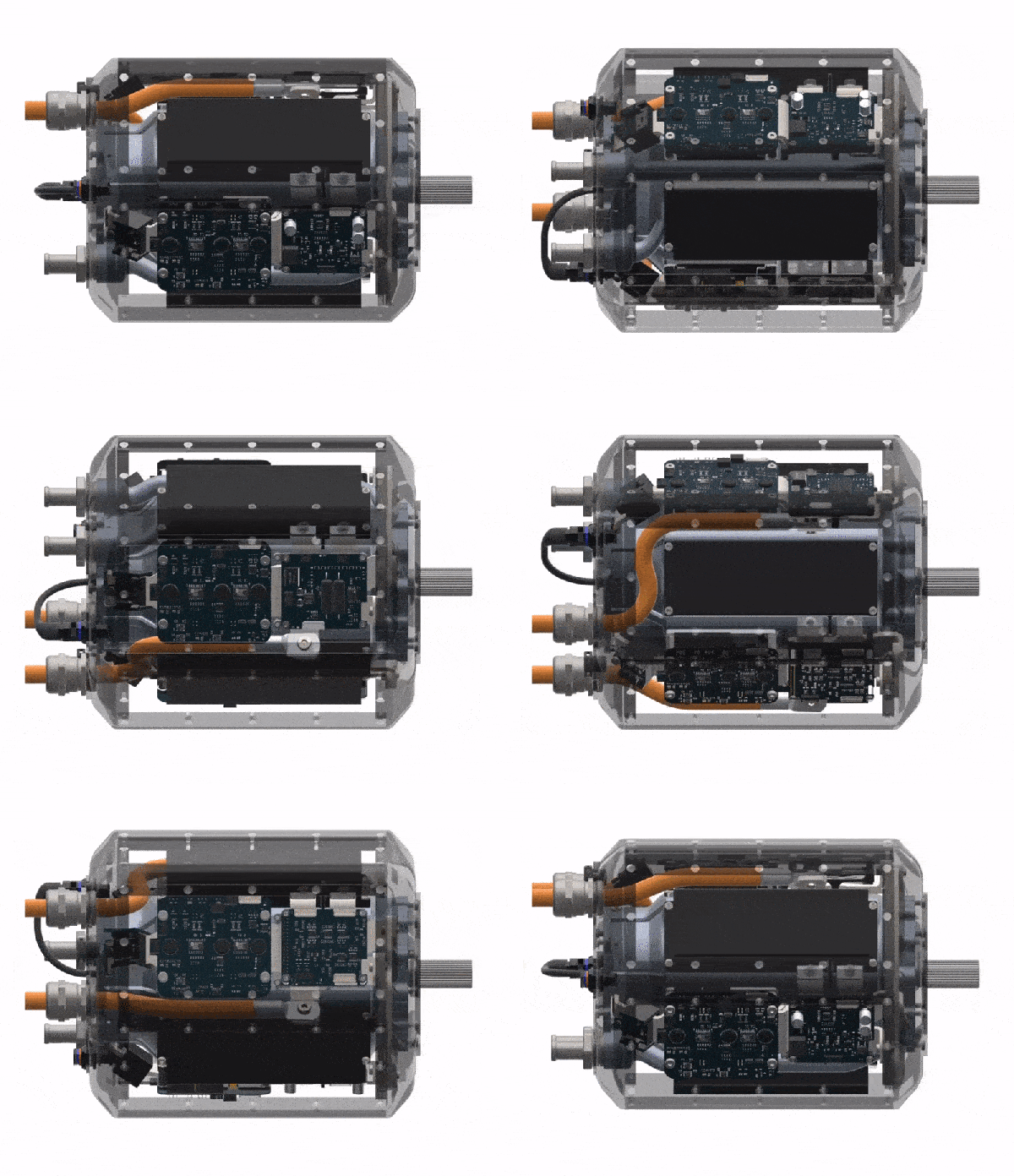
Airplanes and spacecraft have a big problem. The more engine or fuel you have, the more engine and fuel you need. That’s why aircraft use techniques to have lightweight structural members and do everything they can to minimize weight. A lighter craft can go further and carry more payload or supercargo. Electric motors are very attractive for aircraft, but they suffer from having less efficiency per kilogram than competing technologies. H3X thinks they can change that with their HPDM-250 integrated motor and inverter.

Although the 15 kg motor is still in testing, the claimed specifications are impressive: a peak power of 250 kW for 30 seconds and continuous torque of 95 Nm and 200 kW sustained. The company claims 96.7% efficiency. The claims are for the motor running at 20,000 RPM, so you’d need to add the weight of a gearbox for practical applications, but the company says this adds a mere 3 kg to the overall weight.

Continue reading “3D Printed Electric Motor Wants To Take Flight”

Magnifying On The Cheap

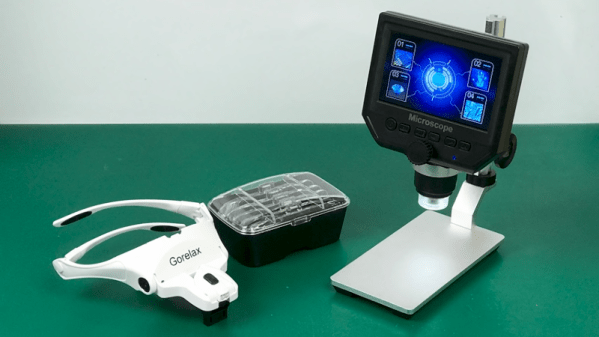
If there is one thing we’ve learned during several years of running the Hackaday SMD soldering challenge it is this: Most people need magnification to do good soldering at a tiny scale. The problem is, like most tools, you can buy something as cheap as a $5 binocular headset or you can spend $1,000 or more on a serious microscope. What’s in between? [Noel] looks at some affordable options in a recent video that you can see below.

[Noel] started out with a cheap “helping hand” that has a simple little magnifying glass attached to it. The major criterion was to find something that would have no delay so he could solder under magnification. While it is possible to work under a scope with a little lag in the display, it is frustrating and there are better options.

Continue reading “Magnifying On The Cheap”

Portable Ham Antenna Uses SMD Capacitors

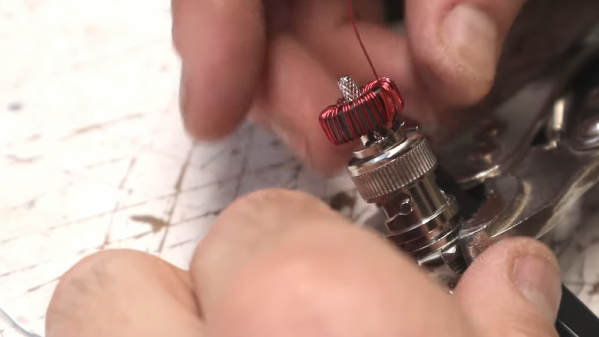
[K6ARK] likes to operate portable, so he puts together very lightweight antennas. One of his latest uses tiny toroids and SMD capacitors to form trap elements. You can see  the construction of it in the video below.

You usually think of toroid winding as something you do when building transmitters or receivers, especially small ones like these. We presume the antenna is best for QRP (low power) operation since the tiny core would saturate pretty quickly at higher power. Exactly how much power you should pass through an FT50-43 core depends on the exact application, but we’ve seen numbers around 5 watts.

Continue reading “Portable Ham Antenna Uses SMD Capacitors”