Solder To Aluminum

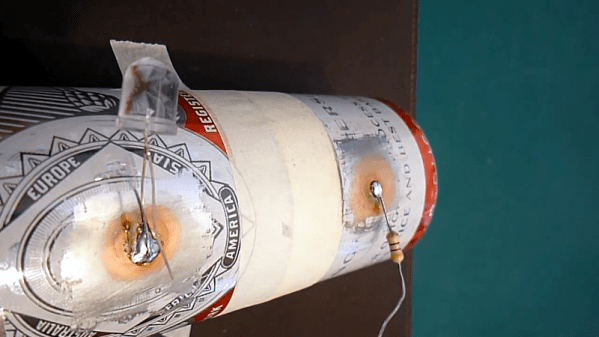
If you’ve ever tried to solder to aluminum, you know it isn’t easy without some kind of special technique. [SimpleTronic] recently showed a method that chemically plates copper onto aluminum and allows you to solder easily. We aren’t chemists, so we aren’t sure if this is the best way or not, but the chemicals include salt, copper sulfate (found in pool stores), ferric chloride as you’d use for etching PCBs, and water.

Once you have bare aluminum, you prepare a solution from the copper sulfate and just a little bit of ferric chloride. Using salt with that solution apparently removes oxidation from the aluminum. Then using the same solution without the salt puts a copper coating on the metal that you can use for soldering. You can see a video of the process below.

Continue reading “Solder To Aluminum” →

Learning About VNAs

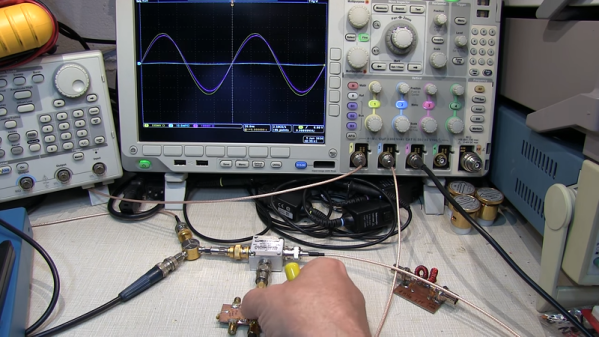
We live in a good time to be an electronics geek. It used to be only the richest or shrewdest among us had a really good oscilloscope, while these days it is entirely feasible to have a scope that would have cost a fortune a few decades ago, a logic analyzer, arbitrary waveform generator, and what would have once been a supercomputer and still not be in debt. One of the cooler pieces of gear for people working on RF electronics is a vector network analyzer (VNA) which used to be exotic, but now can be bought for very little. But what do you do with it? [W2AEW] has the answer.

We always look forward to a video from [W2AEW]. Even if we know about the subject he covers, we usually pick up something new or interesting. Like all of his videos, this one is intensely practical. Not a lot of drawing but plenty of scope shots and experimenting.

Continue reading “Learning About VNAs” →

The Sound Of Silence: Speed Up Your Video Consumption

There’s a lot of interesting content produced on video these days. Invariably, though, when we post something some comments will appear lamenting that a video isn’t the most efficient way to disseminate technical information. We have mixed feelings. Some things benefit from being able to see, for example, a screencast. Some people like the human connection of seeing an instructor interact with a class instead of just reading. But we will admit that sometimes a video takes longer to watch, especially if it is full of pauses. Unsilence is a tool from [labmoellertim] that can fix that. The command line tool takes a video and strips out the parts that are silent. You can also use it as a Python library if you want to build your own tools using the technique.

If you’ve ever taken a class online, it isn’t uncommon to speed up a video so you can get through class faster. This works to a point, but removing or speeding up silent gaps means you don’t have to “listen faster.” Of course, you could still speed up the video, too.

Continue reading “The Sound Of Silence: Speed Up Your Video Consumption” →

Soon… Inkjet Your Circuit Boards

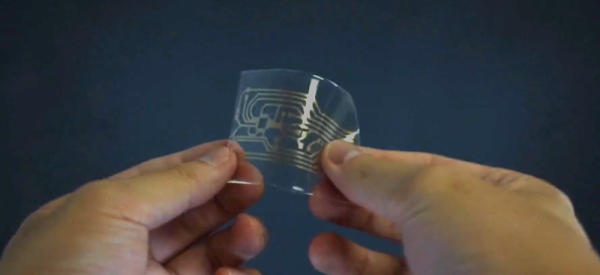
Printed circuit board fabrication — especially in basements and garages — have been transformed by the computer revolution. Before that, people would use a permanent marker or little decals to layout circuit boards prior to etching. Sometimes, they’d do it on film and use a photo process, but they did make decals that you applied directly to the board to resist the etch. Now a team from Georgia Tech, University of Tokyo, Carnegie Mellon, and the University of Nebraska has brought things full circle. Their process inkjet prints silver traces on a substrate that they can then transfer to a circuit board — no etching required.

They start with a standard Epson inkjet with cartridges that have silver-bearing ink. The patterns print on a transfer paper that ensures the particles fuse so there’s no sintering step required to make sure the traces are all conductive. A sticky backing is applied and peels the pattern off the transfer paper. You can see more in the video below.

Continue reading “Soon… Inkjet Your Circuit Boards” →

Testing Hardware With ASCII Waveforms

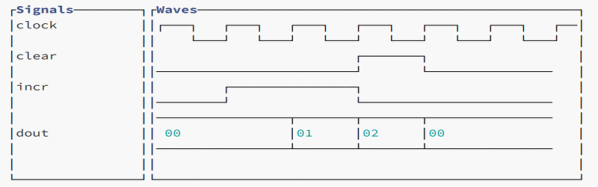
Testing software is — sometimes — easier than testing hardware. After all, you can always create test files and even fake user input before monitoring outputs using common tools. Hardware though, is a bit different. Sometimes it is hard to visualize exactly what’s happening. [Andrew Ray’s] answer? Produce simulated waveforms using ASCII text.

The process uses some custom tools written in OCaml, but the code is available for you on GitHub. The tool, called Hardcaml, allows you to write test benches for hardware — not a new idea for FPGA developers. The output, however, is an ASCII text waveform and common software development tools can check that waveform against the expected output.

Continue reading “Testing Hardware With ASCII Waveforms” →

New Microscope Directly Images Protein Atoms

There’s an old joke that you can’t trust atoms — they make up everything. But until fairly recently, there was no real way to see individual atoms. You could infer things about them using X-ray crystallography or measure their pull on tiny probes using atomic force microscopes, but not take a direct image. Until now. Two laboratories recently used cryo-electron microscopy to directly image atoms in a protein molecule with a resolution of about 1.2 x 10⁻⁷ millimeters or 1.2 ångströms. The previous record was 1.54 ångströms.

Recent improvements in electron beam technology helped, as did a device that ensures electrons that strike the sample travel at nearly the same speeds. The latter technique resulted in images so clear, researchers could identify individual hydrogen atoms in the apoferritin molecule and the water surrounding it.

Continue reading “New Microscope Directly Images Protein Atoms” →

Ancient History Of The Phone Jack

While watching a video about old radios from the 1920s, a phone jack popped up. The host mentioned that phone jacks are super old and he wondered what was their origin. I always assumed they had something to do with the telephone system, and that’s right, but I had no idea how old they really are and how they’ve evolved. Turns out the venerable plug goes back to at least 1878.

Keep in mind, I’m talking about the good old fashioned 1/4″ phone jack with two wires. Over time, the jack and plug have spawned different versions with more wires and — particularly — smaller dimensions. The headphone jack that many smartphone makers are dropping is a direct descendant of that old phone jack. But a mono cable like you would see connecting an electric guitar or another mono source would be right at home connected to a 1900s switchboard. Let’s take a look at the origins of a design that’s almost 150 years old and still in use.

Continue reading “Ancient History Of The Phone Jack” →