PhD Crystal Radio Has Pizza Capacitor

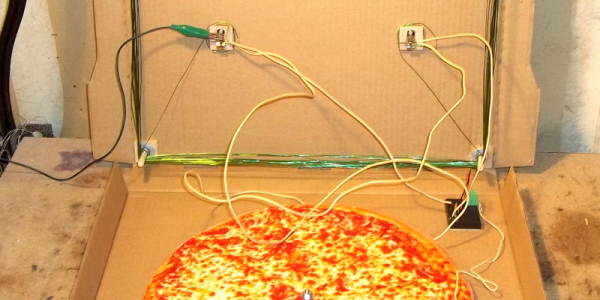
Crystal radios are old news, but great fun. What would happen if a PhD designed a crystal set? By PhD we mean Pizza Hut Deliveryperson and [John Greenlee] (who may not actually be a PhD of either kind; we don’t know) gives us a good idea with his crystal radio in a pizza box.

Pizza boxes aren’t the only food-related material in this radio. [John] makes a tuning capacitor out of cake rounds. Coincidentally, he decorates the tuning capacitor to look like a pizza.

The schematic itself is unremarkable–just a common crystal set. But the construction of the chassis and the capacitor make it an interesting project. If you know a young person that has any interest in radio, a crystal receiver is a rite of passage you shouldn’t deny them and this one is certainly a novelty. The picture of a pizza takes it even one step further than this YouTube build, which is nonetheless a good resource.

The instructions are well done, although some of the parts may be slightly hard to find. Germanium diodes and high-Z earphones are not as plentiful as they used to be, although you can still find them if you look.

This pizza box rig could be a gateway drug to more serious crystal radios. Or you could go smaller and try building one in a match box.

Smart AC Monitoring: Without The $500 Price Tag

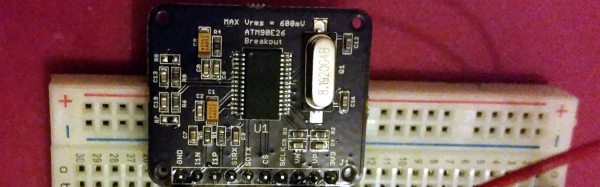
[Tisham Dhar] has been interested in monitoring AC power and previously built a breakout board for the ADE7763. He wanted to find something cheaper and more modern. The ATM90E26 fit the bill. It can communicate via a UART or SPI, and has multiple metering modes. The problem? The evaluation module from Atmel costs about $500 (and for [Dhar] $800 Australian), although the part itself can be had for under a buck in bulk. (Atmel even sent him three samples for free.)

[Dhar] put the low voltage components from the reference design on a PCB and pocketed the difference in cost. So far, he’s tested the setup with a Teensy and low voltage measurements only. He plans to do a full test soon.

The test setup uses SPI mode 3 to talk to the processor. You can find the relevant code on GitHub.

We see a lot of energy monitoring projects go by. Of course, working on household wiring current can be dangerous, so be careful out there.

Sweet 3D Printer

Dylan’s Candy Bar is an upscale sweet shop in Manhattan. In a stunning proof that 3D printing has become buzzword-worthy, they’ve announced a deal with Katjes Magic Candy Factory to bring four 3D gummy printers to the US (specifically, to New York, Chicago, Los Angeles, and Miami).

The device looks a bit like a classic 3D printer, but it extrudes eight different gummis in a variety of flavors. The store offers twenty designs but you can also print text or your own drawings (including, apparently, your face).

Each creation costs about $20. Time will tell if this is just a stunt, or if we are going to see food printers cropping up at a mall near you. You can see a video they posted to Twitter below along with a video from the product roll out of the printer in question.

Continue reading “Sweet 3D Printer” →

Hacking For Good: Watly

Here at Hackaday, we often encourage people to hack for the greater good through contests. Sure, it is fun to create a wireless barbeque thermometer or an electronic giant foam finger. At the end of the day, though, those projects didn’t really change the world, or maybe they just change a little corner of the world.

I recently saw a commercial device that made me think about how more hacker-types (including myself) ought to be working more on big problems. The device was Watly. The Italian and Spanish start up company claims the car-sized device is a “solar-powered computer.” No offense to them, but that’s the worst description for Watly that you could pick and still be accurate.

So what is Watly? It looks like some sort of temporary shelter or futuristic campsite equipment. However, it contains an array of solar cells and a very large battery. I know you are thinking, “Great. A big solar charger. Big deal.” But there’s more to Watly then just that.

The first Watly rolled out in Ghana, in Sub-Saharan Africa. About 67% of the population there–over 600 million people–do not have electricity. Nearly 40% do not have safe water. Watly uses a graphene-based filter and then uses its electricity to distill safe drinking water by boiling it. The company claims the device can deliver about 5,000 liters of safe drinking water per day.

If you read Hackaday, it is a good bet you have easy access to safe drinking water, electricity, and Internet. Think for a minute what it would be like if you didn’t. Here on the Gulf Coast of the United States, we sometimes have hurricanes or other storms that show us what this is like for a week or two. But even then, people come with water in trucks or cans. Generators show up to let you run your fridge for a few hours. Even more important: you know the situation is only temporary. What if you really thought those services would never be restored?

The portable device can provide power, water, and wireless Internet service and can last for 15 years. Watly intends to create a larger version with even more capacity.  The project received funding from the EU Horizon 2020 program that we’ve mentioned before. Creating clean water is something that can help lots of people. So is using less water. If you want some more inspiration for tackling water problems, we’ve got some links for you.

Shower Thoughts In Your Car

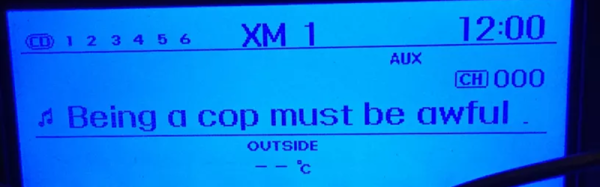
The subreddit for Shower Thoughts offers wisdom ranging from the profound to the mundane. For example: “Every time you cut a corner you make two more.” Apparently, [Harin] has a bit of an addiction to the subreddit. He’s been sniffing the CAN bus on his 2012 Hyundai Genesis and decided to display the top Shower Thought on his radio screen.

To manage the feat he used both a Raspberry Pi and an Arduino. Both devices had a MCP2515 to interface with two different CAN busses (one for the LCD display and the other for control messages which carries a lot of traffic.

The code is available on GitHub. There’s still work to do to make the message scroll, for example. [Harin] has other posts about sniffing the bus, like this one.

We’ve covered CAN bus quite a bit, including some non-automotive uses. We’ve even seen the CAN bus for model railroading.

I’m Sorry Dave, I Only Say 28 Phrases

A few years ago, you could buy an IRIS 9000 Bluetooth speaker. Its claim to fame was that it looked like the “eye” from the HAL 9000 computer on 2001: A Space Oddessy. There’s something seductive about the idea of having a HAL eye answer your queries to Google Now or Siri. The problem is, it still sounds like Google or Siri, not like HAL.

[Badjer1] had the same problem so he decided to build his own eye. His goal wasn’t to interface with his smartphone’s virtual assistant, though. He settled on making it just be an extension cord with USB ports. As you can see in the video below, the build has HAL-style memory units, a key, and can speak phrases from the movie (well, 28 of them, at least). The key is like the one Dave used to deactivate HAL in the movie.

Continue reading “I’m Sorry Dave, I Only Say 28 Phrases” →

Digital Wind Chimes

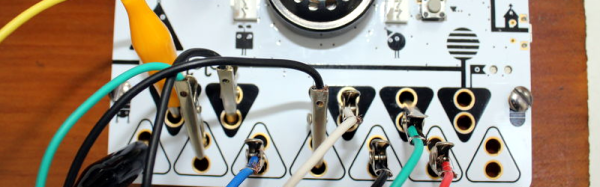
Quality wind chimes are not cheap. No matter how much you spend, though, they generally sound the same year after year. If that bothers you, maybe [sensatroniclab] can help. They’ve posted a simple design for a digital wind chime using the Ototo music generator.

The Ototo is reasonably priced and promises to let you make music from anything (well, anything conductive, anyway).  Because the Ototo handles all the music production, the only real building part of the project is the wind sensors. The sensors are made with conductive fabric with a marble at the end for weight.

In the video below you can see [Matthew Ward] talk about the device and actually play it like you might a harp. This would be a good school project owing to the simplicity of using the Ototo, although [sensatroniclab] is actually working on accessibility music projects.

Continue reading “Digital Wind Chimes” →