ESP8266 Transmits Television On Channel 3

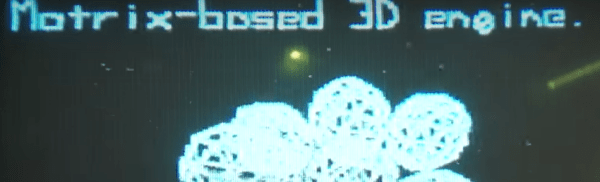
We’ve seen a lot of ESP8266 projects in the past, but this one most definitely qualifies as a hack. [Cnlohr] noticed that the ESP8266, when overclocked, could operate the I2S port at around 80MHz and still not lose DMA data. He worked out how to create bit patterns that generate RF around 60MHz. Why is that interesting? Analog TVs can receive signals around that frequency on channel 3.

As you can see in the video below, the output is monochrome only and is a little snowy. It also will lose frames on some WiFi events, but this is all forgivable when you consider this very inexpensive module isn’t meant to do video output at all.

Continue reading “ESP8266 Transmits Television On Channel 3” →

The Infinite Monkey Cage And General Relativity

If you are British, you probably already know where this is going. For the rest of you, it might help to know that The Infinite Monkey Cage is an odd little show on BBC  Radio 4 (and they’ve been on tour, too). It is the show that asks a question you probably never asked: “What would happen if a physicist and a comedian had a radio show?”

The answer, it turns out, is some science information that is anything but dry. If you are prone to listening to radio programs or podcasts, you might find some interesting tidbits in the Cage. A two-part episode on general relativity was especially interesting although it isn’t exactly like their regular program.

The physicist in question is [Brian Cox] who is an Advanced Fellow of particle physics at the University of Manchester. The comic, [Robin Ince] is not only a comedian, but also a writer, an impressionist, and has an honorary doctorate from Royal Holloway, University of London.

If you poke around the BBC’s site, you can find plenty of episodes to stream or download. General relativity is just one of the topics. You might also enjoy episodes on artificial intelligence or the science of sound.

If you need more comedy connections, consider that [Eric Idle] is responsible for the theme song. Of course, we cover relativity (and other topics) in a hopefully amusing style. Americans typically get British humor, or they don’t.  There’s no in between. The good part about these is that if you don’t get the humor, there’s still the science content. Contrast this to the very funny (if you get it) Look Around You series that is probably not the best place to get scientific information (see the video below).

Continue reading “The Infinite Monkey Cage And General Relativity” →

Back To The Drawing Board

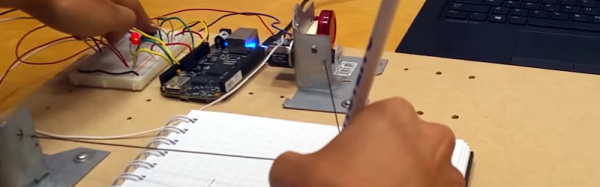
Ever try signing your name with a mouse or a trackball? Not so easy. You could buy a graphics tablet with a pen. [Rahul Ramakrishnan] has a different approach. He took two 10-turn pots, and attached some strings and a washer. A pencil goes through the washer, and a BeagleBone Black reads the pots to determine what it is drawing on the paper. A couple of retractable badge lanyards keep tension on the string.

This ingenious design would be easy enough to replicate with any microcontroller that can read the two pots. The only awkward part is the need to press a button down when you want the device to treat the pencil as down (see the video below). It would probably be easy to rig up some switch on the pencil to make operation a little smoother.

Continue reading “Back To The Drawing Board” →

The Price Of Space

Many engineers of a certain age have one thing in common: Their early interest in science and engineering came from watching the US and Russian space programs. To me, regardless of any other benefit from the space program (and there are many), that ability to inspire a future generation of engineers made the entire program worthwhile.

We live in a world where kids’ role models are more likely to be sports or entertainment figures that have regular visits to police stations, jails, and rehab centers. The value of having role models that “do science” is invaluable.

This time of the year is a dark time for NASA missions, though. On January 27, 1967, the Apollo I crew (Grissom, White, and Chaffee) died in a fire. The investigation led to NASA limiting how much Velcro you can use in a cabin and moving away from pure oxygen in the cabin.

Continue reading “The Price Of Space” →

Two Portable Oscilloscopes: Shootout

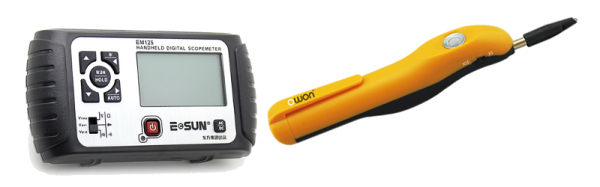
Last time I introduced you to two relatively inexpensive and somewhat portable scopes: the EM125, which is a cross between a digital voltmeter and an oscilloscope, and the Wave Rambler, which is a scope probe with a USB connector attached. Both of the devices cost about $100, and both have their plusses and minuses.

This time, though, I wanted actually to look at some real-world signals. To make that easy, I grabbed yet another scope-like thing I had handy: an Embedded Artists Labtool. This is an interesting board in its own right. It is an LPC-Link programmer attached to an LPC ARM board that has several high-speed A/D channels. However, I’m not using any of that capability for now. The board also has a cheap ARM processor (an LPC812) on it that serves only to generate test signals. The idea is you can use the Labtool in a classroom with no additional equipment.

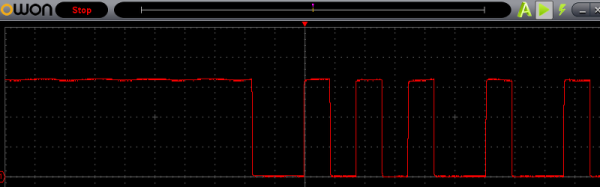
The Labtool’s demo CPU generates a lot of different signals, but with only one channel on the test scopes, it didn’t make sense to look at, for example, I2C data. So I stuck with two different test signals: a varying pulse width modulation signals and a serial UART transmitter.

Continue reading “Two Portable Oscilloscopes: Shootout” →

Warbots: Is It Already Too Late?

In 1971, a non-profit formed that holds the World Economic Forum each year. The Forum claims it “Engages the foremost political, business and other leaders of society to shape global, regional and industry agendas.” This year, the Forum hosted a session: What If: Robots Go To War? Participants included a computer science professor, an electrical engineering professor, the chairman of BAE, a senior fellow at the Vienna Center for Disarmament and Non-Proliferation, and a Time magazine editor.

Continue reading “Warbots: Is It Already Too Late?” →

A Tale Of Two (Sub $100) Oscilloscopes

Hi, I’m Al, and I’m an oscilloscope-holic. Just looking around my office, I can count six oscilloscope or oscilloscope-like devices. There are more in my garage. If you count the number of scopes I’ve owned (starting with an old RCA scope with a round tube and a single vertical scale), it would be embarrassing.

On the other hand, if you are trying to corral electrons into doing useful things, a scope is a necessity. You can’t visualize what’s happening in a circuit any better than using an oscilloscope. Historically, the devices were expensive and bulky. I’ve had many Tektronix and HP scopes that stayed in one place, and you brought what you were working on to them (sometimes called a “boat anchor”). It wasn’t that long ago that one of my vintage Tek scopes had its own dedicated cart so I could wheel it to where it was needed.

These days, scopes are relatively cheap, depending on what you have in mind for performance. They are also highly portable, which is nice. In fact, it is an indication of how spoiled I’ve become that my main bench scope–a Rigol DS1104Z–weighs seven pounds, yet I still look for something smaller for quick jobs.

That’s how I came into possession of two cheap scopes I wanted to talk about. They are similar in ways but different in others. Neither are going to replace a real bench scope, but if you want something portable, or you are budget-limited, they might be worth a look.

Continue reading “A Tale Of Two (Sub $100) Oscilloscopes” →