Robo Car Via 3G

[Emil Kalstø] has a pretty solid remote control car. We don’t mean a little car with a handheld remote you can drive around the neighborhood. [Emil’s] car has a camera and a cell phone so that it can go anywhere there’s 3G or 4G networking available.

The video (see below) shows the results (along with [Emil’s] little brother acting as a safety officer). The video offers tantalizing detail you might find useful if you want to reproduce a similar vehicle. However, it stops short of providing complete details.

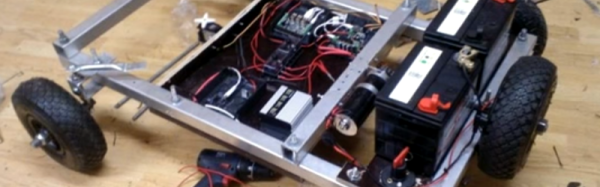
The two batteries onboard will power the vehicle for over 20 hours of continuous use. The 30W motor is reduced with a chain drive to go about “walking speed.” There’s a Raspberry Pi with a Huawei 3G USB dongle onboard and [Emil] uses an XBox controller to do the steering from the warmth of his living room. Of course, a Pi can’t handle a big motor like that directly, so a Phidgets USB motor controller does the hard work. The software is written using Node.js.

The camera mount can swivel 230 degrees on a servo so that the operator can scan the road ahead. The video mentions that steering the car required a heavy-duty servo with metal gears (an earlier attempt with nylon gears didn’t work out).

Overall, it looks like a solid build. We hope [Emil] will share code and more details soon. If you can’t wait (and your insurance is paid up), you might have a go at an even bigger car. Surprisingly, there’s more than one example of that.
Continue reading “Robo Car Via 3G” →

A DOS Education In Your Browser

In the 1970s and 1980s, a lot of us learned to program using good old-fashioned BASIC on machines ranging from Altairs, Commodores, Apple IIs, and the like. Sometime in the 80’s the IBM PC running MSDOS because the de facto standard, but it was still easy enough to launch BASIC and write a simple little program. Of course, there were other programs, some serious like C compilers, some semi-serious like flight simulators, and some pure fun like Wolfenstein 3D.

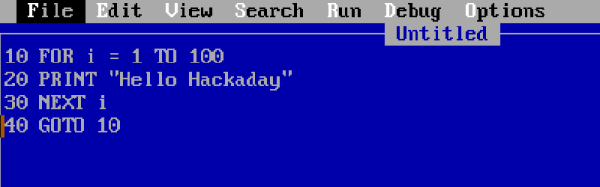
If you read Hackaday, you’ve probably noticed that a lot of people emulate old computers–including old MSDOS PCs–using a variety of techniques, including Raspberry PI boards running DOSBox or another emulator. Honestly, though, that’s a lot of effort just to run some old software, right? You can load up DOS emulators on your desktop too. That’s a little easier, but you still have to find software. But if you are as lazy as we are, you might want to check out the MSDOS collection at archive.org.

Continue reading “A DOS Education In Your Browser” →

Power From Paper

Comedian Steven Wright used to say (in his monotone way):

“We lived in a house that ran on static electricity. If we wanted to cook something, we had to take a sweater off real quick. If we wanted to run a blender, we had to rub balloons on our head.”

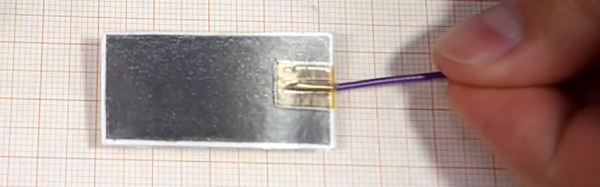
Turns out, all you need to generate a little electricity is some paper, Teflon tape and a pencil. A team from EPFL, working with researchers at the University of Tokyo, presented just such a device at a MEMS conference. (And check out their video, below the break.)

Continue reading “Power From Paper” →

Super Thin ICs Are Coming

An ordinary integrated circuit is made of layers of material. Typically a layer is made from some material (like silicon dioxide, polysilicon, copper, or aluminum). Sometimes a process will modify parts of a layer (for example, using ion implantation to dope regions of silicon). Other times, some part of the layer will be cut away using a photolithography process.

Researchers at MIT have a new technique that allows super thin layers (1-3 atoms thick) and–even more importantly–enables you to use two materials in the same layer. They report that they have built all the basic components required to create a computer using the technique.

Continue reading “Super Thin ICs Are Coming” →

Need A Nano-Ammeter? You Already Have One!

[Dannyelectronics] sometimes needs to measure tiny currents. Really tiny, like leakage currents through a capacitor. He’s built a few setups to make the measurements, but he also knew he’d sometimes want to take readings when he didn’t have his custom gear available. So he decided to see what he could do with an ordinary digital meter.

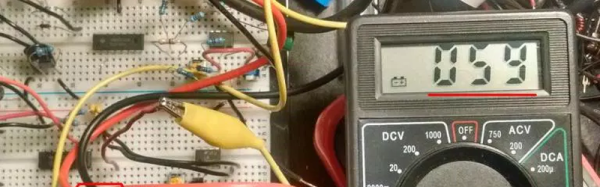
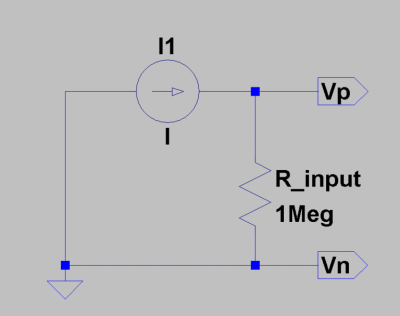
dmm-nano-ammeterAs you might expect, a common digital meter’s current scales aren’t usually up to measuring nano- or pico-amps. [Danny’s] approach was not to use the ammeter scale. Instead, he measures the voltage developed across the input impedance of the meter (which is usually very high, like one megaohm). If you know the input characteristics of the meter (or can calibrate against a known source), you can convert the voltage to a current.


For example, on a Fluke 115 meter, [Danny] found that he could read up to 60nA with a resolution of 0.01nA. A Viktor 81D could resolve down to 2.5pA–a minuscule current indeed.

We’ve looked at the difficulties involved in reading small currents before. If tiny currents aren’t your thing, maybe you’d like to try charging an iPhone with 3 KA, instead.

London Tries Smart Cities

What’s a smart city? According to Wikipedia, a smart city uses ICT (information and communication technologies) to enhance quality, performance, and interactivity of urban services while reducing costs and resource consumption. Hackers have been using technology to enhance all sorts of things for years.

London is joining forces with cities across Europe to demonstrate smart city technology, mostly in the Royal Borough of Greenwich. The project is in conjunction with the EU Horizon 2020 project, which is still soliciting proposals for funding. It seems like some Hackaday readers–especially in the EU–ought to have some ideas worth funding.

Continue reading “London Tries Smart Cities” →

Crosswords Help You Learn Regular Expressions

Regular expressions might seem arcane, but if you do any kind of software, they are a powerful hacker tool. Obviously, if you are writing software or using tools like grep, awk, sed, Perl, or just about any programming language, regular expressions can simplify many tasks. Even if you don’t need them directly, regular expression searches can help you analyze source code, search through net lists, or even analyze data captured from sensors.

If you’ve been using regular expressions for a long time, they aren’t very hard. But learning them for the first time can be tedious. Unless you try your hand at regular expression crosswords. The clues are regular expressions and the rows and columns all have to match the corresponding regular expressions.

Continue reading “Crosswords Help You Learn Regular Expressions” →