Data Logging In The Picoampere Range

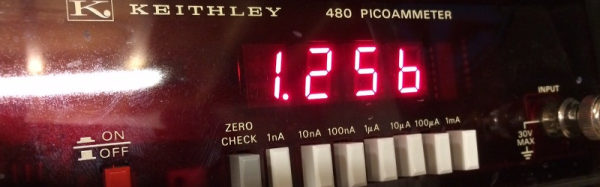
You probably know that to transfer the most energy between a source and a load their impedance needs to match. That’s why a ham radio transmitter needs a 50 ohm antenna (at least, usually). The transmitter is 50 ohms and you want a match. Some test equipment matches impedance, but for multimeters, oscilloscopes and a lot of other gear, the instrument just presents a very large impedance. As long as it is much larger than the measured circuit’s impedance, the effect will be small.

With today’s MOSFET instrumentation amplifiers, it isn’t uncommon to see very high input impedances.  However, you sometimes run into something that has a low input Z and that can cause issues if you don’t account for them. On the other hand, where some people see issues, others see opportunities.
Continue reading “Data Logging In The Picoampere Range”

Raspberry Pi Halt And Catch… Well, Halt

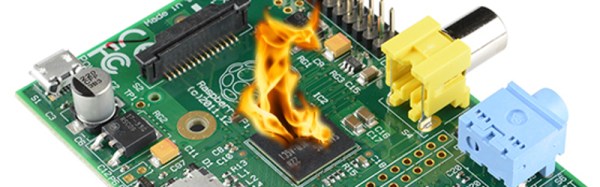
As far back as we can remember, there have always been hacks, exploits, and just curiosity about undocumented CPU instructions. The Z80 had them. Even the HP41C calculator had some undocumented codes. The HCF (Halt and Catch Fire) instruction was apocryphal, but we always heard the old video controller chips could be coaxed into blowing up certain monitors. You don’t hear too much about things like that lately, perhaps because fewer people are working in assembly language.

[Sergi Àlvarez i Capilla] not only works in assembly language, he was writing an ARM assembler when he noticed something funny. Instructions are built in a regular pattern and some of the patterns were missing. What to do? [Sergi] lost no time trying them out.

Continue reading “Raspberry Pi Halt And Catch… Well, Halt”

VirtualBench Tear Down

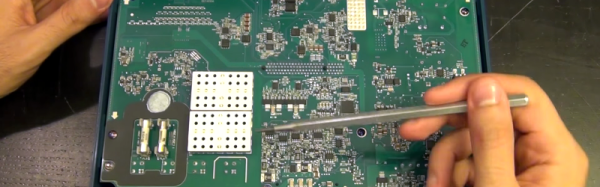
What do you get when you cross a mixed-signal oscilloscope, a function generator, a multimeter, a power supply, and some programmable digital I/O in a box? Sounds like the set up to a very geeky joke, but it is actually National Instrument’s VirtualBench product. [Shahriar] has one and wanted to know what was inside, so he did a tear down.

Continue reading “VirtualBench Tear Down”

Breadboards Go To Pot

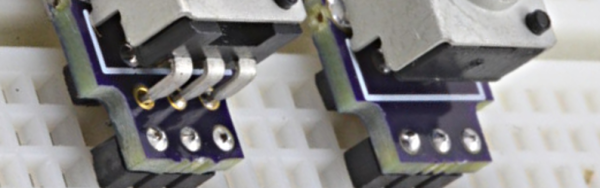
Solderless breadboards are great for ICs and discrete components like resistors, capacitors, and transistors (at least the through hole kind). They aren’t so good at holding big components like potentiometers. Sure, you can jam trimmers in maybe. You can also solder leads to a pot, but that’s not pretty and tend to pull out when handled. [PaulStoffregen] got tired of it, so he put together some good looking PC boards that mount a 6mm shaft pot securely to a breadboard.

[Paul] noticed that having delicate or knobless adjustments on a breadboard inhibited people from playing with demo circuits. The new set up invites people to make adjustments. The pictures and video show an early version with six pins, but [Paul] added two more pins on the recent batch to increase the grip of the breadboard.

Continue reading “Breadboards Go To Pot”

Transfer Data Via YouTube

The original steganography technique dates back to 440 BC (according to Wikipedia) when a Greek wrote secret messages on a piece of wood, covered it in wax, and then wrote innocent text on the wax. The term, in general, means hiding a message in something that looks harmless. The LVDO project (and a recent Windows fork) says it is steganography, but we aren’t quite sure it meets the definition. What it does is converts data into a video that you can transfer like any other video. A receiver that knows what LVDO parameters you used to create the video can extract the data (although, apparently, the reproduction is not always completely error-free).

The reason we aren’t sure if this really counts as steganography is that–judging from the example YouTube video (which is not encoded)–the output video looks like snow. It uses a discrete cosine transform to produce patterns. If you are the secret police, you might not know what the message says, but you certainly know it must be something. We’d be more interested in something that encodes data in funny cat videos, for example.

Continue reading “Transfer Data Via YouTube”

Metal 3D Printing With Your Printer

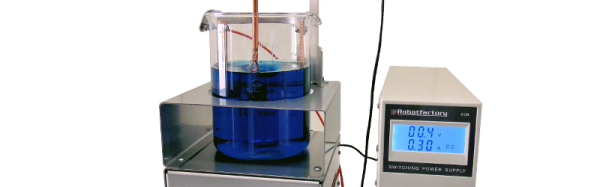
Over in Italy, [Robotfactory] has a new setup called CopperFace that they claim allows you to essentially electroplate 3D printed objects with a metal coating using copper, nickel, silver, or gold.

We’ve talked about electroplating on plastic before, but that technique required mixing graphite and acetone. The CopperFace kit uses a conductive graphite spray and claims it deposits about 1 micron of plating on the object every two minutes.

We couldn’t help but wonder if the graphite spray is just the normal stuff used for lubricant. While the CopperFace’s electroplating tech seems pretty standard (copper sulfate and copper/phosphorus electrodes), we also wondered if some of the simpler copper acetate process we’ve covered before might be workable.

Continue reading “Metal 3D Printing With Your Printer”

MIT’s Glass 3D Printer

How hot does your 3D printer’s hot end get? Most low cost printers heat up to 240°C (464°F) at the most because they contain PEEK which starts to get soft if you go much higher. Even a metal hot end with active cooling usually won’t go much higher than 400°C (752°F). Pretty hot, right? [MIT’s] new G3DP printer goes to 1900°F (over 1000°C) and prints optically clear glass.

By changing design and print parameters, G3DP can limit or control light transmission, reflection and refraction. The printer uses a dual heated chamber. The upper chamber acts as a 1900°F kiln while the lower chamber serves to anneal the structures. The print head is an alumina-zircon-silica nozzle.

Continue reading “MIT’s Glass 3D Printer”