Better Living Through Science: Why Your Kids Probably Aren’t Getting Measles

Oddly, there’s been a few recent outbreaks of measles. It struck me how when I was a kid, a few hundred kids getting measles wouldn’t have been news at all. However, even a handful makes the news now, since in 2000 the Center for Disease Control declared measles eradicated in the United States.

So how can an eradicated disease come back? How did we eradicate it to start with? The answers tell a pretty interesting tale of science applying to everyday life.

Continue reading “Better Living Through Science: Why Your Kids Probably Aren’t Getting Measles”

3D Print Your Own Electric Screwdriver

For the odd job every now and then, a regular screwdriver does the job. However, in situations like a small production operation, it can quickly become uncomfortable to use. In these situations, an electric screwdriver is incredibly useful. There’s no need to rush out to the store, however – you can build one yourself, and [Electronoobs] did just that.

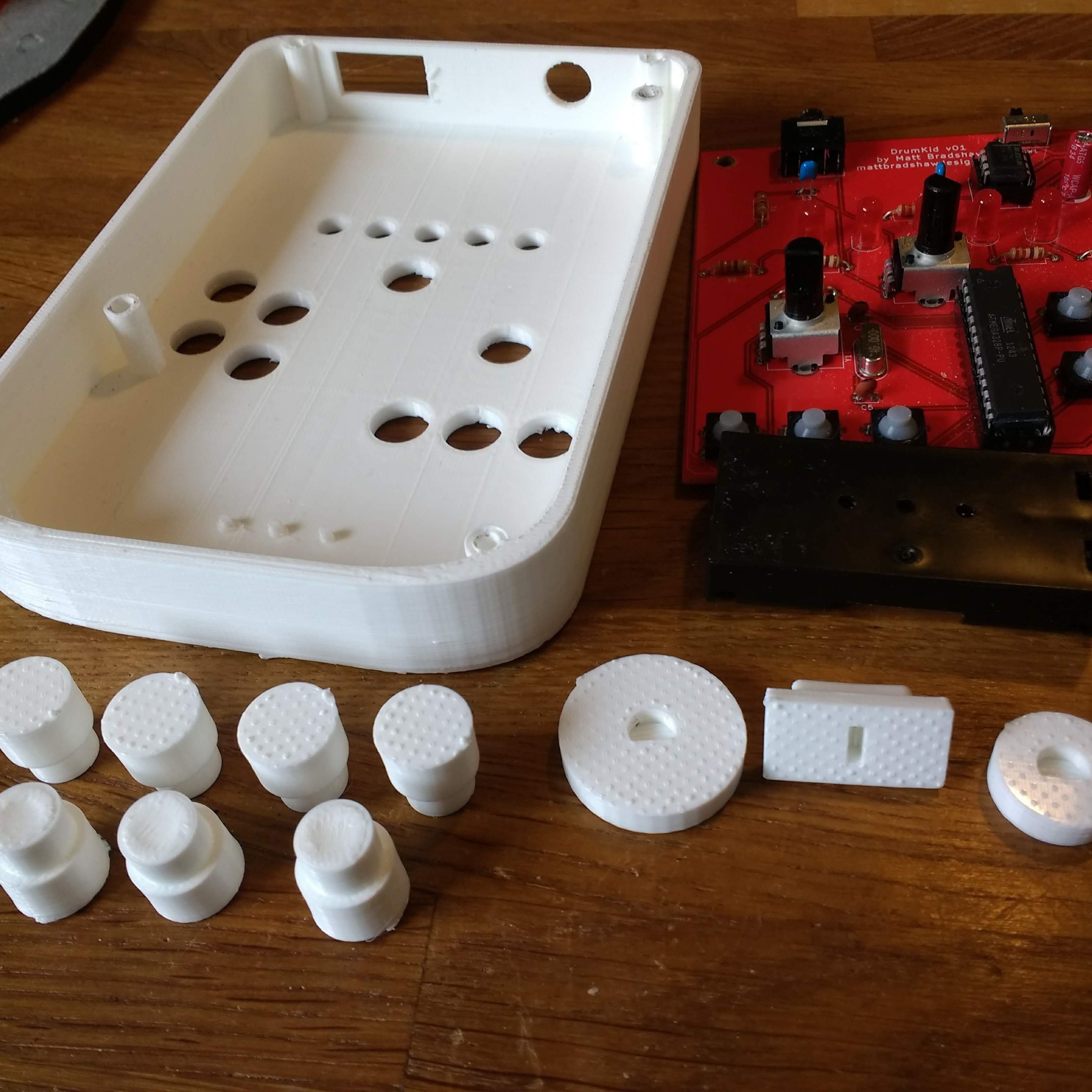
The build is simple, consisting of a series of cheap modules hooked up together. An 18650 battery provides power through a boost converter to an H-bridge motor controller, which allows the DC geared motor to be driven both forwards and backwards. There’s also a USB battery charge module, that allows the screwdriver to be recharged from a standard micro USB charger. It’s all neatly packaged in a 3D printed case with a couple of tactile buttons for forward and reverse operation.

It’s a testament to the quality of modern supply chains that one can assemble a usable tool like this at home from prepackaged modules. All the parts, including the bearing and drill chuck, were sourced from eBay.

We’ve seen servos repurposed into electric screwdrivers, too. Video after the break.

Continue reading “3D Print Your Own Electric Screwdriver”

“Good Code Documents Itself” And Other Hilarious Jokes You Shouldn’t Tell Yourself

Code documentation — is there anything more exciting than spending your time writing extensive comments? If I had to guess, your answer is probably somewhere along the lines of “uhm, yes, everything is more exciting than that”. Plus, requesting to document your code is almost like an insult to your well thought out design, this beautiful creation you implemented so carefully that it just has to be obvious what is happening. Writing about it is just redundant, the code is all you need.

As a result, no matter if it’s some open source side project or professional software development, code documentation usually comes in two flavors: absent and useless. The dislike for documenting ones code seems universal among programmers of any field or language, no matter where in the world they are. And it’s understandable, after all, you’re in it for the coding, implementing all the fun stuff. If you wanted to tell stories, you would have chosen a different path in life.

This reluctance has even formed whole new paradigms and philosophies claiming how comments are actually harmful, and anyone trying to weasel their way out of it can now happily rehash all those claims. But, to exaggerate a bit, we’re essentially villainizing information this way. While it is true that comments can be counterproductive, it’s more the fundamental attitude towards them that causes the harm here.

In the end, code documentation is a lot like error handling, we are told early on how it’s important and necessary, but we fail to understand why and instead grow to resent doing it again for that same old teacher, supervisor, or annoying teammate. But just like error handling, we are the ones who can actually benefit the most from it — if done right. But in order to do it right, we need to face some harsh truths and start admitting that there is no such thing as self-documenting code, and maybe we simply don’t understand what we’re actually doing if we can’t manage to write a few words about it.

So let’s burst some bubbles!

Continue reading ““Good Code Documents Itself” And Other Hilarious Jokes You Shouldn’t Tell Yourself”

Forget The Kiln, These Tiles Were Made On A Prusa

Where does your mind go when you think of 3D printed parts? Running off hard to find replacement components? Maybe spinning up a bespoke electronics enclosure? Occasionally the little boat that you can compare to the little boats of others online? All reasonable enough answers. But thanks to the work of [Matthew Wentworth], you might have a new mental image to associate with the smell of melting PLA: decorative Portuguese Azulejo tiles.

As difficult as it might be to believe, the tiles you’re seeing here weren’t made on some exotic ceramic printer, but a standard Prusa i3 MK3. Well, at least they started on the 3D printer. As you might have guessed, there’s a bit more involved than that.

That said, the idea is actually quite simple. The printed “tile” is just the base plate, plus the raised elements that will eventually be seen on the surface. Everything else is just a void, which naturally saves a lot on printing time and material. Once the print is done, premixed spackling paste is pushed into all of the open areas and the top is made as smooth as possible with a putty knife. The filled tile is then left to dry for 24 hours or so.

Once it’s dried, you take the tile outside and sand the top down with a palm sander (or by hand, if you have the patience). This not only smooths out the spackle, but eventually will expose and then smooth the top parts of the print. Once everything is nice and silky, it gets sprayed with a semi-gloss clear coat to both protect it and give it that authentic looking shine.

[Matthew] actually created his designs based on images of real Azulejo tiles he found online, but really any sort of image that has raised elements like this could be made to work. If anyone out there decorates their home with 3D printed Jolly Wrencher tiles, you know where to send the pictures. Interestingly, these aren’t the first tiles we’ve seen made out of plastic, but we’ve got to admit these ones would look quite a bit more appealing on your kitchen walls.

Making A Hammer With Beautiful Engravings

Tools are a key part of any maker’s pursuit of their work. For most of us, our tools come from the local hardware store or are purchased online. Some prefer to craft their own, however, and [Uri Tuchman] is just one such person.

[Uri] starts at the absolute beginning, with a piece of unfinished rectangular stock. The workpiece is marked up, and the shape of the hammer head meticulously filed out by hand. The wooden handle is similarly prepared from raw stock with a combination of planes, chisels and files.

It may not be the fastest way to work, but careful hand craftsmanship is always impressive to watch. The build also showcases [Uri]’s talent at engraving, with the complex designs all carved out of the surface a millimeter at a time. [Uri] recommends enamel paint to highlight such works, for its rich color and the ease of removing excess paint.

Where [Uri] has built a beautiful piece of art that moonlights as a hammer, it’s possible to go in completely the opposite direction with a build. Video after the break.

[Thanks to BrightBlueJim for the tip!] Continue reading “Making A Hammer With Beautiful Engravings”

The Primordial Sinclair ZX Spectrum Emerges From The Cupboard

The Centre for Computing History in Cambridge, UK, receive many donations from which they can enrich their collection and museum displays. Many are interesting but mundane, but the subject of their latest video is far from that. The wire-wrapped prototype board they reveal with a flourish from beneath a folded antistatic mat is no ordinary computer, because it is the prototype Sinclair ZX Spectrum.

It came to the museum from Nine Tiles, a local consultancy firm that had been contracted by Sinclair Research in the early 1980s to produce the BASIC ROM that would run on the replacement for their popular ZX81 home microcomputer. The write-up and the video we’ve placed below the break give some detail on the history of the ROM project, the pressures from Sinclair’s legendary cost-cutting, and the decision to ship with an unfinished ROM version meaning that later peripherals had to carry shadow ROMs with updated routines.

The board itself is a standard wire-wrap protoboard with all the major Spectrum components there in some form.  This is a 16k model, there is no expansion connector, and the layout is back-to-front to that of the final machine. The ULA chip is a pre-production item in a ceramic package, and the keyboard is attached through a D connector. Decent quality key switches make a stark contrast to the rubber keys and membrane that Spectrum owners would later mash to pieces playing Daley Thompson’s Decathlon.

This machine is a remarkable artifact, and we should all be indebted to Nine Tiles for ensuring that it is preserved for those with an interest in computing to study and enjoy. It may not look like much, but that protoboard had a hand in launching a huge number of people’s careers in technology, and we suspect that some of those people will be Hackaday readers. We’ll certainly be dropping in to see it next time we’re in Cambridge.

If you haven’t been to the Centre for Computing History yet, we suggest you take a look at our review from a couple of years ago. And if prototype home computers are your thing, this certainly isn’t the first to grace these pages.

Continue reading “The Primordial Sinclair ZX Spectrum Emerges From The Cupboard”

Reducing Carbon Emissions With Coal

It might seem like a paradox, but coal might hold the answer to solving carbon emission problems. The key isn’t burning it, but creating it using carbon dioxide from the atmosphere.  While this has always been possible in theory, high temperatures make it difficult in practice. However, a recent paper in Nature Communications shows how a special liquid metal electrocatalyst can convert the gas into a solid form of carbon suitable for, among other things, making high-quality capacitor electrodes. The process — you can see more about it in the video below — works at room temperatures.

It isn’t that hard to extract carbon dioxide from the air, the problem is what to do with it. Storing it as a gas or a liquid is inefficient and expensive, while converting it to a solid makes it much easier to store or even reuse for practical applications.

Continue reading “Reducing Carbon Emissions With Coal”