Let The Musical Instrument Challenge Begin!

Today is the start of the Musical Instrument Challenge. This newest part of the 2018 Hackaday Prize asks you to go far beyond what we’re used to seeing from modern musical instrumentation. Twenty entries will be awarded $1,000 each and go on to compete in the final round of the Hackaday Prize.

Imagine music without the electric guitar amp, violin, two turntables and a microphone, the electric drum pad, or in the absence of autotune. Maybe that last one made you groan, but autotune is a clever use of audio manipulation and when used to augment the music (rather than just to correct off-key voices) it shows its value as a new tool for creativity.

Musicians have always been hackers. The story of Brian May’s handmade guitar — the Red Special — is one of not being able to buy it, so he built it. Unlocking emotion in the listener has always meant finding new and different ways to use sound. This is a natural motivator to re-imagine and invent new ways of doing that. That first hand-built guitar got him in the door, but iterative improvements to the tremolo bar, the pickups, and even just the mechanical engineering of the neck made it a new instrument that you’ve heard in every Queen performance since.

So what’s next? What does a brand new instrument, interface, tool, or trick look like? That’s what we want to see from this Hackaday Prize challenge. From instrument makers to the people who write software for sampling, synthesizing, sequencing, and manipulating sound, we’re looking for things that let others make music. These creations are the tools of the trade that help more people unlock their musical creativity. Show off your work by sharing all the details of your design, and demonstrate the music you can make with it.

You have until October 8th to put your entry up on Hackaday.io. The top twenty entries will each get $1,000 and go on to the finals where cash prizes of $50,000, $20,000, $15,000, $10,000, and $5,000 await.


FOSSCON 2018: Hacking The Indego Bike Sharing API

It’s often said that necessity of the mother of invention, but as a large portion of the projects we cover here at Hackaday can attest, curiosity has to at least be its step-mother. Not every project starts with a need, sometimes it’s just about understanding how something works. That desire we’ve all felt from time to time, when we’ve looked at some obscure piece of hardware or technology and decided that the world would be a slightly better place if we cracked it open and looked at what spilled out.

That’s precisely the feeling Eric O’Callaghan had when he looked out the window of his Philadelphia apartment a few years back and saw something unusual. Seemingly overnight, they had built an automated Indego bike sharing station right across the street. Seeing the row of light blue bicycles sitting in their electronic docks, he wondered how the system worked, and what kind of data they might be collecting. He didn’t need to rent a bike, he hadn’t even ridden one in years, but he suddenly had a strong urge to go across the street and learn as much as he could about this system.

He recently presented those findings during FOSSCON 2018 at the International House in Philadelphia, in the hopes that others might be interested in getting involved. Currently Eric is one of the only people who’s investigating the public data Indego offers, and as his personal MySQL database has now surpassed 15 million rows of data, he’s hoping to get some developers with big data experience into the fray. His approach to making this data useful is an interesting one which I’ll dive into after the break.

Continue reading “FOSSCON 2018: Hacking The Indego Bike Sharing API”

Self Folding Origami From A 3D Printer

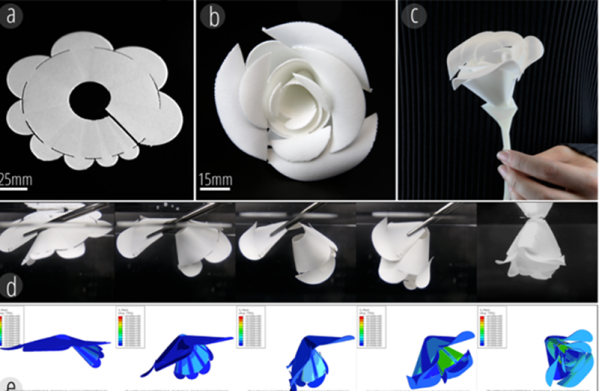
If you’ve done much 3D printing, you probably curse how plastic warps as it cools down and heats. There’s nothing more upsetting than watching a six hour print start curling off the bed and starting its inexorable march to the trash can. However, researchers at Carnegie Mellon have found a way to harness that tendency to warp with heat to make self-folding structures like those seen in the video below. There’s a paper about how it works available, too.

The Thermorph process uses commercially-available 3D printers, but requires special software. You might wonder why you would want to fold, say, a rose, when you could just print it as a fully-formed 3D model. The paper suggests that printing self-folding structures is faster and can save up to 87% on print times for the right models.

Continue reading “Self Folding Origami From A 3D Printer”

Selling Everything, Moving To Asia, And Setting Up A Company

Today I don’t have a hack for you. I have a story, one that I hope will prove useful to a few of you who are considering a move to Asia to chase opportunities here.

Seven years ago, I was a pretty stereotypical starving hacker. I had five jobs: A full-time dead-end job in biotech, and four part-time or contract gigs that were either electronic hardware design or programming. I worked perhaps 50 hours a week, and was barely past the poverty line – I was starting to wonder why I spent so much time in school. I saw the economic growth in Asia as an attractive but risky opportunity.

Check out that image above…France? No, this is Shenzhen and let’s face it: many exciting things are made there (even the copies). After a short visit to the region, I decided to take that risk but not in Shenzhen. I sold everything I owned and moved from Canada to Vietnam and started a company. Over the last seven years things have worked out well, although I certainly wish I had known more about the process before I got on a plane. This article is about the general path I took to get where I am. Obviously I don’t know the legal framework of every country in Asia, but speaking in generalities I hope that I can cover some interesting points for the curious and adventurous.

Continue reading “Selling Everything, Moving To Asia, And Setting Up A Company”

4-Mation Fish eats fish

Time-Stretching Zoetrope Animation Runs Longer Than It Should

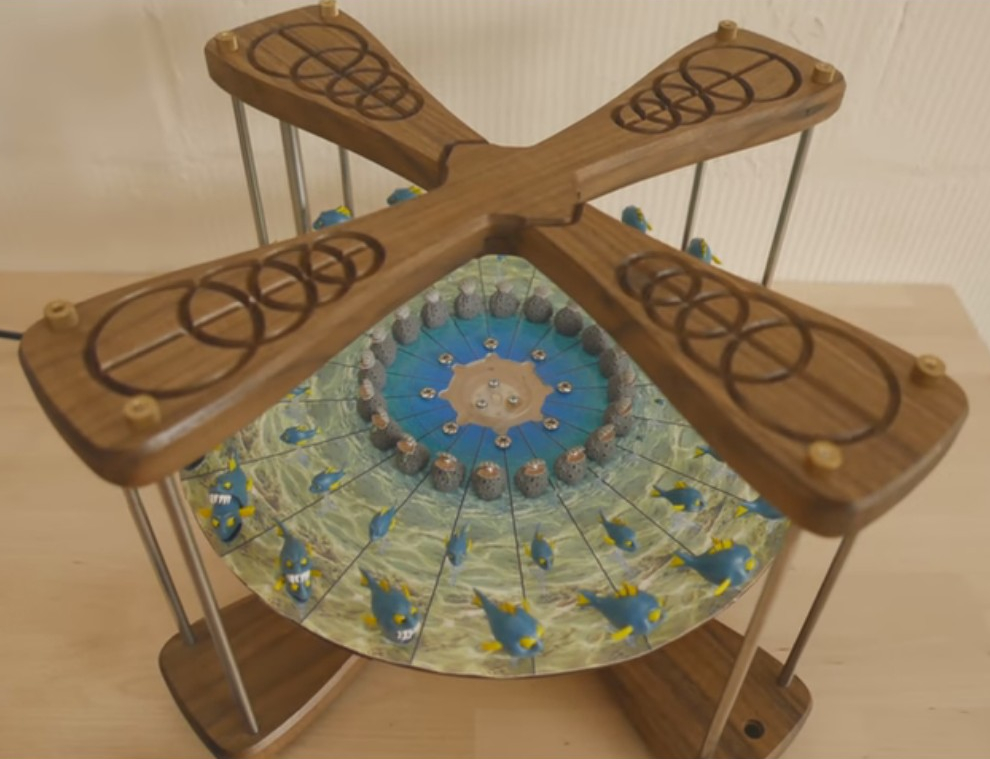
3D printers have long since made it easy for anyone to make 3-dimensional zoetropes but did you know you can take advantage of a 4th dimension by stretching time? Previously the duration of a zoetrope animation would be however long it took for the platform to rotate once. To make it more interesting to watch for longer, you filled out the scene by creating concentric rings of animations. [Kevin Holmes], [Charlie Round-Turner], and [Johnathan Scoon] have instead come up with a way to make their animations last for multiple rotations, longer than three in one example. If you’re not at all familiar with these 3D zoetropes, you might want to check out this simpler version first.

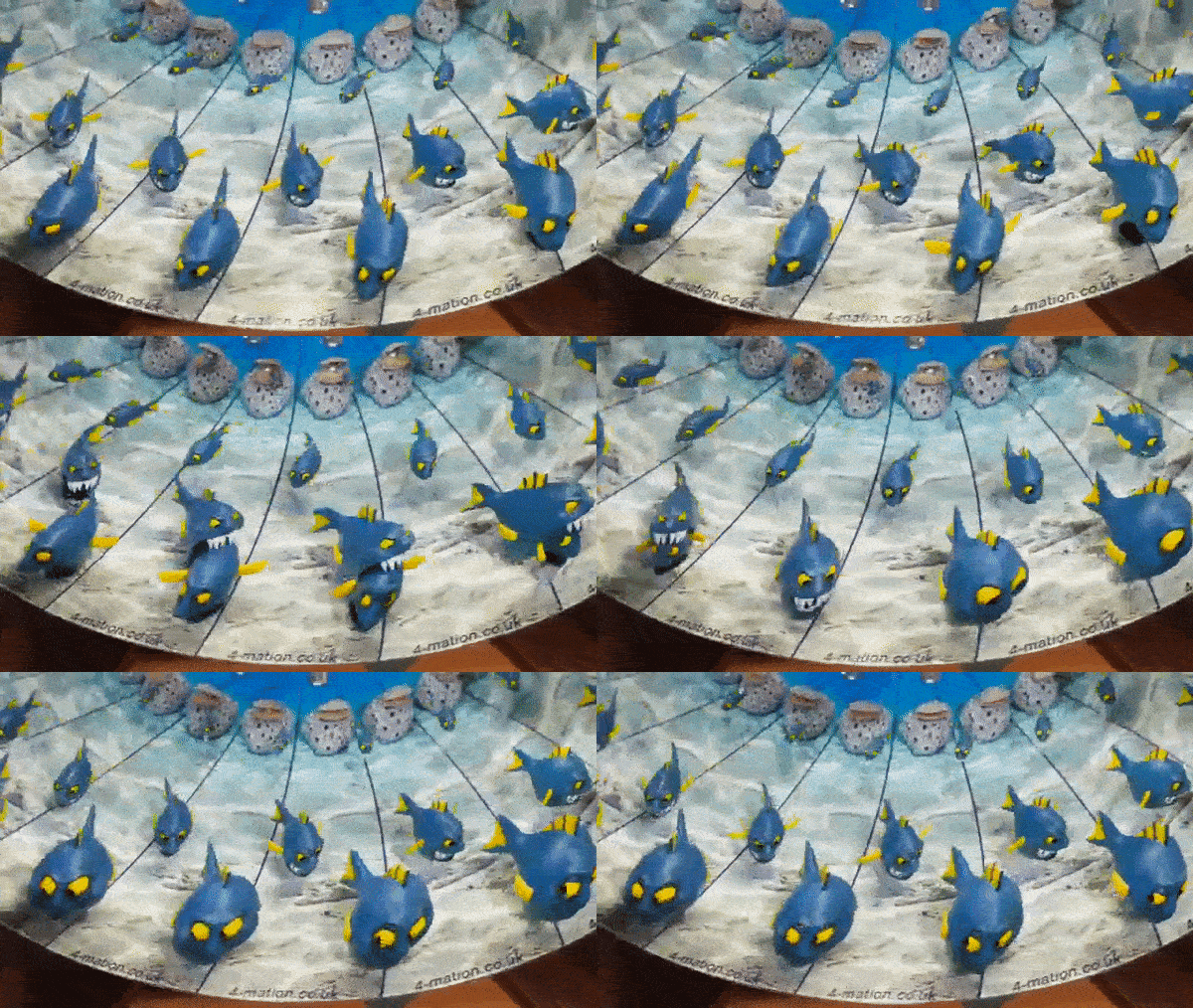
4-Mation Fish eats Fish zoetropeTheir project name is 4-Mation but they call the time-stretching technique, animation multiplexing. One way to implement it is to use one long spiral beginning in the center and ending on the platform’s periphery. It’s the spiral path which make the animation last longer.

In their Fish eating Fish animation, the spiral is of a small fish which exits a clam at the center and gets progressively larger as it spirals outward until it swallows another fish located in a ring at the periphery. Of course when you look at it with a properly timed strobe light, there is no spiral. Instead, it appears as though a bunch of fish move more-or-less radially out from the center. The second video embedded below walks through the animation step-by-step, making it easier to follow the intricacies of what’s going on.

Other features include built-in strobe lighting and both manual and phone app control. This project is a product for a kickstarter campaign and so normally, details of the electronics would be absent. But clearly [Kevin] is familiar with Hackaday and sent in some additional info which you can find below, along with the videos.

Continue reading “Time-Stretching Zoetrope Animation Runs Longer Than It Should”

The Best New Quad Is A Bicopter

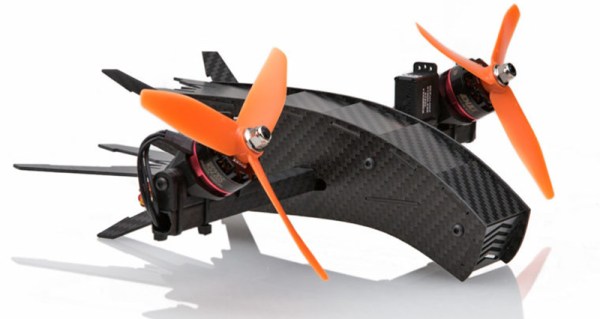
RCExplorer, or [David], or just ‘The Swede’, has come up with a bicopter kit. Yes, there are a lot of people making frames and kits for quadcopter, multicopters, drones, and so forth, but [David] is really the leader in weird multicopters. Now, we have the weirdest multicopter imaginable as a kit, complete with firmware that works.

[David] is one of the great unsung heroes of the drone and multicopter world. He’s famous for rocket knives, even though that really doesn’t have anything to do with drones, he bought an airplane for his front yard (again, little to do with drones), he was one of the first to take a glider up to 100,000 feet with a balloon, and he’s been one of the main forces behind tricopters as a superior — or at least cooler — platform for aerial acrobatics and camera work. There’s a lot of work being done to the various firmwares to support tricopters, and we have [David] to thank for that.

Like [David]’s earlier tricopter kits, this frame is made entirely out of carbon fiber plate, square tube, and threaded standoffs. It also looks like batman’s drone. The firmware — the real trick for a bicopter — is stock betaflight, and there are a few problems with the stock firmware. The bicopter doesn’t like flying backwards, tuning is fiddly, and it’s harder to fly than a quad on rails. That’s to be expected with a platform as weird as a bicopter, but this kit does open the door to firmware developers hacking and making the bicopter features better.

This is what delivery drones will look like, once the people who think delivery drones are a good idea learn physics.

While pure bicopters are great, the release of what will surely be a popular bicopter with a good community of firmware developers means the door is open to a simple VTOL fixed wing, not unlike a V-22 Osprey.

Remember, San Francisco tech bros, if you need a delivery drone, you need three things: long range, VTOL capability, and payload capacity. A quad or hexacopter will not get you there, and fixed wings will give you lift for free. There is no Moore’s Law for batteries, and right now if you want to ship a bottle of shampoo 20 miles in 30 minutes, the way to do that is with a drone that looks like a V-22 Osprey. Please, delivery drone bros, learn physics, use a tilt-rotor, and learn to put the battery in the wing. This is how you found a company that will get an easy $100M valuation.

Continue reading “The Best New Quad Is A Bicopter”

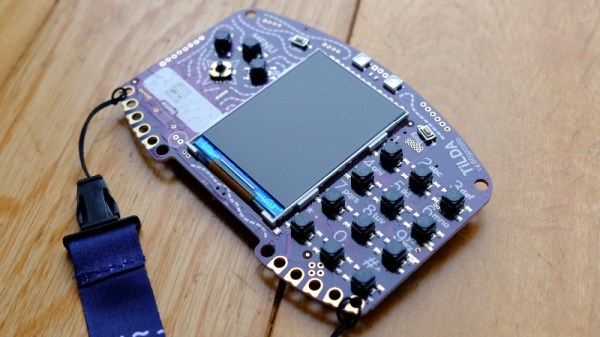
2018 Electromagnetic Field Badge: It’s An Entire Phone!

As is always the case with a significant hacker camp, we’ve been awaiting the official badge announcement for the upcoming Electromagnetic Field 2018 hacker camp with huge interest. These badges, for readers who may have been on Mars for the past few years, are part of a lively scene of wearable electronics at hacker conferences and camps, and can usually be expected to sport a fully-fledged computer in their own right along with other special functionality.

The announcement of the 2018 badge, dubbed the TiLDA Mk4, does not disappoint. We’d been told that there would be an on-site GSM network for which the welcome packs would contain a SIM, and the well-prepared among us had accordingly dusted off our old Nokia handsets alongside our DECT phones. What we hadn’t expected was that the SIM would be for the badge, because the Mk4 is a fully-fledged hackable mobile phone in its own right. The network will be fully functional for  calls and texts within the camp, though since it does not explicitly say so we expect that external calls may be an impossibility. Afterwards though it will remain a usable device on any GSM network, giving it a lease of post-camp life that may see more of them staying in use rather than joining the hacker’s dusty collection in a drawer.

Beyond the party-piece phone it appears to follow the lead of its 2016 predecessor, with the same Python environment atop a TI chipset including an MSP432E4 ARM Cortex M4F microcontroller running at 120MHz with 256kB of internal and 8MB of external RAM, a CC3210 WiFi processor, and the usual battery of sensors, LEDs and GPIOs. Importantly, it also has a Shitty Add-on connector. The 2016 badge was remarkably easy to develop for, and we expect that there will soon be an impressive array of apps for this badge too. If any reader would like to put together a Hackaday feed reader app, we can’t offer you fortune but fame such as we can bestow awaits.

We’ll bring you more information as we have it about the TiLDA Mk4, as well as a hands-on report when one lands in front of us. Meanwhile you’d like to see a retrospective of past EMF badges as a demonstration of where this one has come from, have a read of our coverage of the 2016 and 2014 badges.