Build A Circular Aerofoil Kite

[Waalcko] fell in love with kites when he was 13 years old. He saw a NASA Para Wing kite fly and couldn’t get it out of his head. Now, years later, he shares how to build a circular foil kite design he came up with.

We’re all particular about our chosen hobbies. Some of us like one design direction and hate another. For [Waalcko], he really hates internal supports in kites. When he spied a single line kite in a circular foil configuration he was enraptured, but the design had those hideous spars. So, he got to work and pushed himself to the limit coming up with a kite that was a circular foil, flew with one line, and had no internal supports.

His instructable is a great read and goes into deep detail about the basics of kite construction. (After reading it we’re certain that even the shallows have depths when it comes kites.) It goes through the terminology used when talking about kits, the techniques used to assemble them, the common problems, and more.

Many hours later, if all goes well, one should end up with a really cool kite.
A 150MHz 6502 Co-Processor

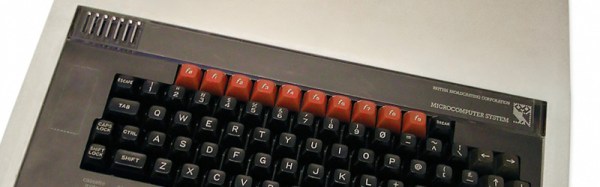
If you are familiar with ARM processors, you may know of their early history at the 1980s British home computer manufacturer Acorn. The first physical ARM system was a plug-in co-processor development board for Acorn’s BBC Micro, the machine that could be found in nearly every UK school of the day.

For an 8-bit home computer the BBC Micro had an unusually high specification. It came with parallel, serial and analog ports, built-in networking using Acorn’s proprietary Econet system, and the co-processor interface used by that ARM board, the Tube. There were several commercial co-processors for the Tube, including ones with a 6502,  a Z80 allowing CP/M to be run, and an 80186.

As with most of the 8-bit generation of home computers the BBC Micro continues to maintain a strong enthusiast following who have not stopped extending its capabilities in all directions. The Tube has been interfaced to the Raspberry Pi, for instance, on which an emulation of original co-processor hardware can be run.

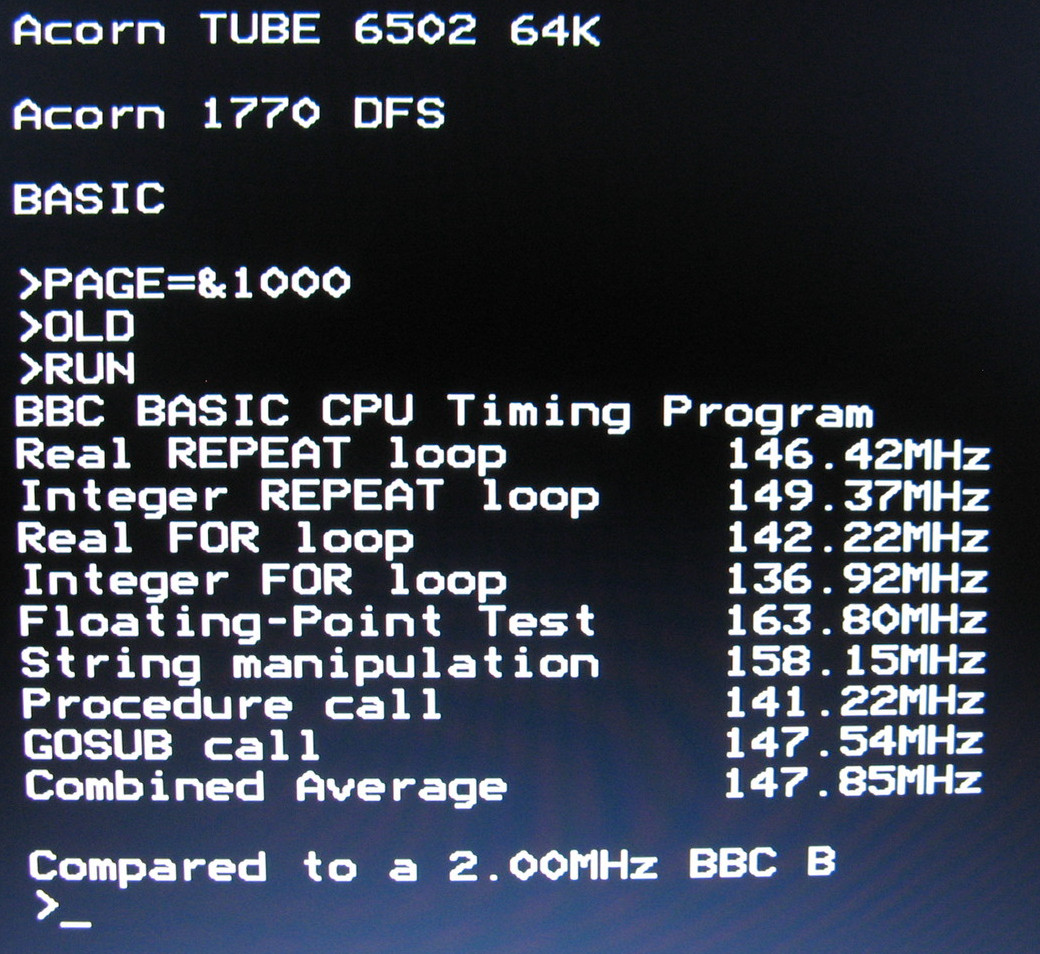
bbc-tube-screenshotAnd thus we come to the subject of this article, [Hoglet] and [BigEd]’s 150MHz 6502 coprocessor for the BBC Micro. Which of course isn’t a 6502 at all, but a 6502 emulated in assembler on an ARM which is in a way the very distant descendant of the machine it’s hosted upon. There is something gloriously circular about the whole project, particularly as the Pi, like Acorn, the BBC Micro, and modern-day ARM, has its roots in Cambridge. How useful it is depends on your need to run 8-bit 1980s software in a tearing hurry, but they do report it runs Elite, which if you were there at the time we’re sure you will agree is the most important application to get running on a BBC Micro.

We’ve featured the Tube interface before when we talked about an FPGA co-processor with a PDP/11 mode that was definitely never sold by Acorn. And we’ve also featured an effort to reverse engineer the primordial ARM from that first BBC Micro-based co-processor board.

BBC Micro image: Stuart Brady, Public Domain, via Wikimedia Commons.

The Future Of Eagle CAD

Last week, Autodesk announced their purchase of CadSoft Eagle, one of the most popular software packages for electronic design automation and PCB layout.

Eagle has been around for nearly thirty years, and has evolved to become the standard PCB design package for electronic hobbyists, students, and engineering firms lead by someone who learned PCB design with Eagle. The reason for this is simple: it’s good enough for most simple designs, and there is a free version of Eagle. The only comparable Open Source alternative is KiCad, which doesn’t have nearly as many dedicated followers as Eagle.  Eagle, for better or worse, is a standard, and Open Source companies from  Sparkfun to Adafruit use it religiously and have created high-quality libraries of parts and multiple tutorials

I had the chance to talk with [Matt Berggren], former Hackaday overlord who is currently serving as the Director of Autodesk Circuits. He is the person ultimately responsible for all of Autodesk’s electronic design products, from Tinkercad, 123D, Ecad.io, and project Wire, the engine behind Voxel8, Autodesk’s 3D printer that also prints electronics. [Matt] is now the master of Eagle, and ultimately will decide what will change, what stays the same, and the development path for Eagle.

Continue reading “The Future Of Eagle CAD”

The Sunday Morning Breakfast Machine

Breakfast is a meal taken very seriously indeed by Brits. So seriously that continual attempts have been made to perfect the experience mechanically. Who could not delight to be woken up by a Teasmade alarm clock delivering a fresh cup of hot beverage, and where else would the getting out of bed sequence in Wallace and Gromit be, not the comedic animated film, but a documentary?

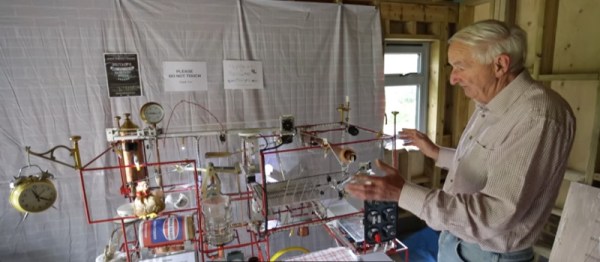
Latest in a long line of British builders of mechanical morning repast generators are [Peter Browne] and [Mervyn Huggett]. Working from a garden shed – where else! – in Sussex, they have spent three months and a thousand man hours creating their “Sunday Morning Breakfast Machine“, designed to cook and serve a slice of toast and a boiled egg alongside a cup of tea or coffee and the morning paper. Prototyping was done in Meccano , could there be any other medium for a machine like this one?

The machine itself is a mix of the practical and the whimsical. The giant-sized facsimile of a vintage Ever Ready battery and the toy rooster hide some pretty accomplished metalwork and control systems. They do admit that the primary purpose is to make people laugh, but it does the job, albeit with what looks like a leak from a cracked egg.

A full description from [Peter] is in the video below the break.

Continue reading “The Sunday Morning Breakfast Machine”

Don Eyles Walks Us Through The Lunar Module Source Code

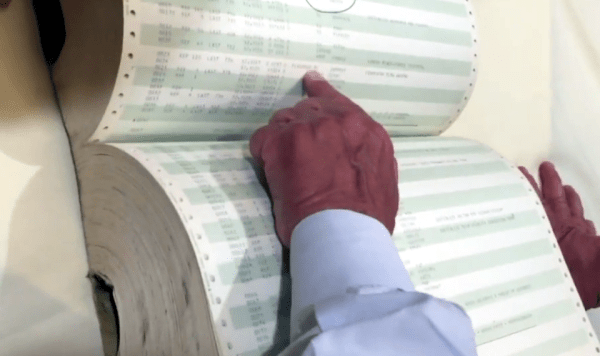
A couple weeks ago I was at a party where out of the corner of my eye I noticed what looked like a giant phone book sitting open on a table. It was printed with perforated green and white paper bound in a binder who’s cover looked a little worse for the wear. I had closer look with my friend James Kinsey. What we read was astonishing; Program 63, 64, 65, lunar descent and landing. Error codes 1201, 1202. Comments printed in the code, code segments hastily circled with pen. Was this what we thought we were looking at? And who brings this to a party?

Continue reading “Don Eyles Walks Us Through The Lunar Module Source Code”

Retrotechtacular: How Solidarity Hacked Polish TV

In the 1980s, Poland was under the grip of martial law as the Communist government of General Wojciech Jaruzelski attempted to repress the independent Solidarity trade union. In Western Europe our TV screens featured as much coverage of the events as could be gleaned through the Iron Curtain, but Polish state TV remained oblivious and restricted itself to wholesome Communist fare.

In September 1985, TV viewers in the city of Toruń sat down to watch an action adventure film and were treated to an unexpected bonus: the screen had a brief overlay with the messages “Solidarity Toruń: Boycotting the election is our duty,” and “Solidarity Toruń: Enough price hikes, lies, repression”. Sadly for the perpetrators, they were caught by the authorities after their second transmission a few days later when they repeated the performance over the evening news bulletin, and they were jailed for four months.

The transmission had been made by a group of dissident radio astronomers and scientists who had successfully developed a video transmitter that could synchronise itself with the official broadcast to produce an overlay that would be visible on every set within its limited transmission radius. This was a significant achievement using 1980s technology in a state in which electronic components were hard to come by. Our description comes via [Maciej Cegłowski], who was able to track down one of the people involved in building the transmitter and received an in-depth description of it.

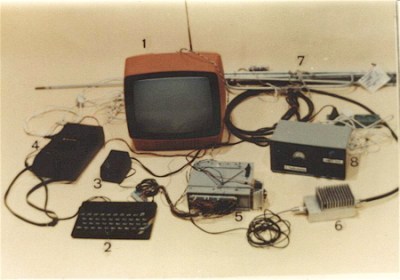
Transmission equipment seized by the Polish police.

The synchronisation came courtesy of the international effort at the time on Very Long Baseline Interferometry, in which multiple radio telescopes across the world are combined to achieve the effect of a single much larger instrument. Before GPS made available a constant timing signal the different groups participating in the experiment had used the sync pulses of TV transmitters to stay in time, establishing a network that spanned the political divide of the Iron Curtain. This expertise allowed them to create their transmitter capable of overlaying the official broadcasts. The police file on the event shows some of their equipment, including a Sinclair ZX Spectrum home computer from the West that was presumably used to generate the graphics.

There is no surviving recording of the overlay transmission, however a reconstruction has been put on YouTube that you can see below the break, complete with very period Communist TV footage.

Continue reading “Retrotechtacular: How Solidarity Hacked Polish TV”

Data Exfiltration With Broadcast Radio And CD-ROM Drives

The first music played on personal computers didn’t come out of fancy audio cards, or even a DAC. the first audio system in a personal computer was simply holding an AM radio up to the case and blinking address pins furiously. This worked wonderfully for homebrew computers where EMC compliance hadn’t even become an afterthought, but the technique still works today. [Chris] is playing music on the radio by sending bits over the system bus without using any wires at all.

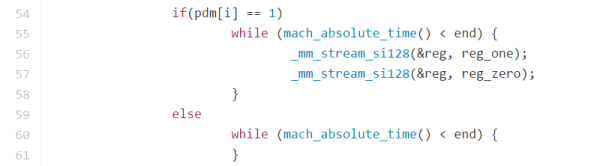
[Chris]’ code is based on the earlier work of [fulldecent], and works pretty much the same. To play a sound over the radio, the code simply writes to a location in memory when the waveform should be high, and doesn’t when the waveform is low.

Of course the ability to exfiltrate information over an airgap has a few more nefarious purposes, but [Chris] also has another way of doing just that which is undefeatable by a TEMPEST shielded computer. He can send one bit at a time by opening and closing a CD-ROM drive, capturing these bits with a webcam. Is it useful? It’s hard to imagine how this setup could ever capture any valuable data, but it is a proof of concept.