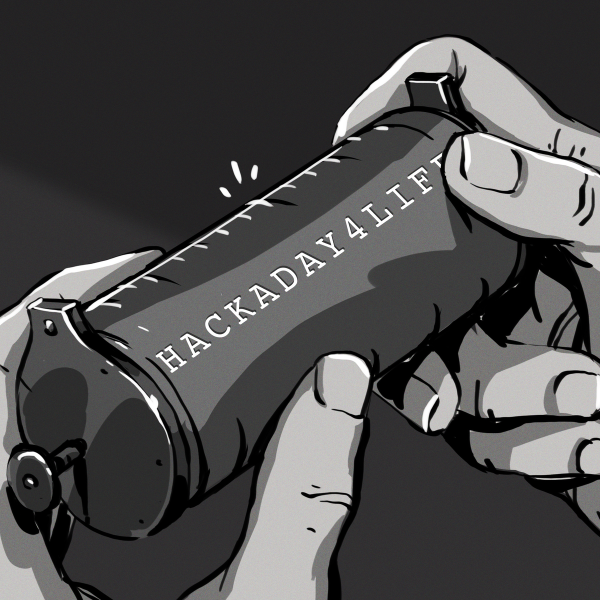
[Christopher] has put together a Prank Stun Baton to annoy his friends. It delivers a slight shock to the person on the business end of the device. Oddly, it’s powered solely by static electricity, there is no battery here and the resulting injury is no worse than touching a door knob after scooting your socks around on some shag carpet.
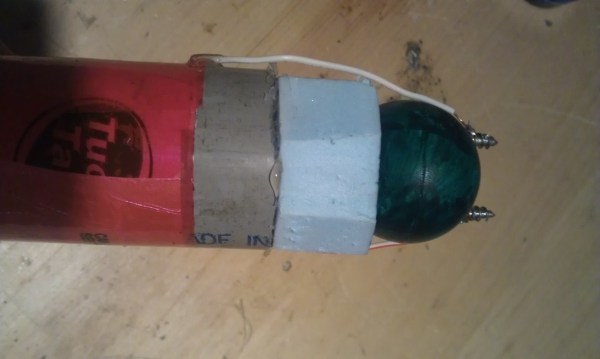
The design is super simple and is effectively just a rudimentary capacitor. The main housing is a PVC pipe that acts as a dielectric in the ‘cap’ system. Two separate pieces of tin foil are wrapped around the inside and outside of the PVC pipe. These layers of tin foil provide a conductive path up to the a couple of screws stuck in the end of the baton. A ping-pong ball and some foam act as an insulator between the PVC and the screws.
To charge the baton it only has to be brought close to a source of static electricity, a tube TV will do the trick. Rubbing it with a piece of wool will also work. When this is done an electrostatic field is stored in the PVC between the two pieces of tin foil, one side takes on a positive charge and the other a negative charge creating an electric potential between the two screws at the end of the baton. When something (with a low-enough resistance) shorts the screws, the stored energy on the positive screw tries to go to the negative screw, shocking the unsuspecting victim.
Need something a little more powerful? You may want to check out this other stun baton.


 The red ones are 1.7mm long, the yellow one, 1.3mm, and the orange one, 1.2mm.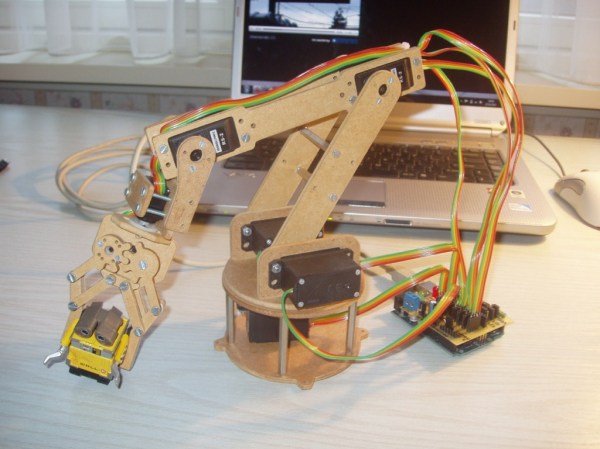
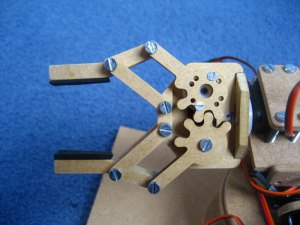 Like any project, there were some hiccups along the way. First, several revisions of the gripper were necessary to get the correct tooth profile that resulted in smooth and tight movement. Also, while making the shield the spacing between banks of headers came out one header too close! On this first board [jjshortcut] just bent the pins so they would fit into the Arduino. You can’t let some minor snafu prevent forward momentum of a project!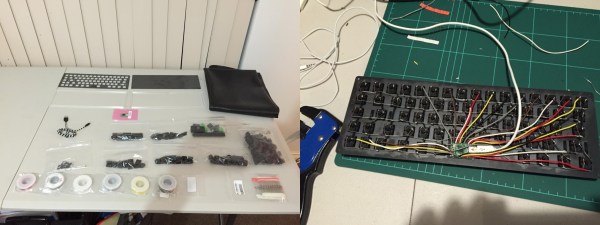

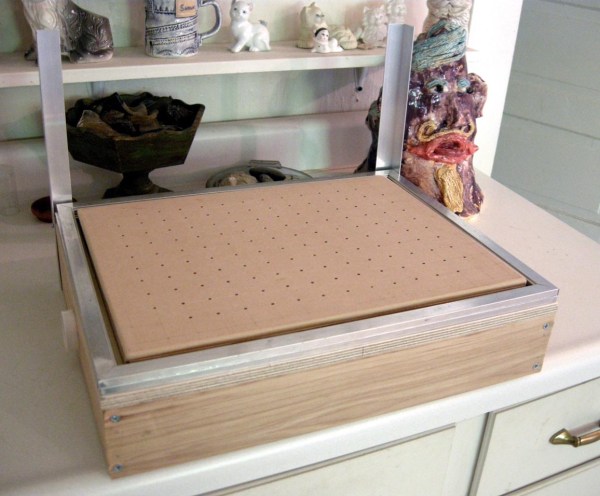
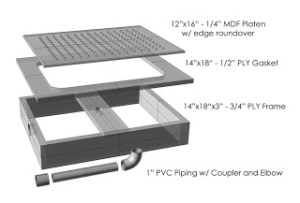 There is a two-pronged attack to keep the costs down on this project. First, the frame is made from readily available materials that you probably have kicking around in your wood scrap bin. The sides of the frame are 3/4″ plywood and the hole-filled top is made from 1/4″ MDF. A piece of PVC pipe connects the chamber below the top piece of MDF to a shopvac. The shopvac pulls the air down through the top’s holes; think reverse air hockey table.