Hacking Transcend Wifi SD Cards

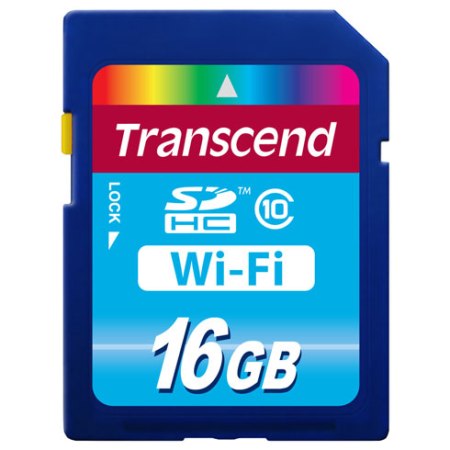
[Pablo] is a recent and proud owner of a Transcend WiFi SD Card. It allows him to transfer his pictures to any  WiFi-enabled device in a matter of seconds.

As he suspected that some kind of Linux was running on it, he began to see if he could get a root access on it… and succeeded.

His clear and detailed write-up begins with explaining how a simple trick allowed him to browse through the card’s file system, which (as he guessed correctly) is running busybox. From there he was able to see if any of the poorly written Perl scripts had security holes… and got more than he bargained for.

He first thought he had found a way to make the embedded Linux launch user provided scripts and execute commands by making a special HTTP POST request… which failed due to a small technicality. His second attempt was a success: [Pablo] found that the user set password is directly entered in a Linux shell command. Therefore, the password “admin; echo haxx > /tmp/hi.txt #” could create a hi.txt text file.

From there things got easy. He just had to make the card download another busybox to use all the commands that were originally disabled in the card’s Linux. In the end he got the card to connect a bash to his computer so he could launch every command he wanted.

As it was not enough, [Pablo] even discovered an easy way to find the current password of the card. Talk about security…

All Wheel Drive Motorcycle

Take one look at the front fork of this dirt bike and you’ll notice that it’s not really a front fork at all. A custom front end replaces the traditional design in order to give this motorcycle all wheel drive. Look closely and you’ll see the chain that drives the front wheel. The swing-arm like addition lets the front end retain all of its suspension and steering and that’s where the project gets tricky.

We actually saw this thing in person at the monthly meeting of our local hackerspace: Sector67. [Martin Lawson] got his seven minutes of fame during the presentations (they use a prototype of this scoreboard to limit each presenter), and then was mobbed with a ton of interest afterwards. We were able to get a pretty good look at how the front drive works. It starts with an additional cog fastened beside the one that drives the chain for the back end. This feeds up through some tensioners and transfers out on the left side (from the rider’s perspective) of the front end. From here the rotational force is transferred to the right right and includes a U-joint to account for steering. The last chain goes straight down to the wheel.

The idea is that when the rear wheel loses traction you’re still being pulled by the front. This is illustrated well in the video after the break. [Marty] — who has a patent on the design — is trying to get some interest from manufacturers. He says the ability ride right through poor traction terrain make this a lot easier than a traditional dirt bike for beginners to ride. But it’s obvious the professionals are having fun on the thing as well!

Continue reading “All Wheel Drive Motorcycle”

An Elegant Timepiece From Paper And A Fistful Of Servos

papercraftClock

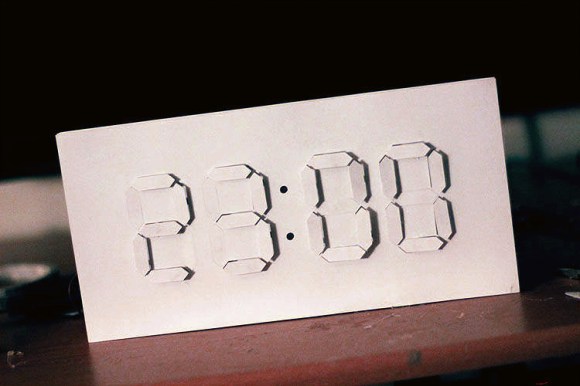
Segments rise from a sheer white surface to reveal the time in this papercraft digital / analog clock build by [Jacky Mok].

New York-based designer [Alvin Aronson] is responsible for the original, titled “D/A Clock,” which he built as a student at RISD using Corian instead of paper. [Aronson]’s design is also massive in comparison. It measures one meter wide by a half meter tall. Without access to either a 3D printer or to a laser cutter, [Jacky] instead reduces the scale of his interpretation and relies on cardstock as the primary construction material. His experience with papercraft typography leads to a design that anyone with an Exacto knife and a slice of patience should find manageable. [Jacky] ignores the Exacto option, however, and cuts his pieces with a tool we saw earlier this year: the Silhouette Portrait.

The clock’s electronics include an Arduino Uno, a servo motor controller, twenty-eight servos and an RTC breakout board that handles timekeeping. Each servo drives its own segment by sliding a paperclip forward or backward inside a small, hollow aluminum rod. Though we’re still holding out for a video of the finished papercraft build, you can watch a video of Aronson’s original clock after the break and see what inspired [Jacky’s] design.

Need another clock to envy? Last month’s build by [ebrithil] uses twenty-two servos to individually spin the segments. If you prefer that your clocks light up, [Aaron’s] o-scope transformation has you covered.

Continue reading “An Elegant Timepiece From Paper And A Fistful Of Servos”

Hack VersaPak Battery Modules To Reuse Laptop Cells

retrofit-battery-packs-with-laptop-cells

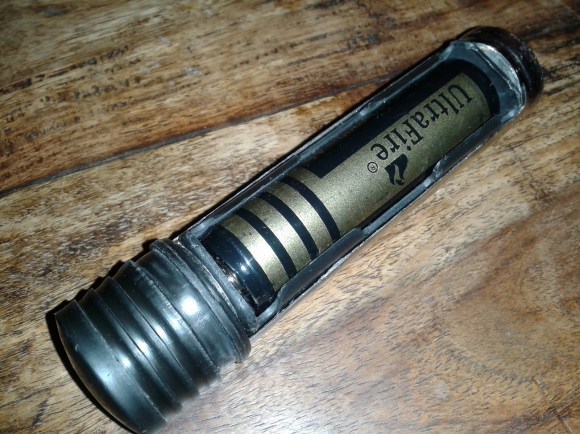
If you’re familiar with VersaPak tools you’ll note that while the battery pack in this image looks somewhat familiar, it’s not supposed to have a removable cell. This is [Martin Melchior’s] hack to use laptop 18650 Lithium cells with VersaPak tools.

The original NiCad packs used three cells for a total of 3.6V, so it is possible to substitute a Lithium cell in the same voltage neighorhood. The tools are pretty hard on the battery packs, drawing a lot of current in certain situations. But these cells are being harvested from dead laptop battery packs so it’s not a huge concern if their life is a bit shortened.

The hack places an 18650 battery receptacle inside of the VersaPak battery housing. There’s a bit of careful disassembly to get to this point, but it’s well illustrated in [Martin’s] project log. And of course you’ll need to use a proper Lithium battery charger from here on out.

This form factor has been popping up in a lot of hacks lately. Here’s another one that modifies the Goal Zero Bolt flashlight to use them.

Boominator Solar Stereo Keeps The Music Pumping Even In Cloudy Weather

Despite 40-some years of product improvements, boomboxes today still require a half dozen D-cell batteries and measure their life in single digit hours.  After this, the batteries get chucked in the trash. Tired of the absurd cost and quantity of batteries required in a typical boombox, reddit user [anders202] has whipped up a solution that will keep the party going and the landfills empty. Using some off-the-shelf components and some impressive woodworking skills, he created the “Boominator”.

Despite its environmentally-conscious design, this green machine packs a whallop. Using its dual 10W solar panels, it can drive four woofers and tweeters to produce an estimated 102dB of sound with power to spare.  This extra juice can be used to charge its two internal 7.2Ah batteries or a cellphone using the integrated USB charging ports.  Better still, Anders chose amorphous solar panels (as opposed to crystalline) which produce power even in cloudy weather as demonstrated during a cloudy day at the Roskilde festival in Denmark.  For more information, check out the reddit comment thread.

Video demo after the jump

Continue reading “Boominator Solar Stereo Keeps The Music Pumping Even In Cloudy Weather”

Hackaday Links: August 11, 2013

While we’re not much for fashion hacks, we’re reasonably impressed with [Karolina]’s faux Chanel bag made of chips. Apparently a grid of black squares is one of Chanel’s trademark looks, and a thousand or so QFP chips makes for a reasonable substitution.

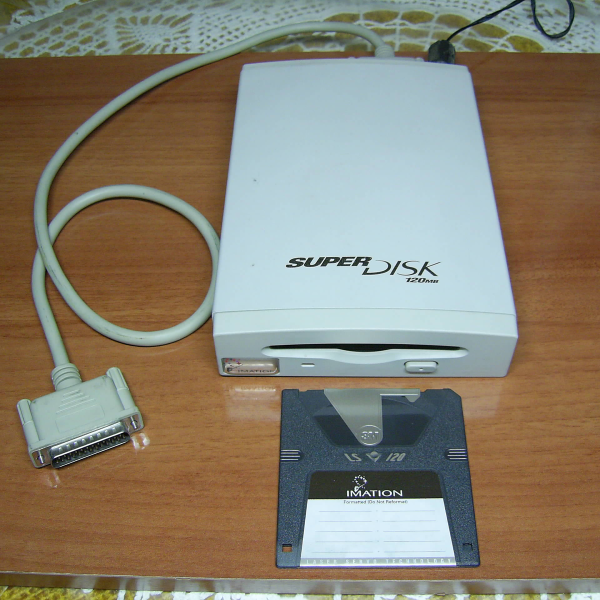
News of the death of our retro edition has been greatly exaggerated. [Brandon] got an old Apple IIe up on the Internet and loaded up our retro edition, so we’re sort of obliged to mention him. He’s using a Super Serial Card connected to an OS X box running lynx. With getty running, he can shoot the output of lynx over to the Apple. Awesome.

Take an old Yamaha organ, convert the keyboard to MIDI, throw in a few Arduinos, thousands of LEDs, and a handful of bubble machines. What you end up with is the bubble organ, as seen at the Bass Coast Festival last weekend. If you want a hands on, you can also check it out at the Rifflandia festival in BC, Canada this September.

Some guy over on reddit created the smallest Arduino in the world. We’re looking at a rank amateur here, though. I’ve been working on this little guy for the last 18 months and have even created an open source cloud based github design for the production model. It’s less than half the size of a Digispark, and also Internet of Things 3D interactive education buzzword buzzword.

[Moogle] found an old Super 8 camera at an estate sale. No big deal right? Well, this one is clear, and it uses light-sensitive film. Your guess is as good as ours on this one, but if you know what’s up, drop a note in the comments.

One day [John] decided he would put a PC inside an old G3 iMac. After a year, it’s finally done. He took out the CRT and replaced it with a 15″ Dell monitor. The G3 was discarded for an AMD, and the internal speakers and slot-load CD drive still work. It’s a really, really cool piece of work.

A Crystal Radio Amplifier In A Jar

The cool thing with crystal radios is that they are solely powered by the incoming radio waves. However, it usually means listening to your AM radio station with an earpiece and even then, depending on the antenna length, ground connection, and radio station, it can be quite hard to hear.

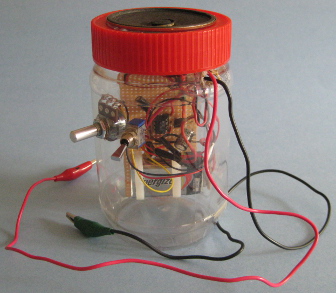
Even though it is cheating, [Steven] decided to make an amplifier for all the different crystal radios he had made over the years. His design, based on an LM386 amplifier was firstly tested on a breadboard and then permanently soldered onto a perfboard. To make the complete system easy to transport, he opted for a peanut butter jar where he embedded the speaker in the cap. The on/off switch and volume controls are mounted on the side, and easy alligator clips are used for the antenna connection.

The final result is not the one shown in the picture above as [Steven] painted the jar black, giving it a sweet look.