Retrotechtacular: The Blit Has Given Me Access To The Power Of Multiprogramming!

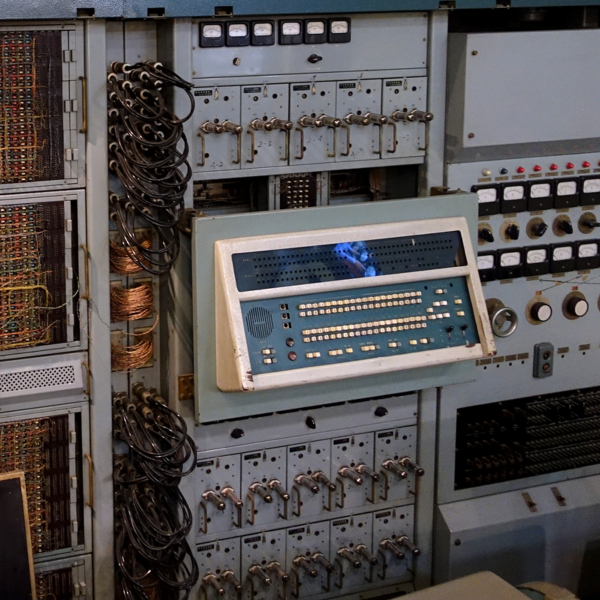
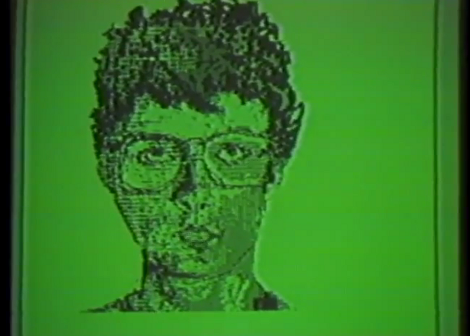
We normally try to be descriptive with our titles. But when that statement pops out of the narration with notable excitement it made us chuckle. This installment of Retrotechtacular is a promotional video for the Blit. It’s a graphics-based hardware terminal for Unix systems. It’s biggest boast is the ability to run (and display on screen) several different programs at once — an activity called multiprogramming. But there is also the “digitizing mouse”. On board is a 68000 microcprocessor 256k of RAM (they call it a quarter meg), and connects via RS232. The screen is 800 by 1024; that’s right, it’s a portrait orientation.

Notable in this episode are some classic eyeglass frames, and rad synthesizer sounds for scene transitions. Whatever happened to videography technique that uses a dimwitted companion to ask that all-knowing narrator stupid questions?

Continue reading “Retrotechtacular: The Blit Has Given Me Access To The Power Of Multiprogramming!”
Printing Point-to-point Circuits On A 3D Printer

[CarryTheWhat] put up an Instructable on his endeavours in printing circuit boards for solder free electronics. He managed to print a flashlight where the only non-printed parts are a pair of batteries and a couple of LEDs.

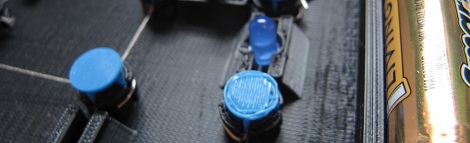
The circuit is a weird mix of point to point and Manhattan style circuit construction; after modeling a printed plastic plate, [CarryTheWhat] added a few custom component holders to hold LEDs, batteries, and other tiny electronic bits.

To deliver power to each electronic bit, the components are tied off on blue pegs. These pegs are attached to each other by conductive thread much like wirewrap circuit construction.

Right now, the circuits are extremely simple, but they really remind us of a few vintage ham radio rigs. While this method is most likely too complex to print 3D printer electronics (a much desired and elusive goal), it’s very possible to replicate some of the simpler projects we see on Hackaday.

[CarryTheWhat] put the models and files up on GitHub if you’d like to try out a build of your own.

The Gas Cap Senses Your Flatulence And Displays It On Your Forehead

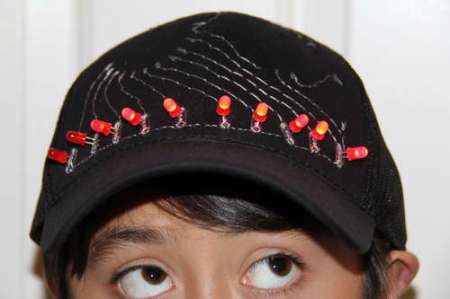
If you’ve ever found yourself wondering if there’s any possible way to let those with deficient olfactory senses know just how flatulent you are, wonder no more. The Gas Cap is here to fulfill that very need. A bar graph of sorts, located on the front of a hat that will light up to reflect the amount of methane sensed near your, uh, exhaust port. This project cost around $100, though a good portion of that went to the Xbee modules so that the detector could be separated from the hat, allowing for remote fart notifications.

This seems to be a project that is not as uncommon as one might assume. We’ve seen fart intensity detectors as well as tweeting chairs that alert the world when you pass gas.

[via Adafruit]

Arduino PIC Programmer Writes To 18F Family

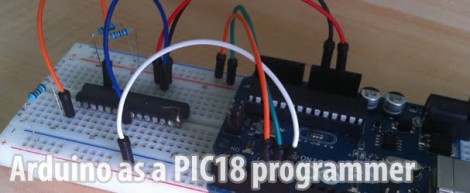
[Kirill] wrote in to share his Arduino-based PIC programmer. It is capable of writing to the 18F family of chips, including 18F2XXX and 18F4XXX. We think that’s pretty exciting because this line of chips has USB functionality and there are bootloaders out there that let you program them via USB. So if you wanted to build your own PIC dev-board (like this one) you can use your Arduino to flash the bootloader.

This post comes hot on the heels of the Arduino being used as a PIC 16F programmer. That hack has a rudimentary programming GUI, something that [Kirill] admits his lacks but has no plans to implement himself. Perhaps someone will do a little porting work to merge the projects, adding to the range of chips supported by this programming technique.

Fairly Simple Hack Makes Samsung TVs Reboot Forever

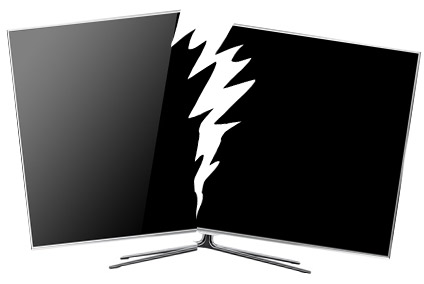
[Luigi Auriemma] almost rendered his brother’s TV useless attempting to play a simple practical joke. In the process, he uncovered a bug that could potentially upset a lot of people. His idea was to connect a computer to the system via WiFi, masquerading as a remote control.  [Luigi] found that by altering the packet being sent to the TV by adding a line feed and some other characters to the name, it would begin an endless reboot loop.

He also discovered that he could easily crash the devices by setting the MAC address string too long. We’re not sure if he’s modifying the remote, or the television on this one though.

These bugs affect the Samsung TVs and Blu Ray players that utilize the same chip. The crazy part is that despite his attempts, he has been unable to contact anyone at Samsung to let them know!

[via BoingBoing]

An ATTiny13 Makes May 13th Brighter

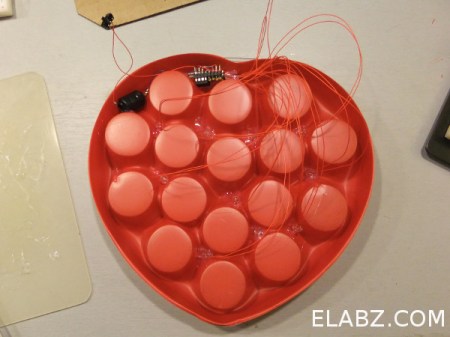
When the time comes to go to the store and pick up those chocolates you always get your mother for valentines mother’s day, why not spice them up a little with some LEDs? [Dmitry] shows how you can easily add some flashing lights to the packaging without really modifying it. He’s using an ATtiny13 which only has 5 I/O pins, so he had to charlieplex the LEDs to get all 10 functional. The result is fairly quick and might just show Mom that you really do care.

[via HackedGadgets]

A 3D Printed, Electromechanical Computer

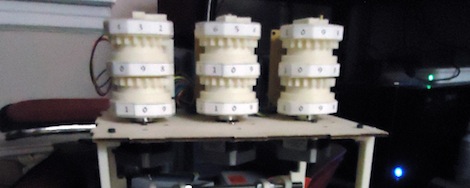
If you had a machine that could print complex mechanical parts in an hour or so, what would you do? [Chris] is doing the coolest thing we can imagine and is building an electromechanical computer from 3D printed parts.

You may remember [Chris] from his efforts to getting his tiny, 1/10th scale Cray-1 supercomputer up and running. Even though he has the OS on a disk, actually booting the machine is a bit of a problem; much the same as his electromechanical computer project. Late last year we saw [Chris] building a few gears for his computer, but now he’s got a punch card reader that looks very much like a Jacquard loom.

Even though the computer doesn’t actually do anything yet, it’s amazing to think that [Chris] is building out of plastic that will run computer programs. You can check out the video of [Chris]’ video of his punch card reader after the break.

Continue reading “A 3D Printed, Electromechanical Computer”