GSM Hacking With Prepaid Phones

Want to listen in on cellphone calls or intercept test messages? Well that’s a violation of someone else’s privacy so shame on you! But there are black-hats who want to do just that and it may not be quite as difficult as you think. This article sums up a method of using prepaid cellphones and some decryption technology to quickly gain access to all the communications on a cellular handset. Slides for the talk given at the Chaos Communications Congress by [Karsten Nohl] and [Sylvain Munaut] are available now, but here’s the gist. They reflashed some cheap phones with custom firmware to gain access to all of the data coming over the network. By sending carefully crafted ghost messages the target user doesn’t get notified that a text has been received, but the phone is indeed communicating with the network. That traffic is used to sniff out a general location and eventually to grab the session key. That key can be used to siphon off all network communications and then decrypt them quickly by using a 1 TB rainbow table. Not an easy process, but it’s a much simpler method than we would have suspected.

[Thanks Rob]
PS3 Hacking Start-to-finish – CCC

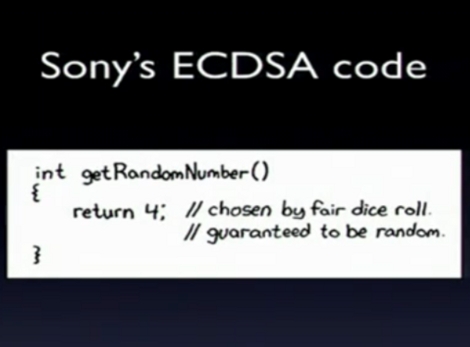
Well it looks like the Play Station 3 is finally and definitively cracked. FailOverflow’s Chaos Communications Congress talk on console security revealed that, thanks to a flaw on Sony’s part, they were able to acquire the private keys for the PS3. These keys can be used to sign your own code, making it every bit as valid (to the machine anyway) as a disk licensed by the media giant. We’ve embedded the three-part video of the talk, which we watched in its entirety with delight. We especially enjoy their reasoning that Sony brought this upon themselves by pulling OtherOS support.

We remember seeing a talk years back about how the original Xbox security was hacked. We looked and looked but couldn’t dig up the link. If you know what we’re talking about, leave the goods with your comment.

Continue reading “PS3 Hacking Start-to-finish – CCC” →

Lightsaber Boasts Detachable Blade And Crystal Chamber

[Bradley W. Lewis] continues to amaze us with this Return of the Jedi Lightsaber build. You’ll remember his fine work from his previous Episode IV replica. He’s taken the parts that turned out well for him and expanded upon them. In the demonstration after the break you’ll see the new version has a removable blade (which happens to house 90 LEDs). Just like the last time he’s got a Hasbro sound board and a speaker to add the Jedi-like sound effects. But there’s another trick up his sleeve. Two parts of the grip slide apart on a spring-loaded assembly to reveal the crystal that gives the weapon its sting. And as we found out the last time, [Bradley] really knows how to share his work in the build log.

Oh, and the drawings above? Well, someone who plans this meticulously obviously knows what they’re doing.

Continue reading “Lightsaber Boasts Detachable Blade And Crystal Chamber” →

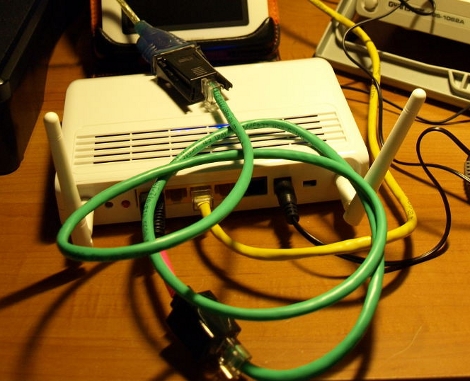
Adding A Serial Port Through An RJ45 Connector

[Mike Lu] likes to add serial ports to his routers to use for debugging but he didn’t want to drill holes in his new RT-N12. After a bit of head-scratching he thought about repurposing the four unused wires on one of the RJ45 Ethernet connectors. This would allow him to interface with the necessary signals and still have the option of using that port for a network connection. The first step was to build the circuit to output the correct serial levels and connect it to the unused pins on the jack. Next, to separate serial and Ethernet on the outside of the router he build a short adapter cable.

This is an elegant solution if you’re looking for zero case modifications. But if you don’t mind a few inconspicuous holes we love the serial port used on this Dockstar.

Lego Pinhole Camera

[Bshikin] built a pinhole camera out of Lego pieces (translated). It is a fully automated unit thanks to the integration of the NXT pieces. It took a bit of careful calculation to get the film spacing adjusted to match the focal length, and quite a bit of tape was necessary to keep light out of the film chamber. But in the end, it’s an amazing build that takes decent pictures. The software has settings for film size and speed, and takes care of exposing and advancing the frame at the click of a button. See for yourself after the break.

If you hunger for some more camera building goodness check out this SLR hand crafted from scratch.

Continue reading “Lego Pinhole Camera” →

IPod Nano 6g Closer To Being Cracked

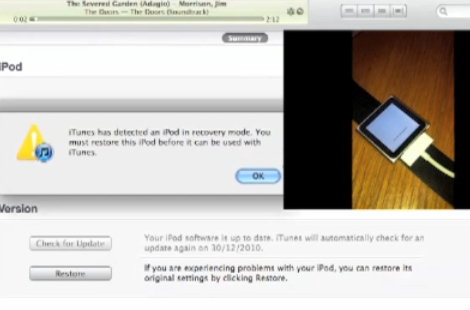
[Steven Troughton-Smith] figured out how to push signed firmware through to the iPod Nano 6g. This is accomplished by modifying iRecovery to recognize the device on the USB after forcing a recovery mode reboot. So no, this doesn’t mean that it has been cracked since it checks the firmware you push and reboots if it’s not approved. But if you can figure out how to craft a custom image that passes the check you can call yourself a jailbreak author.

Continue reading “IPod Nano 6g Closer To Being Cracked” →

Custom Made Industrial Hookah

Since their invention in the 1500s, Hookahs have always been a way for craftsmen to show off skills by creating ornate, elaborate, and functional pieces of art. This still holds true today, as easily seen above. Found on the Hookah subreddit, this pipe was pieced together by recycling an old vodka bottle, as well decorating and re-purposing a number of plumbing items. Some finishing touches such as LEDs and gears to the base, as well as a set of turn-valves to the hose plugs give this hookah a very distinctive look.

As always, we at Hackaday do not recommend or promote smoking, no matter what goes into the bowl of the hookah. However, whether you smoke or not, the final product is worth appreciating. Be sure to check out the higher resolution pictures after the break.

Continue reading “Custom Made Industrial Hookah” →