ENIAC Was First, Right?

Well, no. Many of us who went to school and have degrees in various computer related fields instantly think of ENIAC as the first “computer”, but we’re all wrong. We know some of you are already familiar with the Atanasoff-Berry computer, and we are too… now. However, when we learned about it, it was long after our school lessons were over, and it felt like learning Santa wasn’t real, or the pilgrims didn’t really have a fancy dinner with the native Americans. [Jane Smiley] is releasing a book telling the whole story, and it should be fairly interesting. She gave an interview with Wired about the book. In the interview she talks about how fascinating the story is and even addresses [Alan Turing]’s role.

Harvesting Ultrasonic Sensors

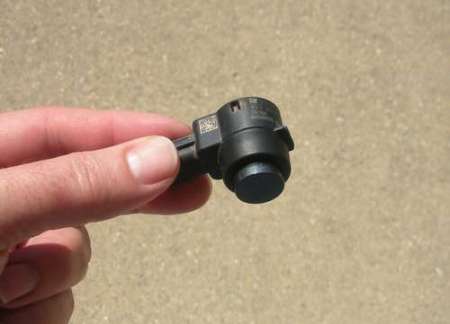
With many modern cars coming equipped with an array of ultrasonic sensors mounted in the bumpers, it stands to reason that many junk yards have them too. [jimk3038] points out that, unless they’re crushed, they’re probably good. The list of features on these is pretty long, including being short proof, water proof,  EMF proof and fast. These tough little suckers can be used in a multitude of projects and can have a range of roughly 2 meters.  [jimk3038] documents in great detail how to use these things as well as offering some sample code to get you started. Why didn’t we think of this?

PID Controlled Smoker

[dafonso] purchased a nice 1500W smoker but was somewhat dismayed that it only had one cooking temperature. To compensate he designed his own PID control system which allows him to set the cooking temperature digitally. At the heart of the system is a PICAXE 18 micro which switches the smoker on and off using a solid state relay. Rather than testing the 110V system on the smoker itself (which would have been a pain indoors) he used a lamp instead. To see if he was getting the correct temperature he taped his thermocouple to the light bulb and let the PID switch the lamp on and off. Also be sure to checkout his video which does a good job of explaining how he was able to solder the surface mount components required for the control board.

Triggering A DSLR Shutter With An Audio Clip

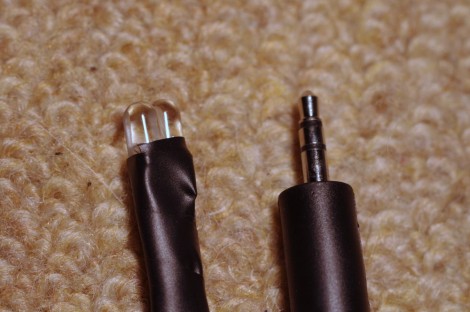
Apparently Pentax DSLR cameras have a remote shutter option that used infrared signals. [Pies for you] gathered up several different hacks and built a method of triggering the camera using custom audio. He put together the dongle above, just a headphone extension cord and two IR LEDs, which plugs into the headphone jack of any audio device like an iPod or an Android phone. When you play back a file the audio signals drive the IR LEDs. This is completely worthless unless you craft your own audio file using the correct frequency, duty cycle, and bit encoding. [Pies for you] did just that and got things up and running. Looks like the system doesn’t do so well with MP3 compression, but take a look at the waveform analysis that he posted and then make sure you’re using a lossless format.

Internships: Have Fun While Working Toward A Career

Attention Students: Living your life with a devil-may-care attitude will soon come to an end… But while you’re at it, take the summer away from your normal school’s-out activities to hack together something cool while tricking family into thinking it’s good for the career.

That link will take you to Waterloo Labs’ announcement that they’re hiring four paid interns this summer. You’ll need a bucketful of hacking skills from mechanical, to electrical, to coding (or any combination thereof). If the name doesn’t strike a bell be warned; these guys and gals do things like riding the roof of remote-control cars, and playing video games with real armaments.

Is your company offering similarly radical internships? We’d love to connect some hardcore hackers with good summer homes. Send a tweet a to Mike (@szczys) so that we can post an internships follow-up with more opportunities.

[via Twitter]

See-through LED Display

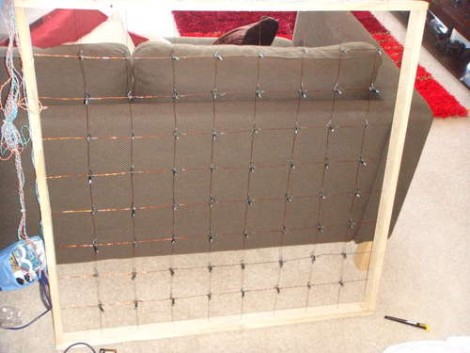
[Ndsit] is having a party and wanted to liven up the place with some blinky lights. He’s a bit new when it comes to hobby electronics, and although we’d highly recommend inviting some resistors to participate, the LED matrix that he built is very nice. It’s 8×8, it’s big, and (as shown in the clip after the break) the lights seem to hover in midair. That’s because he didn’t use a substrate to make the display. A grid of enameled wire is strung between the four sides of the wooden frame. LEDs were gathered from a string of Christmas lights which means they’re in a holder and have insulated wires already connected. Each one was tied on at a junction point of the grid, then connected to a portion of the wire where enamel had been scraped off.

It works but there’s already one light that is out. We hope some current protection is added so that this can be used again and again.

Continue reading “See-through LED Display” →

Location Recorder And Mapper

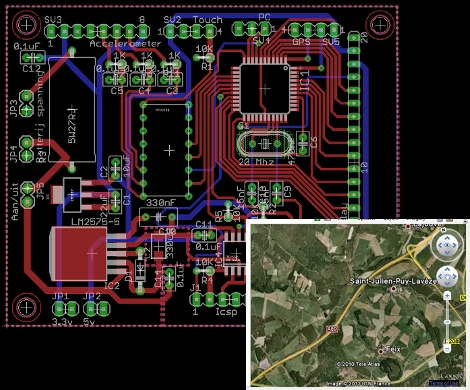
[Jeroen’s] student project is a module that uses GPS tracking to create travel data on Google maps. It’s not really a spy device as the data isn’t transmitted, but would be a lot of fun to use on cycling and hiking adventures. A PIC 18F2550 reads location and altitude data from a GPS receiver as well as data from an accelerometer. This information can be displayed on an attached touchscreen display and it is also saved to a pair of EEPROMs. When you get back from your trip, the data pulled from the device via a serial connection is processed by [Jeroen’s] C# application and used to overlay the route on a google map. He’s got a source code package available for download but we’ve saved you the trouble if the schematic is all you’re after. It’s attached after the break.

Continue reading “Location Recorder And Mapper” →