Adding Mute To A Bluetooth Headset

[Jared] often needs to be on conference calls for work during his motorcycle commute. He’s got a bluetooth headset that cancels noise but it didn’t have a mute feature. He cracked open the speaker and microphone portion of the apparatus but there wasn’t enough room for a switch. The base unit which houses the noise cancelling hardware had plenty of room. He added a single pole double throw (SPDT) switch to the positive wire from the microphone, allowing him to disconnect it as a mute function would. He mentions the need to seal the unit with silicone after the hack in order to keep out the elements. We might have opted for a weather-proof switch as well.

This simple hack makes a nice addition to any Bluetooth projects you’re working on.
Teensy Credit Card Reader

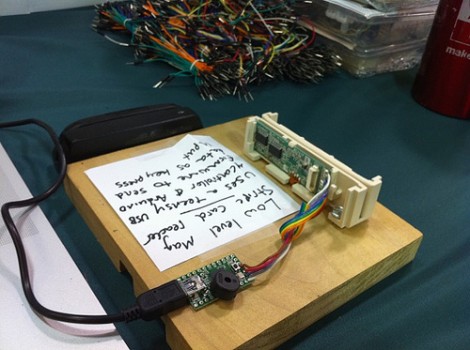
Here’s a hack that makes business sense. [PT] recalls last year’s HOPE conference when their booth was using a virtual credit card terminal for purchases that required manual entry of card information. This year they’ll have the same virtual terminal but this magnetic stripe reader will fill it out automatically.

A magstripe reader (reading only, no funny business here) from Mouser grabs data from the card. A Teensy microcontroller board, which identifies itself as a USB keyboard, automatically fills out the virtual terminal from the parsed data. The real question, are his customers comfortable sliding their plastic through a hacked reader?

20-channel DMX Controller

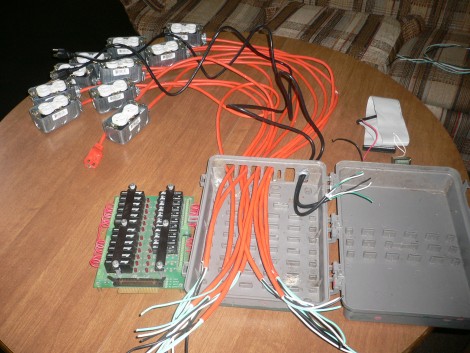
[Joshua] shares his details on building this 20-channel DMX controller. He’s sourced some extension cords to cut up for the complicated wiring project. He plans to drive 120V lights with the system so he’s also using the extension cords to connect a bunch of outlet boxes to the main controller. Inside you’ll find a set of AVR chips ready for your commands. Instead of using jumpers or DIP switches to set their addresses he set them in the firmware and burned a different version to each chip. The key here is writing the address right on the chips to prevent any confusion.

This will be used of Halloween and Christmas displays. We love Halloween hacks just about as much as we love Christmas hacks, so hit the basement and don’t forget to share the result of your labors with us.

Spirograph Generator

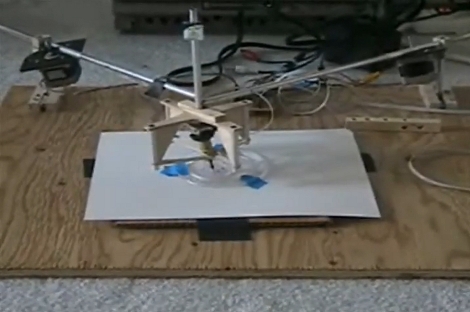
The Agnewgraph I can turn out a pretty nice Spirograph drawing. Instead of relying on meticulously acurate CNC hardware, it uses a Spirograph stencil similiar to that business card we’re so fond of. The key to the [Mpark’s] design is an analog joystick which is attached to the pen. As the pen follows the plastic guide around, a Propeller microcontroller calculates the angle of travel based on that joystick. These measurements are used to decide how to move the two stepper motors that provide horizontal and vertical motion to the frame. We’ve attached a video after the break just in case our rough description didn’t do it for you.

Continue reading “Spirograph Generator” →

Terminal Node Controller In A Router

[Andrew] used a DSL router to make his own Terminal Node Controller. This will become part of an APRS-IS network, an Internet-based network built by amateur radio operators. The router used here is a Dlink DSL-502T with an AVR based TNC module attached to the serial port header. The phone line connector and its accompanying hardware have been removed to make room for the TNC module, which is supplied with 12V via that red wire. When the router boots up it sends data to the serial port header so the firmware on the TNC needed some tweaking to accommodate this (yay for open source).

Want some more APRS goodness? Check out this AVR APRS tracker.

A Bicycle Build For… 2.0

Here’s an interesting way to fill the second seat on your tandem bicycle. It seems no one ever wants to be the stoker, so this gentleman decided to build his riding partner. JouleS powers the bicycle from the back using the same motions a human would. It’s not the easiest way to make an electric bicycle but the mechanics that went into it are quite beautiful. See the old boy pedaling away after the beak.

Continue reading “A Bicycle Build For… 2.0” →

All That’s Needed Is A Retro Paintjob, MiniMAME

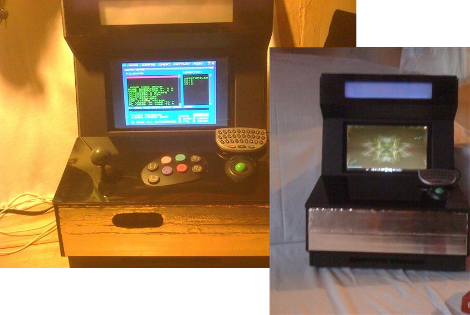
[Tim’s] miniMAME‘s construction follows the “light and cheap” approach, using foam core board and hot glue. Sure it won’t last a nuclear attack, but at least it’s light enough to carry to a friend’s house.

With a removable netbook at the core, CCFLs, speakers, trackball, and mini arcade fighting stick, the project completely surpassed our expectations. For those looking to build a miniMAME, [Tim] includes lots of pictures, details, and plans allowing anyone to make their own in about an afternoon.