
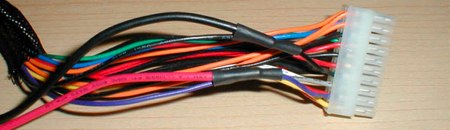
This simple and clever guide to installing an always on USB port comes from the Team Hack-a-Day forums (originally created for the team’s Folding@home efforts). [Cerberus] added a USB port to his computer case that always has power, even when the computer is off. The power comes from the +5VDC standby line in the motherboard connector. You can use this new port to charge any USB based device.
Laser Surveillance Defeater

Imagine our chagrin when we first laid eyes on this “laser surveillance defeater.” It’s supposedly built to the security requirements of federal agencies. We don’t believe most government issue devices have exposed circuit boards or 9V batteries dangling from them. Laser surveillance works by bouncing the beam off of a room’s window. People speaking in the room cause the window to vibrate, which modulates the reflected laser beam. This device looks like it’s just a piezo buzzer meant to vibrate in vocal ranges. A quick search didn’t turn up any DIY projects, but it looks simple enough. Shomer-Tec would love you to purchase one for every window at $69 each. A small price to pay when you’re taking on people willing to spend $20.
[via Gizmodo]
Pwnie Awards 2008, Nominations Open

Nominations for the 2008 Pwnie Awards have opened. The annual event, in its second year, is accepting nominations in nine categories ranging from Mass 0wnage to Best Song. The awards will be presented at the Black Hat in Las Vegas in August. Linux.com covered last year’s awards ceremony.
[photo: GNUCITIZEN]
[via trailofbits]
Logicport Overview
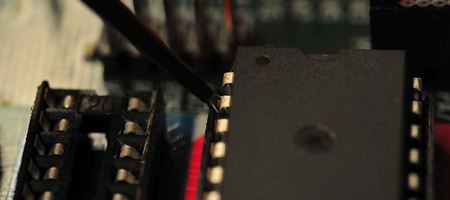
As promised earlier, the Near Future Laboratory has published an overview of the Logicport Logic Analyzer. They’re using the Playstation 2 analysis as an example. The Logicport uses “interpreters” to define protocols. It has I2C/TWI, SPI, RS232, and CAN 2.0A/2.0B, but you can build your own interpreter based on these. You can specify bit order and the format you want the data in. Slave interpreters can be used for specific tasks: with the PS2 they were used to just show the fifth byte, which is the actual button press.
“Triggers” are used to signal specific activity. On the PS2, one was attached to the falling signal on the slave select line. This event means the master is about to start sending data.
The final area worth exploring is “measurements”. These can be frequency or arbitrary time intervals between events. The Logicport has multiple ground connections to eliminate noise from the signal and you’ll have to play with sample rate and logic level to get things running smooth. It’s nice to see how-tos written from the perspective of someone just getting started with the tool.
EFiX Dongle Still Not Available
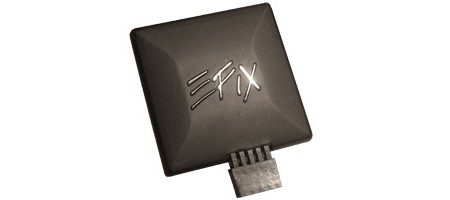
Well, it’s June 23rd, and still no dongle from EFiX. Despite a new product page on the company’s site, the OS X installing dongle is still not available for purchase. The USB dongle is supposed to facilitate the installation of Mac OS X by booting the Leopard install DVD on PCs, but so far no one has been able to verify this claim as no one has one of these in their hands yet. We’ve been covering this story since the beginning, and we’ll be sure to let you know when you can actually buy one of these.
[via Engadget]
Air Hockey Robot
Don’t be ashamed, we suck at air hockey too. Luckily for us, we now have a robot opponent to blame or losing streak on. Engineers at Nuvation didn’t build this air hockey playing robot, they simply adapted a standard industrial robot arm for the task. It is controlled jointly by a ColdFire processor and a 9S08 microcontroller. An array of high power LEDs and a camera are positioned over the air hockey table, which captures the position of the puck. The robot reportedly wins 90% of its games, even against solid opponents. While this is more of project to show the power of ColdFire processors, we can’t help but think it will lead to a rash of unbeatable robot opponents. We’ve already been robo-owned at foosball; what’s next?
Tube Amp Monitor

Sparkfun contributor [Pete] really loves tube amps, but he’s a very safety-conscious guy who doesn’t like being electrocuted. This is a problem, since tube amps are usually very high voltage, and a small mistake can be fatal. To deal with this voltage issue, he built a tube amp with a control system built around a 6DOF v3 controller board. The control system is there mainly in case of a failure, automatically shutting off the high voltage transformer in any such event. It has the added benefit of filtering any 60Hz noise from getting into the audio, which happened before he installed the control system.
In addition to regulating power, the controller board also monitors bias points in the output tubes and displays its diagnostics on an LCD. Aside from getting great sound from the tube amp, [Pete] made it look great too, installing colored LEDs under the tubes. We love his design: just because safety comes first it doesn’t mean cool-factor can’t come in a close second.








