Sad news for kids and adults alike as Lego announces the end of the Mindstorms line. The much-wish-listed line of robotics construction toys will be discontinued by the end of this year, nearly a quarter-century after its 1998 introduction, while support for the mobile apps will continue for another couple of years. It’s probably fair to say that Mindstorms launched an entire generation of engineering careers, as it provided a way to quickly prototype ideas that would have been difficult to realize without the snap-fit parts and easily programmed controllers. For our money, that ability to rapidly move from idea to working model was perhaps the strongest argument for using Mindstorms, since it prevented that loss of momentum that so often kills projects. That was before the maker movement, though, and now that servos and microcontrollers are only an Amazon order away and custom plastic structural elements can pop off a 3D printer in a couple of hours, we can see how Mindstorms might no longer be profitable. So maybe it’s a good day to drag out the Mindstorms, or even just that big box of Lego parts, and just sit on the carpet and make something.

Hackaday Columns4794 Articles
This excellent content from the Hackaday writing crew highlights recurring topics and popular series like Linux-Fu, 3D-Printering, Hackaday Links, This Week in Security, Inputs of Interest, Profiles in Science, Retrotechtacular, Ask Hackaday, Teardowns, Reviews, and many more.
Hackaday Podcast 191: Researchers Parse Starlink, Switches Sense Muscles, And LFT Plays The Commodordion
This week, Editor-in-Chief Elliot Williams and Staff Writer Dan Maloney get together for a look at everything cool under the hardware-hacking sun.
Think you need to learn how to read nerve impulses to run a prosthetic hand? Think again — try spring-loaded plungers and some Hall effect sensors. What’s Starlink saying? We’re not sure, but if you’re clever enough you can use the radio link for ad hoc global positioning. Historically awful keyboards, pan-and-scan cable weather stations, invisibility cloaks, plumbing fittings for electrical controls — we’ll talk about it all. And if you’ve never heard two Commodore 64s and a stack of old floppies turned into an electronic accordion, you really don’t know what you’re missing.
Download it your own bad self!
Check out the links below if you want to follow along, and as always, tell us what you think about this episode in the comments!
This Week In Security: IOS, OpenSSL, And SQLite
Earlier this week, a new release of iOS rolled out, fixing a handful of security issues. One in particular noted it “may have been actively exploited”, and was reported anonymously. This usually means that a vulnerability was discovered in the wild, being used as part of an active campaign. The anonymous credit is interesting, too. An educated guess says that this was a rather targeted attack, and the security company that found it doesn’t want to give away too much information.
Of other interest is the GPU-related fix, credited to [Asahi Lina], the VTuber doing work on porting Linux to the Apple M1/M2 platform, and particularly focusing on GPU drivers. She’s an interesting case, and doing some very impressive work. There does remain the unanswered question of how the Linux Kernel will deal with a pull request coming from a pseudonym. Regardless, get your iOS devices updated.
Continue reading “This Week In Security: IOS, OpenSSL, And SQLite”
Computing Fluidly
Computers come in many forms, depending on your definition. We’ve seen computers and computer gates built out of things as diverse as marbles, relays, and — of course — transistors. However, there are logic gate systems that use a property of moving fluids to form logic gates and a bistable element. That’s all the pieces you need to build a working computer.
It may sound far-fetched, but there have been general-purpose computers built using this technology. It is also used in specialized applications where fluids are already flowing, like shower heads, automotive transmissions, and in places where electronics are prone to misbehave. Many think the field will see a resurgence when we need to build logic at the molecular level for nanotech applications, too.
Basics
In its most basic form, a fluidic gate uses flow as a logic 1 and less flow to be a logic 0. Merging two streams together provides an OR gate. Using a supply stream that you can divert with a control stream provides a NOT function. Given enough inverters and OR gates, you can build everything else.
2022 Supercon: Schedule Released, And [Odd Jayy]
It’s finally time! We’ve put together the 2022 Supercon Schedule, and you can check out all the talks, workshops, and events in one place – right now.

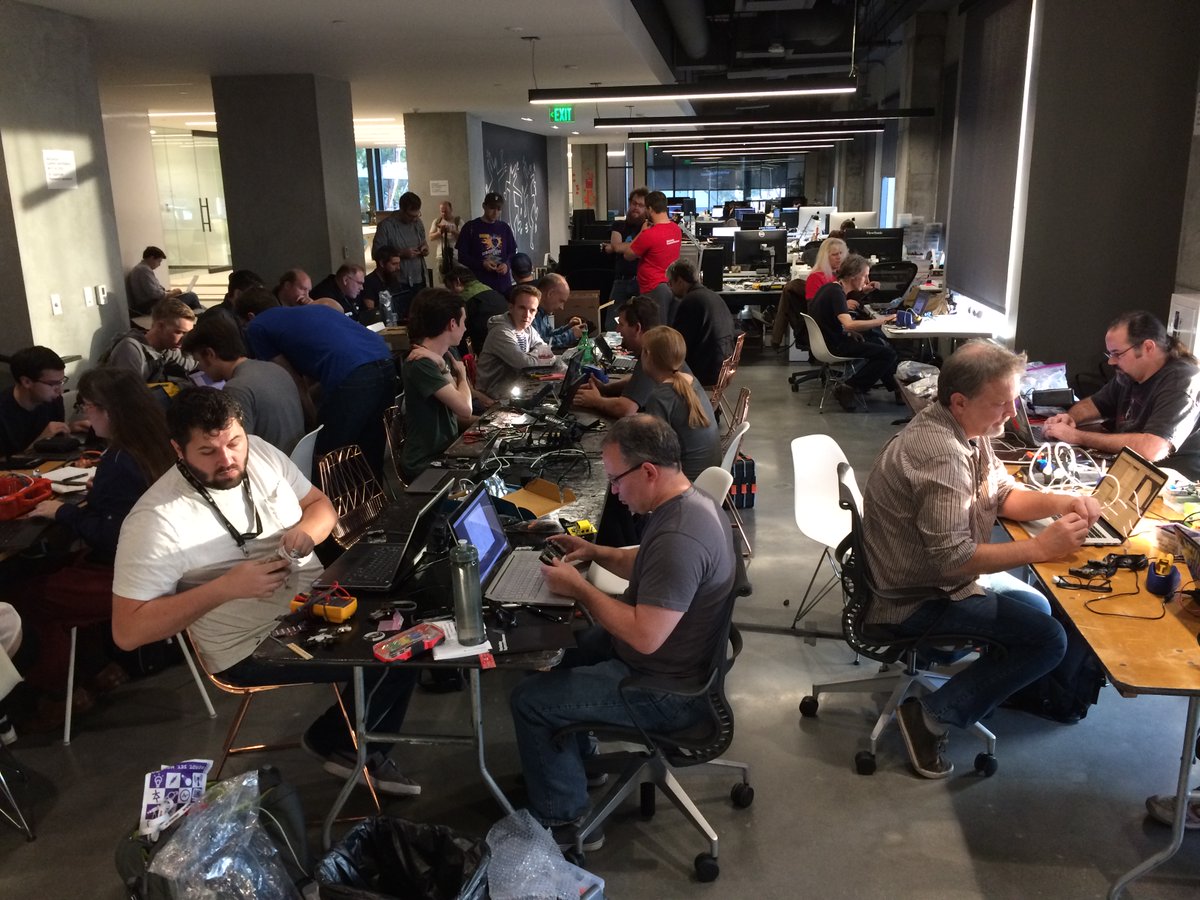
It all starts off with breakfast on Friday morning to power you up for a full day of badge hacking, workshops, and general mixing and mingling before the Friday night party. Fridays are significantly less formal, but swing by Supplyframe HQ any time to get registered, get your badge, and get a mellow head start on Supercon.
Saturday morning, the talks begin! After a brief introduction and welcome, keynote speaker Joe Grand takes the stage to kick things off. And from then on, it’s two tracks of talks on two stages until your brain explodes. Or at least until the Hackaday Prize Awards ceremony at 7:00 PM, followed by the awards after-party.
Pull yourself out of bed Sunday morning for another full day of stellar talks. And squeeze in some more last minute badge-hacking time somehow, because we close up Sunday evening with the always entertaining badge hacking contest and awards.
Jorvon [Odd Jayy] Moss to Speak
Plus, we’ve got one last bit of great news: Jorvon [Odd Jayy] Moss is giving a talk on his adventures in making companion robots, and his latest forays into adding more intelligence into his animatronic and artistic creations.
So if you haven’t bought your tickets yet, do it. ‘Nuff said. See you at Supercon!
And if you’re not able to make it live, all of the talks on the LACM Stage will be streamed live on our YouTube channel, and you can join in the discussion over at the Hackaday Discord server or on Hackaday.io’s Supercon Chat channel. And all the talks that we can’t stream, we’re recording for later release, so you can always catch up later.
2022 Hackaday Supercon: Joe [Kingpin] Grand Keynote And Workshops Galore
It’s our great pleasure to announce that Joe [Kingpin] Grand is going to be our keynote speaker at the 2022 Supercon!
If you don’t know Joe, he’s a hacker’s hacker. He’s behind the earliest DEFCON electronic badges, to which we can trace our modern #badgelife creative culture. He was at the l0pht when it became the most publicly visible hackerspace in the USA, at the dawn of what we now think of as cybersecurity. And moreover, he’s a tireless teacher of the art of hardware hacking.
Joe’s talk at DEFCON 22 about reverse engineering PCBs on a hacker budget is on our top-10 must watch playlist, and his JTAGulator debug-port enumeration device has been present at the start of countless hacking sessions. But again, it’s his enthusiasm for creating, his inspiring “what if I poke at this thing this way?” attitude, and overwhelming hacker spirit that make Joe a long-overdue speaker at Supercon! Continue reading “2022 Hackaday Supercon: Joe [Kingpin] Grand Keynote And Workshops Galore”
Bare-Metal STM32: Setting Up And Using SPI
The Serial Peripheral Interface (SPI) interface was initially standardized by Motorola in 1979 for short-distance communication in embedded systems. In its most common four-wire configuration, full-duplex data transfer is possible on the two data (MOSI, MISO) lines with data rates well exceeding 10 Mb/s. This makes SPI suitable for high-bandwidth, full-duplex applications like SD storage cards and large resolution, high-refresh displays.
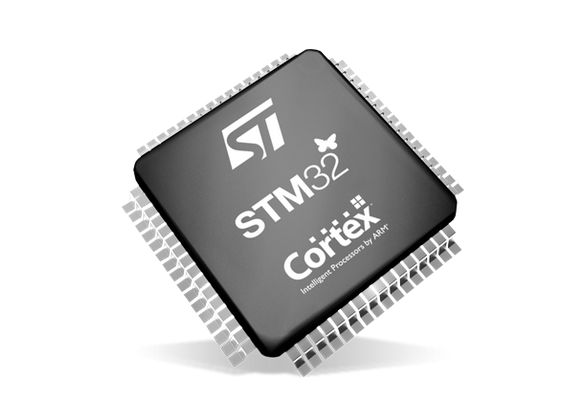
STM32 devices come with a variable number of SPI peripherals, two in the F042 at 18 Mb/s and five in the F411. Across the STM32 families, the SPI peripheral is relatively similar, with fairly minor differences in the register layout. In this article we’ll look at configuring an SPI peripheral in master mode.
Continue reading “Bare-Metal STM32: Setting Up And Using SPI”