The Fastest MS-DOS Gaming PC Ever

After [Andy]’s discovery of an old ISA soundcard at his parents’ place that once was inside the family PC, the onset of a wave of nostalgia for those old-school sounds drove him off the deep end. This is how we get [Andy] building the fastest MS-DOS gaming system ever, with ISA slot and full hardware compatibility. After some digging around, the fastest CPU for an Intel platform that still retained ISA compatibility turned out to be Intel’s 4th generation Core series i7-4790K CPU, along with an H81 chipset-based MiniITX mainboard.

Of note is that ISA slots on these newer boards are basically unheard of outside of niche industrial applications, ergo [Andy] had to tap into the LPC (low pin count) debug port & hunt down the LDRQ signal on the mainboard. LPC is a very compact version of the ISA bus that works great with ISA adapter boards, specially an LPC to ISA adapter like [Andy]’s dISAppointment board as used here.

A PCIe graphics card (NVidia 7600 GT, 256 MB VRAM), ISA soundcard, dodgy PSU and a SATA SSD were added into a period-correct case. After this Windows 98 was installed from a USB stick within a minute using [Eric Voirin]’s Windows 98 Quick Install. This gave access to MS-DOS and enabled the first tests, followed by benchmarking.

Benchmarking MS-DOS on a system this fast turned out to be somewhat messy with puzzling results. The reason for this was that the BIOS default settings under MS-DOS limited the CPU to non-turbo speeds. After this the system turned out to be actually really quite fast at MS-DOS (and Windows 98) games, to nobody’s surprise.

If you’d like to run MS-DOS on relatively modern hardware with a little less effort, you could always pick up a second-hand ThinkPad and rip through some Descent.
Continue reading “The Fastest MS-DOS Gaming PC Ever”

The Amiga No One Wanted

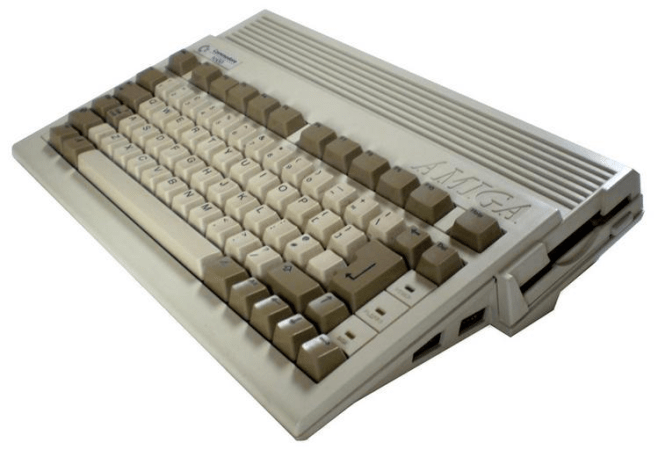
The Amiga has a lot of fans, and rightly so. The machine broke a lot of ground. However, according to [Dave Farquhar], one of the most popular models today — the Amiga 600 — was reviled in 1992 by just about everyone. One of the last Amigas, it was supposed to be a low-cost home computer but was really just a repackaged Amiga 1000, a machine already seven years old which, at the time, might as well have been decades. The industry was moving at lightspeed back then.

[Dave] takes a look at how Commodore succeeded and then lost their way by the time the 600 rolled out. Keep in mind that low-cost was a relative term. A $500 price tag was higher than it seems today and even at that price, you had no monitor or hard drive. So at a $1,000 for a practical system you might as well go for a PC which was taking off at the same time.

By the time Commodore closed down, they had plenty of 600s left, but they also had refurbished 500s, and for many, that was the better deal. It was similar to the 500 but had more features, like an external port and easy memory expansion. Of course, both machines used the Motorola 68000. While that CPU has a lot of great features, by 1992, the writing was on the wall that the Intel silicon would win.

Perhaps the biggest issue, though, was the graphics system. The original Amiga outclassed nearly everything at the time. But, again, the industry was moving fast. The 600 wasn’t that impressive compared to a VGA. And, as [Dave] points out, it couldn’t run DOOM.

There’s more to the post. Be sure to check it out. It is a great look into the history of the last of a great line of machines. Maybe if Commodore had embraced PC interfaces, but we’ll never know. [Dave’s] take on the end of the Amiga echos others we’ve read. It wasn’t exactly Doom that killed the Amiga. It was more complicated than that. But Doom would have helped.

A Look At The Panasonic FS-A1FM

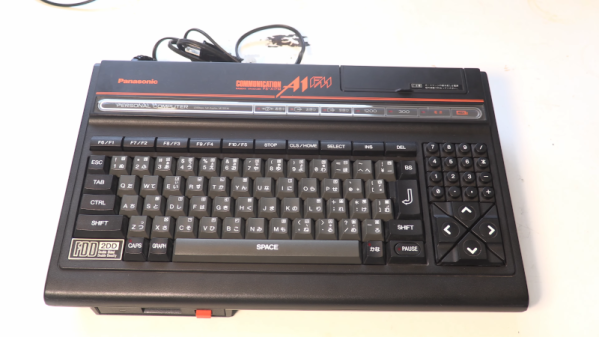
MSX computers were not very common in the United States, and we didn’t know what we were missing when they were popular. [Re:Enthused] shows us what would have been a fine machine in its day: a Panasonic FS-A1FM. Have a look at the video below to see the like-new machine.

The machine isn’t just an ordinary MSX computer. The keyboard is certainly unique, and it has an integrated floppy drive and a 1200-baud modem. The case proudly proclaims that the floppy is both double-sided and double-density. Like most MSX computers, it had a plethora of ports and, of course, a cartridge slot. Unfortunately, the machine looks great but has some problems that have not been repaired yet, so we didn’t get to see it running properly.

He was able to get to the MSX-DOS prompt to show along with the BIOS menu. We hope he manages to get the keyboard working, and we were glad to see another computer from that era we had not seen before.

We don’t think anyone made one at the time, but we’ve seen a modern take on a luggable MSX. Of course, you can emulate the whole thing on a Pi and focus on the aesthetics.

Continue reading “A Look At The Panasonic FS-A1FM”

Classy Paper Tape Reader Complements Homebrew Retrocomputer

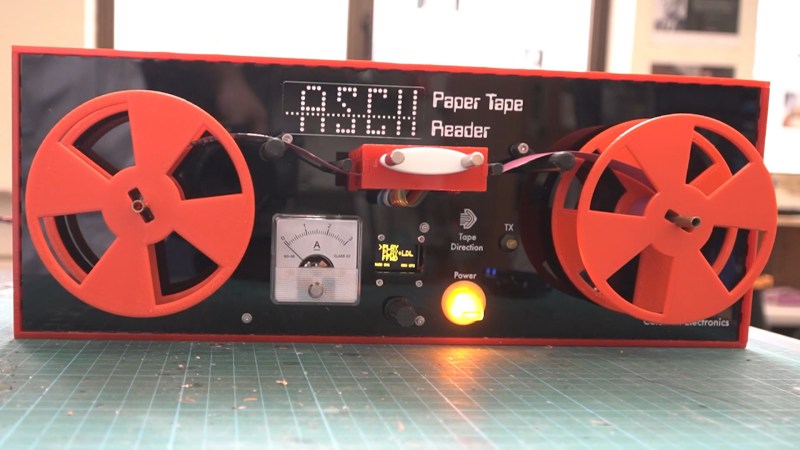
If you were one of the earliest of early adopters in the home computing revolution, you might have had to settle for paper tape mass storage. It was slow, it was bulky, but it was what you had, and that gave it a certain charm that’s hard to resist. And that charm is what [Joshua Coleman] captures with this DIY paper tape reader build.

If the overall style of this project looks familiar, it’s because it was meant to echo the design themes from [Joshua]’s Coleman Z-80 modular computer. The electronics of the reader are based on [David Hansel]’s take on a paper tape reader, which in turn was meant to complement his Altair 8080 simulator — it’s retrocomputers all the way down! [Joshua]’s build has a few bells and whistles to set it apart, though, including an adjustable read head, parametric 3D-printed reels, and a panel mounted ammeter, just because. He also set it up to be a sort of keyboard wedge thanks to an internal relay that bypasses the reader unless it’s actually playing back a tape. Playback speed is pretty fast; see the video below for details.

So far, writing the tapes is an offline process. [Joshua] uses a Python program to convert ASCII to an SVG file and uses a laser cutter to burn holes in lengths of paper, which are then connected together to form a longer tape. A logical next step might be to build a feeder that moves a paper tape across the bed of the laser cutter in sync with the conversion program, to create continuous paper tapes. Or, there’s always the old-school route of solenoid-powered punch and die. We’d be thrilled with either.

Continue reading “Classy Paper Tape Reader Complements Homebrew Retrocomputer”

Soviet ZX Spectrum clone on a table

ZX Spectrum, Soviet Style: A 44-IC Clone You Can Build

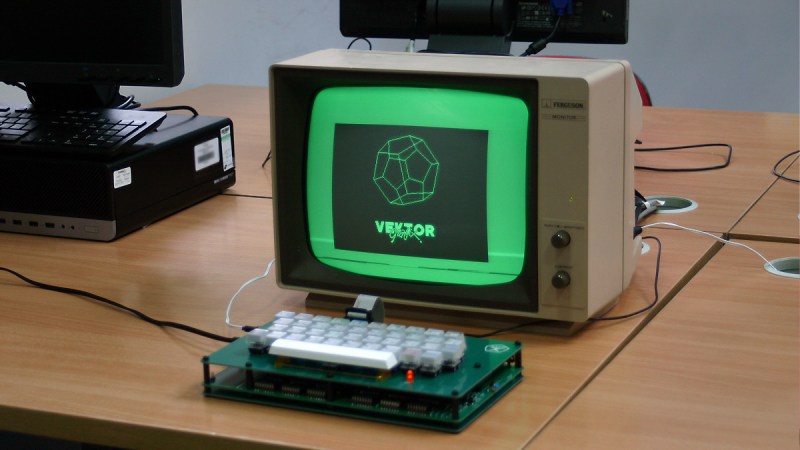
If you’ve ever fancied building a ZX Spectrum clone without hunting down ancient ULAs or soldering your way through 60+ chips, [Alex J. Lowry] has just dropped an exciting build. He has recreated the Leningrad-1, a Soviet-built Spectrum clone from 1988, with a refreshingly low component count: 44 off-the-shelf ICs, as he wrote us. That’s less than many modern clones like the Superfo Harlequin, yet without resorting to programmable logic. All schematics, Gerbers, and KiCad files are open-source, listed at the bottom of [Alex]’ build log.

The original Leningrad-1 was designed by Sergey Zonov during the late Soviet era, when cloning Western tech was less about piracy and more about survival. Zonov’s design nailed a sweet spot between affordability and usability, with enough compatibility to run 90-95% of Spectrum software. [Alex]’ replica preserves that spirit, with a few 21st-century tweaks for builders: silkscreened component values, clever PCB stacking with nylon standoffs, and a DIY-friendly mechanical keyboard hack using transparent keycaps.

While Revision 0 still has some quirks – no SCART color output yet, occasional flickering borders with AY sound – [Alex] is planning for further improvements. Inspired to build your own? Read [Alex]’ full project log here.

IPV4, IPV6… Hey! What Happened To IPV5?

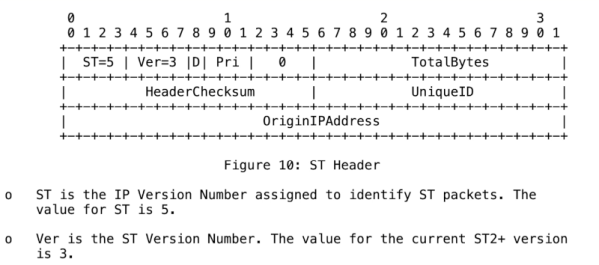
If you’ve ever been configuring a router or other network device and noticed that you can set up IPv4 and IPv6, you might have wondered what happened to IPv5. Well, thanks to [Navek], you don’t have to wonder anymore. Just watch the video below.

We will warn you of two things. First, the video takes a long time to get around to what IPv5 was. In addition, if you keep reading, there will be spoilers.

Continue reading “IPV4, IPV6… Hey! What Happened To IPV5?”

Fictional Computers: EMERAC Was The Chatbot Of 1957

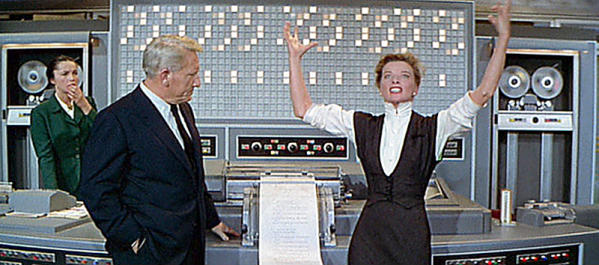
Movies mirror the time they were made. [ErnieTech] asserts that we can see what people thought about computers back in 1957 by watching the classic Spencer Tracy/Katharine Hepburn movie “Desk Set.” What’s more, he thinks this might be the first movie appearance of a human-like computer. On a side note, in the UK this movie was known as “The Other Woman.”

The story is about an MIT computer expert computerizing a broadcasting company who, of course, finds romance and, at least towards the end, comedy.

Continue reading “Fictional Computers: EMERAC Was The Chatbot Of 1957”