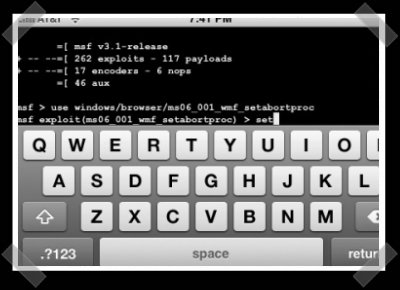
[muts] went through some trials, but managed to get metasploit running on his iPhone. Later he found out that it comes with the Cyida installer that he used on his journal to manually install it. Still, it’s interesting to see these tools showing up on the platform.
Cellphone Hacks541 Articles
LED Serial Debugging For Cell Phone Hacking
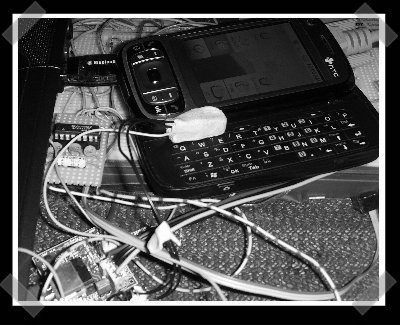
[Barry] needed some way to get serial output to help debug his efforts to port Linux to the HTC TytnII (Windows mobile Pocket PC phone). He wrote some code to send serial output via one of the LEDs on the phone and rigged up an AVR to pic up the output and provide a USB interface to the computer. It runs at about 200bps – perfect for the quick debug session.
Openmoko FreeRunner Now Available
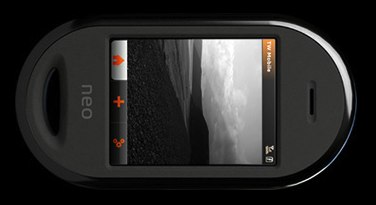
Openmoko began selling Neo 1973 phones direct to developers last July. The phone is an open source project designed to ease development on mobile platforms. The Neo 1973 has since sold out, but a new Linux phone intended for the mass market has been released, the FreeRunner for ~$399. The screen is 640×480 with 3D acceleration and a 500MHz Samsung processor. The new phone has WiFi and 2.5G GSM support. It has some truly unique features like USB host mode support. You can find the differences between the two phones here. This new phone release should help strengthen the community since average users were discouraged from purchasing the original. Pictures of the phone’s internals and a component diagram can be found on the Openmoko wiki. We wish more manufacturers would explicitly tell us how to get console access.
[via Slashdot]
IPhone 2.0 Adds Secure Wipe
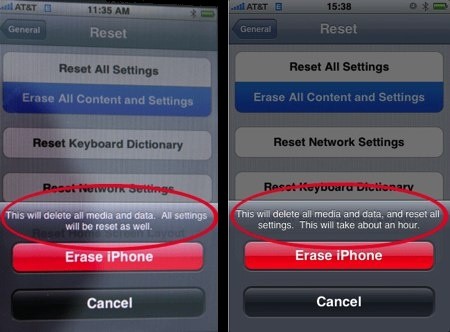
AppleInsider is reporting that iPhone Software v2.0 will add a secure wipe feature. The screenshot above shows the text “This will take about an hour.” added to the normal erase feature. This time is used to overwrite data to the disk multiple times. The need for secure phone erasure came to light after a researcher was able to recover personal information from a refurbished iPhone using forensic tools. Since then, a few people have published techniques for obliterating personal data using either the GUI or the more thorough command line method. Remote wipe has also been added to the new firmware in case the phone is stolen. We’re happy to see security being made easily accessible to nontechnical users and expect that remote wipe will become standard on laptops in the future.
Open Source Symbian
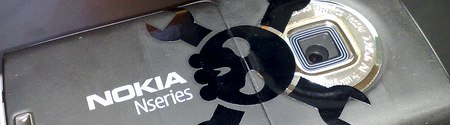
Nokia recently announced its plans to purchase Symbian and formed the Symbian Foundation with the intention opening the software platform over the next two years. Symbian is already present on 60% of all cellphones in the world. With such a massive install base, open source Symbian has a much better chance of taking off than platforms like Android, which are starting on the ground floor.
Wiretapping And How To Avoid It
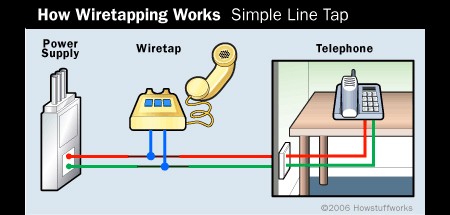
No matter who you suspect is plotting your doom, you’ll need need to know the way wiretapping works in order to learn their plans and shield yourself from their surveillance. Luckily, ITSecurity has posted a comprehensive
article about wiretapping, including information on how to wiretap and how to find out if someone is wiretapping you.
One of the more intriguing methods of wiretapping the articles discusses is a service by a company called FlexiSPY. It works by covertly installing a program onto the target’s cellphone. Once installed, the spying party can listen to anything going on in the room the target is in by calling the phone. It won’t ring, vibrate, or give any indication that it is transmitting audio data.
Some of the more hack-oriented methods involve tapping into a landline, using special software to record VoIP calls, or buying a wiretapping kit. Of course, countermeasures, are also discussed, but some of the links they provide are a little more informative on the topic of defense against wiretapping.
IPhone Used To Control Squad Of UAVs
[youtube=http://www.youtube.com/watch?v=CRcld5aAN2E&hl=en]
Building UAVs is only half the work involved in making them fly; the other half is a control system. The Center for Collaborative Control of Unmanned Vehicles (C3UV) from the University of Califorina, Berkeley has devised a way to control a squad of RC airplanes with an iPhone. The system works by submitting commands and coordinates to a web site via the iPhone’s web browser. The site then sends the commands to the team of drones, which carry out the orders. The drones are outfitted with cameras and a tracking device, which allows them to be monitored on the ground using Google Maps.
The iPhone Terms of Service specifically prohibits it being used to drive remote vehicles, but that shouldn’t really pose a problem: since the orders are deployed via the iPhone’s web browser, they could technically be given by any web-enabled device. Before anyone cries foul, though, bear in mind that the idea is to issue orders from the field, and the iPhone is perhaps the most high-profile mobile web device on the market, which maximizes the project’s exposure. Still, we can’t help but think that they’d have gotten more media attention if they had used a hacked Kindle instead.