Next Week: Bring-A-Hack In NYC

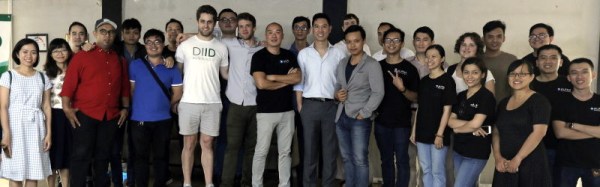
Hackaday, along with Ultimaker and New Lab, are hosting an extravaganza of super hacks and more in New York next week. Grab a project you’re working on and join us on Wednesday, February 28 in Brooklyn.

This is all about showcasing the coolest, newest stuff being worked on by makers, hackers, artists, and engineers. Get ready to talk hardware, stare into far too many LEDs, and enjoy drinks and camaraderie. The event is being hosted by New Lab, and we’re teaming up with Ultimaker to bring you a night of fun and solder fumes. We have great speakers lined up, and we’ve blocked out some time for lightning talks too so fill out this form if you’re interested.

Support for the KiCad Project

RSVPs for this meetup are $5, with all proceeds being donated to the KiCad project via CERN.

Sending some funding to support this Open Source EDA project is a great thing. If this fee is a no-go for you, we’re also looking for a few volunteers for the event. If you’d like to help out and skip that $5 cover, send us a note on Hackaday.io.

Hackaday Dublin Unconference: Grab Your Tickets!

Hackaday comes together in Ireland on April 7th and we want you to be there. Get your free ticket right now for the Hackaday Dublin Unconference!

An Unconference is the best way to put your finger on the pulse of what is happening in the hardware world right now. Everyone who attends should be ready to stand and deliver a seven-minute talk on something that excites them right now — this means you. The easiest thing to do is grab your latest hack off the shelf and talk about that.

Talks may be about a prototype, project, or product currently in progress at your home, work, or university. It could also be an idea, concept, or skill that you’re now exploring. The point is to channel your excitement and pass it on to others in a friendly presentation environment where everyone will cheer as your story unfolds.

Hackaday hosted an excellent Unconference in London back in September to a packed house for dozens of amazing presentations on a huge range of topics. We heard about bicycle turn signals, laser enhancing NES zappers, telepresence robots with IKEA origin stories, tiny-pitch LED matrix design, driving flip-dot displays, not trusting hardware 2-factor, and much more.

All the tickets for that event were scooped up in a few hours, and a huge waitlist followed. Don’t wait to grab your ticket!

We’re so happy to partner with DesignSpark, the exclusive sponsor of the Hackaday Dublin Unconference. DesignSpark is the innovation arm of RS Components and will have some staff on hand at the Unconference. They share our excitement in bringing together the Hackaday community throughout Europe. It is with their support that we are able to book an incredible venue and offer admission at no cost to all attendees. Hackaday events fill to capacity quickly, so get your ticket now before they are gone.

This Unconference is being held at Project Arts Centre, right at the heart of the Temple Bar area in central Dublin. The performing arts space has comfortable seating and is perfect for our presentation format. We’ll get started at 13:00. Tea, coffee, and snacks will be served throughout the afternoon and we’ll provide dinner as well. Anyone who is still standing when we close the doors at 21:00 is invited to join us at the pub afterward (we’ll get the first round).

As always, Hackaday’s success is based on the community of hackers, designers, and engineers that make it up. Please share the link to tickets on your social media and pester your friends to attend. Most importantly, don’t shy away from this speaking opportunity. We want to hear your story and this is the place to tell it. See you in Dublin in just a few short weeks!

Great Beginnings For Vintage Computing In Seattle; VCF PNW

The pitch to my wife was simple: “Feel like spending the weekend in Seattle?” That’s how I ended up at the inaugural Vintage Computer Festival Pacific Northwest last weekend, and I’m glad we made the five-hour drive into The Big City to check it out. Hackaday is a VCF sponsor, after all, so it seemed like a great excuse to make the trip. That it ended up being two consecutive days of great Seattle weather was only icing on the cake of being able to spend time with fellow retro computer aficionados and their dearest bits of old hardware, in a great museum dedicated to keeping computer history alive and accessible.

The fact that Seattle, home of Microsoft, Amazon, and dozens of other tech companies, has until now been left out of the loop in favor of VCF East in New Jersey and VCF West in Mountain View seems strange, but judging by the reception, VCF PNW is here to stay and poised to grow. There were 20 exhibitors for this go around, showing off everything from reanimated PDP-11 and Altair 8800 control panels to TRS-80s from Model 1 through to the CoCo. Almost every class of reasonably transportable retro hardware was represented, as well as some that pushed the portability envelope, like a working PDP-8 and a huge Symbolics 3640 LISP workstation.

Continue reading “Great Beginnings For Vintage Computing In Seattle; VCF PNW”

Early Bird Tickets For Hackaday Belgrade

Early Bird tickets for Hackaday Belgrade have just gone on sale, but they will not last long. This is Hackaday’s premier European hardware conference with talks, workshops, great food and drink, entertainment, and a hardware badge for hacking and demos. Festivities will go all day on 26 May and carry long into the night. The last time we did this was two years ago and it was completely sold out — now’s the time to get in on the fun.

Who’s speaking, what are the workshops all about, what does the hardware badge do, and what music do you have lined up? Trust your gut — we’ll have more details soon enough but you know this conference will be epic and it’s worth your time and treasure to be there. To reward your enthusiasm, Early Bird tickets are a much better deal than general admission.

Our Call for Proposals is now open. We seek talks and workshops exploring the most interesting uses of technology and the culture that goes along with it.

The Circle of Friends You May Not Have Met

You know those people just outside of the Hackaday orbit who are tired of hearing about the stuff you build and the coding tricks you discover? Those people won’t be there. Everywhere you turn at Hackaday Belgrade, fascinating conversations await. You’ll want it to last a week but it’s just one day… plus a little more.

Plan to arrive in Belgrade on Friday. There will be an unofficial meetup at a bar (last time we took over most of the place). The weather in Springtime is amazing and having pivo on the porch until far too late in the evening was a blast.

Hackaday Belgrade Badge prototype. Voja Antonic, creator of the Galaksija computer — now in museums around the world — just Tweeted this teaser image of the conference badge design.

Things get started, not too early, on Saturday around 10 AM, and we’ll have coffee and treats to kick off the day. The baristas in 2016 were incredible, and the food — lunch and dinner — were as well. These amenities ring the socializing area of the conference in the lobby of the main hall. Talks and workshops will go all day but at 7 PM it’s all about hacking while our crew lay down a live IDM set. At 11 PM the badge hacking demos begin and the live DJ steps up at midnight.

See the Sights

Don’t let things end there. I vaguely remember a 3 or 4 AM ćevapi run after the last Hackaday Belgrade conference, and there were multiple groups planning museum trips the next day. Belgrade has a wonderful Museum of Science and Technology (I made it to that one), a Nikola Tesla Museum (I’m planning to get there this time), and a multitude of interesting attractions. I’ll save you from having to see my gallery of food photos, but the city is fun, inexpensive, and has really delicious cuisine.

This is a weekend you’ll remember forever. Make your plans now!


Hackaday Belgrade 2018 Posters (click for full size download link):

You Can Learn A Lot From A Blinkenrocket

At this year’s Chaos Communication Congress, we caught up with [muzy] and [overflo], who were there with a badge and soldering project they designed to teach young folks how to solder and program. Blinkenrocket is a basically a 64-LED matrix display and just enough support hardware to store and display animations, and judging by the number of blinking rockets we saw around the necks of attendees, it was a success.

Their talk at 34C3 mostly concerns the production details, design refinements, and the pitfalls of producing thousands of a thing. If you’re thinking of building a hardware kit or badge on this scale, you should really check it out and crib some of their production optimization tricks.

For instance, instead of labelling the parts “C2” or “R: 220 Ohms”, they used a simple color-coding scheme. This not only makes it easier for kids to assemble, but it also means that they didn’t have to stick 1,000 part labels on every component. Coupled with [overflo]’s Zerhacker, SMD parts in strips were cut to the right length and color-coded in one step, done by machine.

The coolest feature of the Blinkenrocket itself is the audio programming interface. It’s like in the bad old days of software stored on cassette tapes, but it’s a phenomenal interface for getting a simple animation out of a web app and straight into a piece of minimal hardware — just plug it into a laptop or cell phone’s audio out and press “play” in the browser. The original design tried to encode the data in the pulse-length of square waves, but this turned out to be very hardware dependent. The final design used frequency-shift keying. What’s old is new again.

Everything you could want to know about the design, its code, and even the website itself are up on the project’s GitHub page, so go check it out. If you’d like to arrange a Blinkenrocket workshop yourself, shoot [muzy] or [overflo] an e-mail. Full disclosure: [overflo] gave us a kit, the “hard-mode” SMD one with 0805 1206 parts, and it was fun to assemble and program.

Next Week: Vintage Computer Festival Pacific Northwest

Next week something magical is happening. Seattle is getting a Vintage Computer Festival. It’s the Vintage Computer Festival Pacific Northwest, and it’s happening Saturday, February 10th and Sunday, February 11th at the Living Computers Museum and Labs.

As with all Vintage Computer Festivals, this is one with plenty of exhibits, speakers, and the ever-popular consignment shop. A few of the more interesting exhibits include a demonstration of the Syntauri alphaSyntauri, a synthesizer card and controller designed for the Apple II. When it was released in 1980, this was the first affordable digital synthesizer that competed against the Synclavier and Fairlight CMI. The difference? Synclaviers cost as much as a house, where the alphaSyntauri cost as much as a car. Also on deck is the dis-integrated MOnSter6502, a complete NMOS 6502 constructed out of individual, surface mount transistors. The Digi-Comp II from Evil Mad Scientist will be there, there will be BlinkenBones, and for anyone who wants to assemble their own front panel for a vintage minicomputer, [Oscar Vermeulen] will be there with the Pi-DP/8. This isn’t an event to miss.

As an aside, we’d really like to commend the Vintage Computer Federation for their incredible work in putting these shows together. The VCF West at the Computer History Museum in Mountain View is an incredible show, VCF Southeast has some amazing displays, and VCF East in New Jersey is a pretty incredible gathering going down May 18th through the 20th this year. The people working behind the scenes to make these shows happen are doing a service for all vintage computers and performing digital archeology that benefits us all.

Hackaday is proud to be a sponsor of VCF Pacific Northwest.

Making The Case For Open Source Medical Devices

Engineering for medical, automotive, and aerospace is highly regulated. It’s not difficult to see why: lives are often at stake when devices in these fields fail. The cost of certifying and working within established regulations is not insignificant and this is likely the main reason we don’t see a lot of work on Open Hardware in these areas.

Ashwin K. Whitchurch wants to change this and see the introduction of simple but important Open Source medical devices for those who will benefit the most from them. His talk at the Hackaday Superconference explores the possible benefits of Open Medical devices and the challenges that need to be solved for success.

Continue reading “Making The Case For Open Source Medical Devices”