Books You Should Read: The Boy Who Harnessed The Wind

For many of us, our passion for electronics and science originated with curiosity about some device, a computer, radio, or even a car. The subject of this book has just such an origin. However, how many of us made this discovery and pursued this path during times of hunger or outright famine?

That’s the remarkable story of William Kamkwamba that’s told in the book, The Boy Who Harnessed the Wind. Remarkable because it culminates with his building a windmill (more correctly called a wind turbine) that powered lights in his family’s house all by the young age of fifteen. As you’ll see, it’s also the story of an unyielding thirst for knowledge in the face of famine and doubt by others.

Continue reading “Books You Should Read: The Boy Who Harnessed The Wind”

Crunching Giant Data From The Large Hadron Collider

Modern physics experiments are often complex, ambitious, and costly. The times where scientific progress could be made by conducting a small tabletop experiment in your lab are mostly over. Especially, in fields like astrophysics or particle physics, you need huge telescopes, expensive satellite missions, or giant colliders run by international collaborations with hundreds or thousands of participants. To drive this point home: the largest machine ever built by humankind is the Large Hadron Collider (LHC). You won’t be surprised to hear that even just managing the data it produces is a super-sized task.

Since its start in 2008, the LHC at CERN has received several upgrades to stay at the cutting edge of technology. Currently, the machine is in its second long shutdown and being prepared to restart in May 2021. One of the improvements of Run 3 will be to deliver particle collisions at a higher rate, quantified by the so-called luminosity. This enables experiments to gather more statistics and to better study rare processes. At the end of 2024, the LHC will be upgraded to the High-Luminosity LHC which will deliver an increased luminosity by up to a factor of 10 beyond the LHC’s original design value.

Currently, the major experiments ALICE, ATLAS, CMS, and LHCb are preparing themselves to cope with the expected data rates in the range of Terabytes per second. It is a perfect time to look into more detail at the data acquisition, storage, and analysis of modern high-energy physics experiments. Continue reading “Crunching Giant Data From The Large Hadron Collider”

The Mark 14 Torpedo — When Just About Everything Goes Wrong, Even The Testing

I am a fan of the saying that those who don’t know history are doomed to repeat it. After all, humans have been building things for a number of centuries and we should learn from the engineers of the past. While you can learn a lot studying successes, sometimes — maybe even most of the time — we learn more from studying failure. The US Navy’s Mark 14 torpedo certainly has a lot to teach us.

The start of the story was the WWI-era Mark 10 torpedo which was fine for its day, but with faster destroyers and some additional data about how to best sink enemy ships it seemed necessary to build a new torpedo that would be faster, carry more explosive charge, and use a new method of detonation. Work started in 1931 with a $143,000 budget which may sound laughable today, but that was a lot of coin in the 1930s. Adjusted for inflation, that’s about $2.5 million.

Continue reading “The Mark 14 Torpedo — When Just About Everything Goes Wrong, Even The Testing”

A Redox Flow Battery Made From Iron Industry Waste

Researchers at the University of Southern California have found a way to make an effective and competitive redox flow battery out of the iron industry’s waste products.  Luckily for us, the results of the paper were posted on an open journal and we could take a look into the tech behind this battery.

As electric utilization, adoption of electric cars, and the use of renewable power continues to rise, engineers all over are searching for the perfect utility scale battery. We have all heard about Tesla’s 100MW lithium battery pack in South Australia. The system is a massive success and has already paid itself back. However, engineers all over were quick to point out that, until we have a breakthrough, Lithium cells are just not the right choice for a utility system in the long run. There has to be a better solution. Continue reading “A Redox Flow Battery Made From Iron Industry Waste”

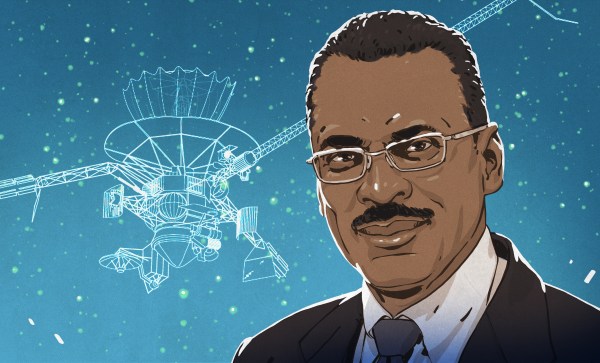
Dr. Anthony Fauci, Infectious Disease Slayer

In the two months since the harsh realities of SARS-CoV-2 and COVID-19 have come into sharp focus, Americans have become increasingly familiar with a man who has been quietly serving the people since the days when Ronald Reagan was up for re-election. For many, Dr. Anthony Fauci is the national voice of reason in a sea of dubious information. He has arguably become the most trustworthy person the government has to offer in the face of this pandemic.

Officially, Dr. Fauci is the Director of the National Institute of Allergy and Infectious Diseases (NIAID), a position he was appointed to in 1984. He has worked under six presidents, advising them on every outbreak from the HIV/AIDS epidemic up through Zika and Ebola. Now, he is part of the White House’s coronavirus task force.

At 79 years old, he still works 18-hour days, sticking it to infectious diseases with one hand, and smoothing the feathers of the American people with the other. Dr. Fauci certainly feels like the right person at the right time. So how did he get to this point?

Continue reading “Dr. Anthony Fauci, Infectious Disease Slayer”

What Will You Do With An Extra 1.2 Gigahertz?

While our collective minds have been turned towards the global pandemic it’s refreshing to hear that in some quarters life has continued, and events that would have made the news in more normal times have continued to take place while they have been replaced in coverage by more urgent considerations.

In the last few weeks there has been a piece of routine American bureaucracy that flew under the radar but which will have a significant effect on global technology; the United States’ Federal Communication Commission first proposed, then ratified, the allocation of an extra 1200 MHz of spectrum in the 6 GHz band to ISM usage. This allocation process is likely to be repeated by other regions worldwide, freeing up another significant piece of spectrum for unlicensed usage.

In practice this means that there will be a whole new set of WiFi channels created, and we’ll all have a little more spectrum to play around with, so it’s worth examining in a little more detail. Continue reading “What Will You Do With An Extra 1.2 Gigahertz?”

EARN IT: Privacy, Encryption, And Policing In The Information Age

You may have heard about a new bill working its way through the US congress, the EARN IT act. That’s the “Eliminating Abusive and Rampant Neglect of Interactive Technologies Act of 2020”. (What does that mean? It means someone really wanted their initials to spell out “EARN IT”.)

EARN IT is a bipartisan bill that claims to be an effort to put a dent in child exploitation online. It’s also managed to catch the attention of the EFF, Schneier, and a variety of news outlets. The overwhelming opinion has been that EARN IT is a terrible idea, will make implementing end-to-end encryption impossible, and violates the First and Fourth Amendments. How does a bill intended to combat child pornography and sex trafficking end up on the EFF bad list? It’s complicated.

Continue reading “EARN IT: Privacy, Encryption, And Policing In The Information Age”