Hackaday Scouts For Hacks At SXSW

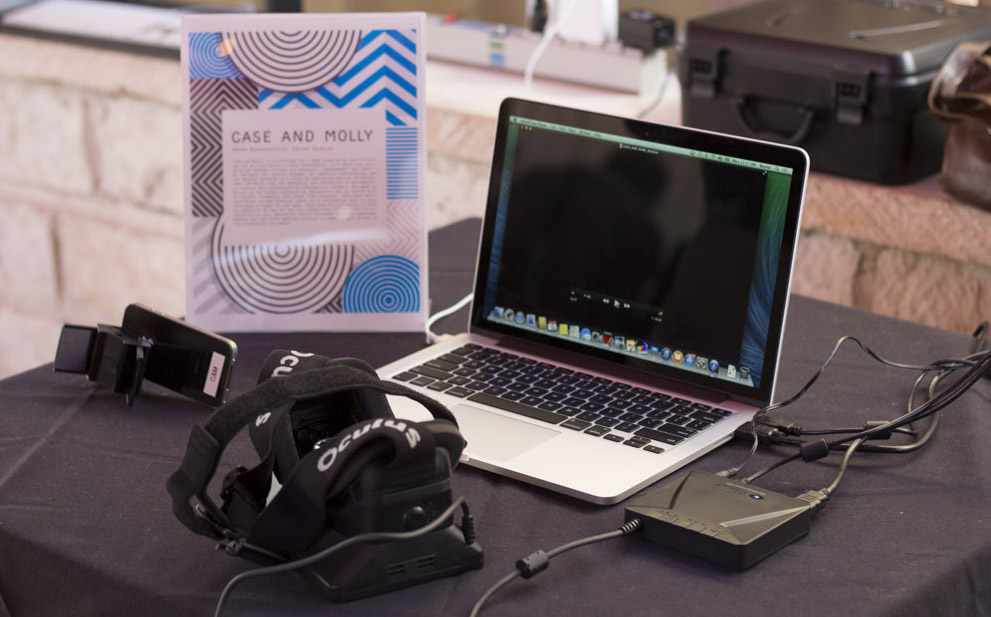
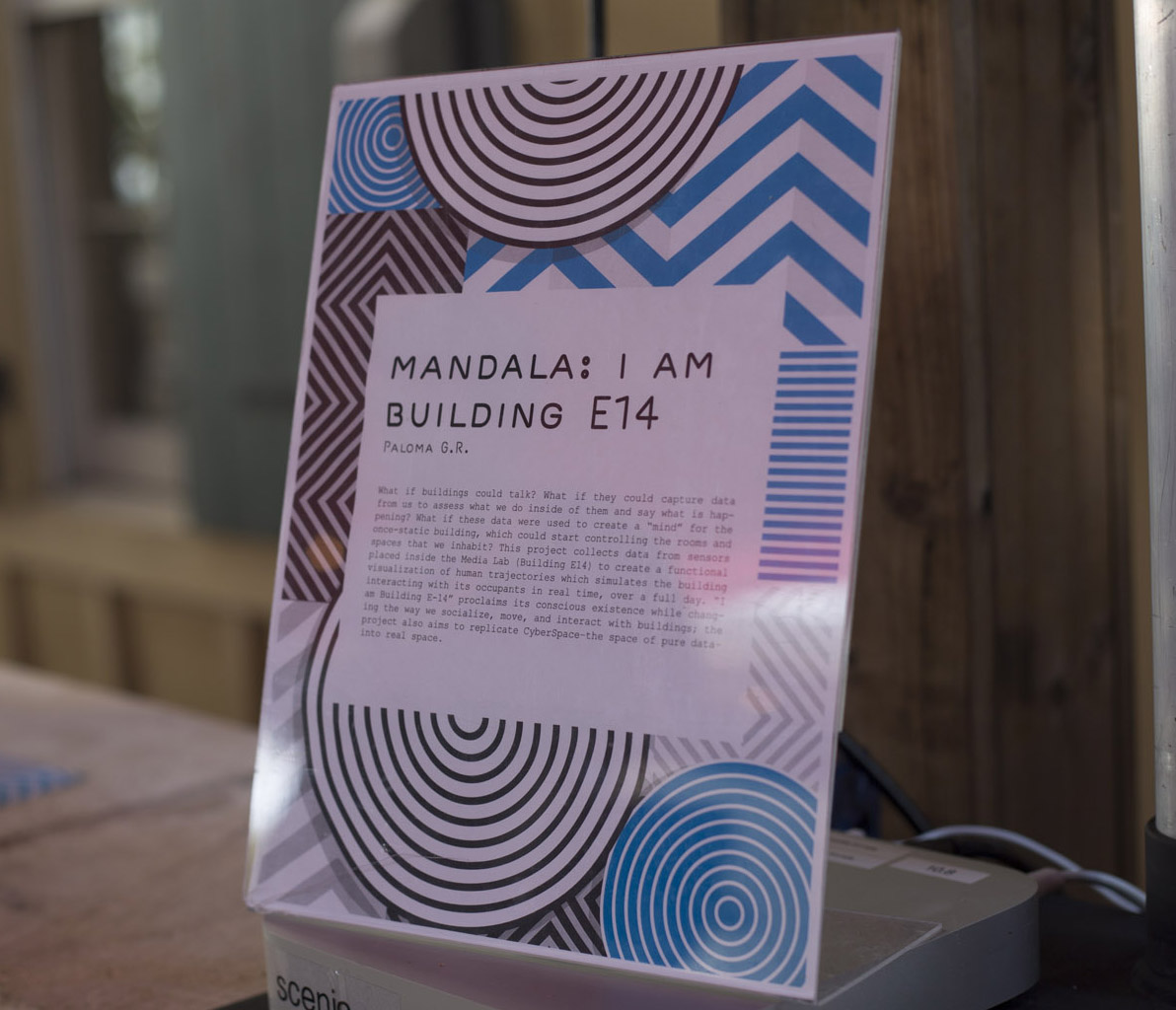
It seems like everyone is going to South by Southwest this year. We even heard about it on The Today Show this week. But we still have hope that there’s awesomeness to be found. A few of our crew will be there this year and they’re on the lookout for something special. The festival starts on Friday and runs more than a week to the following Sunday but our guys will be on the ground Sunday, March 9th through Tuesday the 11th.

Sure, we’ll take a gander at the interactive hardware areas, but preliminary research tells us these may be watered down to the lowest common denominator. What we really want to see is if a Burning-Man-like culture is beginning to coalesce around SXSW. Are you carrying around your own hacked hardware at this year’s event? Do you roll up in a custom party-mobile and spend the week trying to keep the 24-hour tailgate alive with your fold out pig roaster and awning-based entertainment system? We’d like to check that out.

[Eren], [Alek], and [Ivan] are handling coverage of the event. They’ve been killing themselves making Hackaday Projects an awesome place to share and interact. What they wanted was a bit of down time, but handing out T-shirts and Stickers in exchange for a look at your hacks doesn’t get in the way of that. Connect with them on Twitter using the hash tag #HaD_SXSW. They’ll be using it to tweet their activities but of course it works both ways. Your best bet of just crashing into these guys is to check out [Alek’s] talk on StageTwo.

[Background Image Source]

Theta Junction to Case Tjc

Hot Or Not? Find Out How To Calculate Component Heat And Why You Should

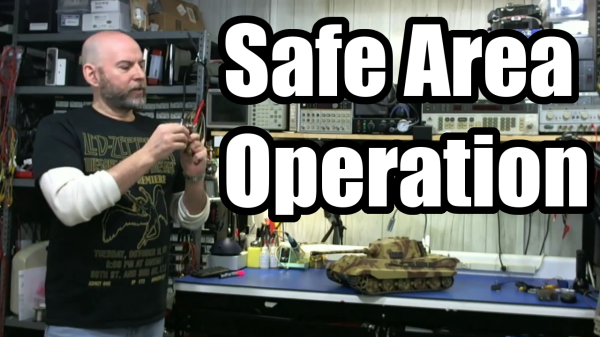
How hot are your key components getting? There’s a good chance you’ve built a project and thought: “Well I guess I better slap a heat sink in there to be safe”. But when working on a more refined build you really need to calculate heat dissipation to ensure reliability. This is actually not tough at all. The numbers are right there in the datasheet. Yes, that datasheet packed with number, figures, tables, graphs, slogans, marketing statements, order numbers… you know right where to look, don’t you?

Hackaday has you covered on this one. In under 10 minutes [Bil Herd] will not only show how easy these calculations are, he’ll tell you where to look in the datasheets to get the info you need quickly.

Continue reading “Hot Or Not? Find Out How To Calculate Component Heat And Why You Should”

Searching For Makers In Washington DC

makeDC

Despite there being an inordinate amount of techies and tech companies in the Washington, DC/Northern Virginia area, there aren’t really that many hacker/makerspaces, or really anywhere else for tinkering, building, and generally futzing around with a soldering iron. [Zach] thought it was time for a change and is now organizing the second Make DC an informal get together to show off your latest projects and builds. Here’s the best part: Hackaday is coming, and we’re bringing some sweet swag.

Right now [Matt] has two talks lined up focused on bringing APIs into the physical world. There’s space for plenty more speakers, so if you have something to show off be sure to sign up.

The event is scheduled for Wednesday, March 19, 6:30 PM, half a block away from the Dupont Circle Metro station. Be there. You’ll get a sticker at least.

Hackaday Meetup With [Chris Gammell]

hackaday-meetup-with-chris-gammell

Update: We have it figured out. We’re bringing the awesome at The Blind Donkey in Pasadena, CA at 6pm this evening. Stop in with your hardware and your war stories. Chris Gammell, Mathieu Stephan, and I can’t wait to talk Arduino hardware hacking with you!

I’m getting to meet all kinds of cool people in person this year, and so can you! Well… if you happen to be in Pasadena, California on Wednesday after work and have nothing better to do. [Chris Gammell] — well-known for The Amp Hour and Contextual Electronics — and I are both going to be in town. We’re meeting up for a beer and thought we’d invite you along for the fun.

Details are scarce right now. I’m not sure of time or place (other than Pasadena area) so make sure you follow @Hackaday on Twitter and watch for the #HaD_meetup tag Wednesday afternoon for the details. We’ll also update the Hackaday Projects event page at the time. I’ll bring along some swag; you’d better cart along a piece of hardware to show off in return for a t-shirt or stickers. You’re on your own for food and beverages at this one.

Wondering what I meant about meeting lots of cool people? In addition to the nearly 500 awesome readers who showed up at The Gathering, I met [Brian] and [Eliot] for the first time.

Guest Post: Try Radar For Your Next Project

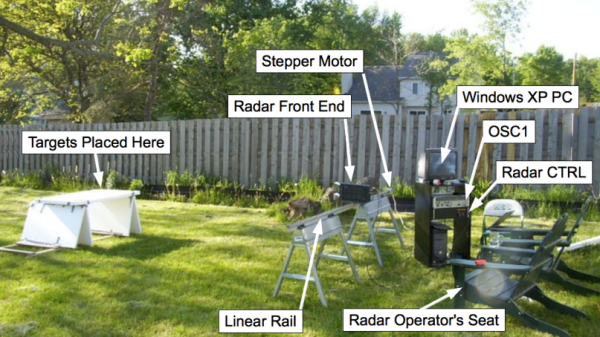
Sensors. The low-end stuff that we can get our hands on usually suffers from poor range, lack of sensitivity, and no way to characterize what the target is. But today we can use the good stuff that, until recently, was only available to military: radar. In this post we will discuss how radar works, commercially available small radar devices, and where to learn more to help make it easy to add radar to your next project. Reach out and sense something!
Continue reading “Guest Post: Try Radar For Your Next Project”

Introducing: Hackaday Projects

Today Hackaday is launching a new site that furthers our goal of being a Virtual Hackerspace. Now you can host your own hacks and builds in a place truly worthy of what we’re all about. We present to you: Hackaday Projects.

What’s so great about it? It has a dark theme, just like the blog! Actually, the awesome of the new site is a combination of what’s already available and what we have planned. First and foremost, the site has been built from the ground up with open data in mind. This means you own what you create on Hackaday Projects. You can export your work, delete it, and use a public API to extend the usefulness of the data. Secondly, we have a range of different tools which are extremely easy and quick to use, but allow rich styling and presentation when you need it. Want to see what we mean? Go check out the NFC Voting Rig that was at The Gathering.

Where do we go from here? A huge part of that is up to you. We need Hackaday readers to get in there and tell us what works, what doesn’t work, and what needs to be added. Are you up to the task? Request your alpha testing invite now and guide Hackaday Projects to be the hosting site the Hackaday community has always dreamed about!

Call For Hams And Hackers: Welcome ICE/ISEE-3 Home

ISEE-3, one of America’s most dedicated space exploration vessels is on its way home. Unfortunately, when it gets here, no one will be talking to it. NASA decommissioned the equipment needed to communicate with the satellite nearly 15 years ago. [Emily Lakdawalla] at the planetary society has been following the long traveled probe for years. Her recent article on the topic includes the news that NASA essentially gave up the battle before it even started.

Originally named International Sun/Earth Explorer 3 (ISEE-3), the spacecraft was launched atop a Delta rocket on August 12, 1978. Its mission was to study interaction between the Earth’s magnetic field and solar wind. As part of this mission ISEE-3 became the first spacecraft to enter halo orbit. It did this by positioning itself at Lagrangian point L1, directly between the sun and the Earth. In 1982, scientists on earth were preparing for the 1986 flyby of Halley’s Comet. ISEE-3 was repurposed as a comet hunter, and renamed International Cometary Explorer (ICE). The craft flew back to Earth and entered lunar orbit, coming within 120km of the moon’s surface. It used this momentum to achieve a heliocentric orbit, on track for two comet encounters. ICE/ISEE-3 encountered Comet Giacobini-Zinner on September 11, 1985, collecting data and becoming the first spacecraft to fly through a comet’s plasma tail. While not considered part of the Halley Armada, ICE/ISEE-3 took measurements as it passed within 28 million km of Comet Halley’s nucleus. Since then, ICE/ISEE-3 has continued on its 355 day heliocentric orbit. It studied coronal mass ejections in the early 90’s, before being shut down in May of 1997. Follow us past the break to learn ICE/ISEE-3’s fate.

Continue reading “Call For Hams And Hackers: Welcome ICE/ISEE-3 Home”