MoCA Networking Is A Niche Solution For Coax Lovers

When it comes to networking these days, the vast majority of our devices are connected wirelessly. Beyond that, we’re all familiar with the Cat 5 and Cat 6 cables that form the high-capacity Ethernet networks in our homes, schools, and offices.

It’s only if you go back to the very dawn of Ethernet that coaxial cables are relevant… right? Wrong! MoCA networking is all about coaxial cables, designed to hook up devices over cable TV infrastructure!

Continue reading “MoCA Networking Is A Niche Solution For Coax Lovers”

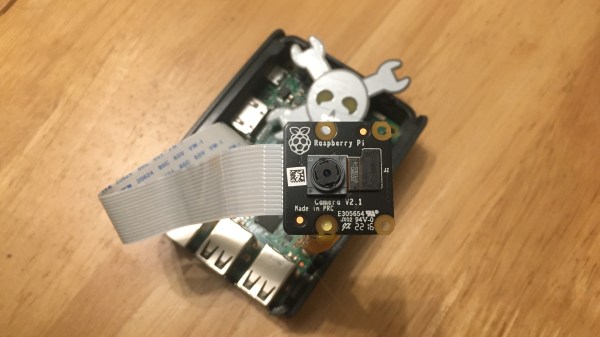
A Raspberry Pi 3 with a black Raspberry Pi Camera PCB on top of it, looking at the camera taking this picture. There's a Jolly Wrencher in the background.

Make Your Pi Moonlight As A Security Camera

A decade ago, I was learning Linux through building projects for my own needs. One of the projects was a DIY CCTV system based on a Linux box – specifically, a user-friendly all-in-one package for someone willing to pay for it. I stumbled upon Zoneminder, and those in the know, already can tell what happened – I’ll put it this way, I spent days trying to make it work, and my Linux skills at the time were not nearly enough. Cool software like Motion was available back then, but I wasn’t up to the task of rolling an entire system around it. That said, it wouldn’t be impossible, now, would it?

Five years later, I joined a hackerspace, and eventually found out that its CCTV cameras, while being quite visually prominent, stopped functioning a long time ago. At that point, I was in a position to do something about it, and I built an entire CCTV network around a software package called MotionEye. There’s a lot of value in having working CCTV cameras at a hackerspace – not only does a functioning system solve the “who made the mess that nobody admits to” problem, over the years it also helped us with things like locating safety interlock keys to a lasercutter that were removed during a reorganization, with their temporary location promptly forgotten.

Being able to use MotionEye to quickly create security cameras became quite handy very soon – when I needed it, I could make a simple camera to monitor my bicycle, verify that my neighbours didn’t forget to feed my pets as promised while I was away, and in a certain situation, I could even ensure mine and others’ physical safety with its help. How do you build a useful always-recording camera network in your house, hackerspace or other property? Here’s a simple and powerful software package I’d like to show you today, and it’s called MotionEye.

Continue reading “Make Your Pi Moonlight As A Security Camera”

Bye Bye Linux On The 486. Will We Miss You?

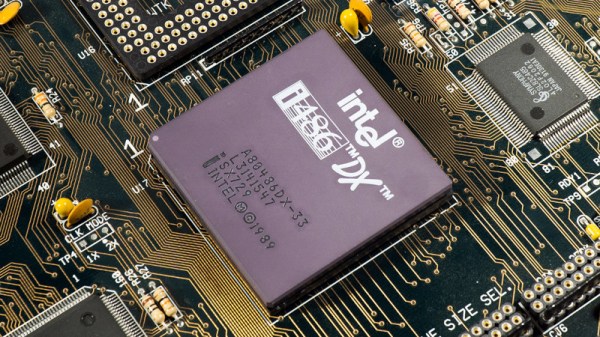
A footnote in the week’s technology news came from Linus Torvalds, as he floated the idea of abandoning support for the Intel 80486 architecture in a Linux kernel mailing list post. That an old and little-used architecture might be abandoned should come as no surprise, it’s a decade since the same fate was meted out to Linux’s first platform, the 80386. The 486 line may be long-dead on the desktop, but since they are not entirely gone from the embedded space and remain a favourite among the retrocomputer crowd it’s worth taking a minute to examine what consequences if any there might be from this move.

Is A 486 Even Still A Thing?

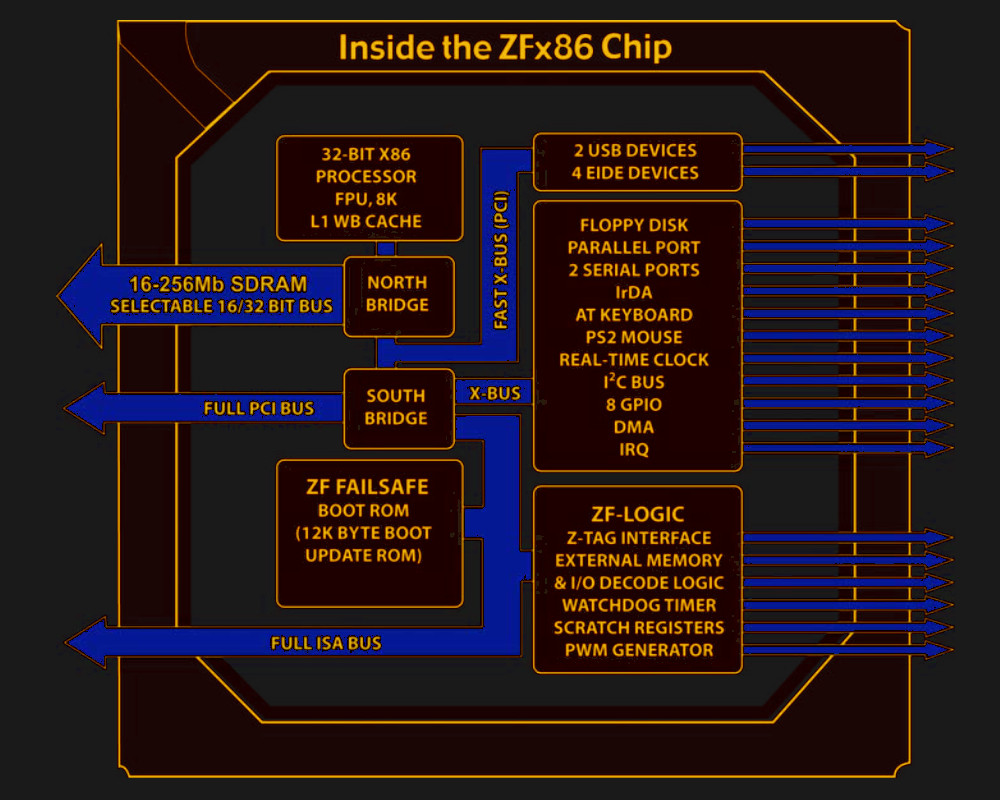
Block diagram of the ZFx86 SoC
An entire 486 PC in a chip that only uses 1W, that would have been amazing in 1994!

The Intel 80486 was released in 1989, and was substantially an improved version of their previous 80386 line of 32-bit microprocessors with an on-chip cache, more efficient pipelining, and a built-in mathematical co-processor. It had a 32-bit address space, though in practice the RAM and motherboard constraints of the 1990s meant that a typical 486 system would have RAM in megabyte quantities. There were a range of versions in clock speeds from 16 MHz to 100 MHz over its lifetime, and a low-end “SX” range with the co-processor disabled. It would have been the object of desire as a processor on which to run WIndows 3.1 and it remained a competent platform for Windows 95, but by the end of the ’90s its days on the desktop were over. Intel continued the line as an embedded processor range into the 2000s, finally pulling the plug in 2007. The 486 story was by no means over though, as a range of competitors had produced their own take on the 486 throughout its active lifetime. The non-Intel 486 chips have outlived the originals, and even today in 2022 there is more than one company making 486-compatible devices. RDC produce a range of RISC SoCs that run 486 code, and according to the ZF Micro Solutions website they still boast of an SoC that is a descendant of the Cyrix 486 range. There is some confusion online as to whether DM&P’s Vortex86 line are also 486 derivatives, however we understand them to be descendants of Rise Technology’s Pentium clone. Continue reading “Bye Bye Linux On The 486. Will We Miss You?”

Linux Fu: Easy VMs

It wasn’t long ago that we looked at easily creating Docker containers from the command line so you could just easily spin up a virtual environment for development. Wouldn’t it be nice if you could do the same for virtual machines? You can. Using Multipass from Canonical, the makers of Ubuntu, you can easily spin up virtual machines under Linux, Mac, or Windows. Granted, most of the virtual machines in question are variations of Ubuntu, but there are some additional images available, and you can create your own.

Once you have it installed, starting up a new Ubuntu instance is trivial. If you have a set configuration, you can even set up predefined setups using a YAML file.

Continue reading “Linux Fu: Easy VMs”

Identify That Antenna By Sight

It’s a skill that radio amateurs pick up over years but which it sometimes comes as a surprise to find that is not shared by everyone, the ability to casually glance at an antenna on a mast or a rooftop and guess what it might be used for. By which of course I mean not some intuitive ability to mentally decode radio signals from thin air, but most of us can look at a given antenna and immediately glean a lot of information about its frequency and performance. Is this privileged knowledge handed down from the Elmers at the secret ceremony of conferring a radio amateur’s licence upon a baby ham? Not at all, in fact stick around, and I’ll share some of the tricks. Continue reading “Identify That Antenna By Sight”

Europe’s Energy Squeeze Pushes Large Hadron Collider To Halt Operations

Energy prices have been in the news more often than not lately, as has war. The two typically go together, as conflicts tend to impact on the supply and trade of fossil fuels.

With Europe short on gas and its citizens contemplating a cold winter, science is feeling the pinch, too. CERN has elected to shut down the Large Hadron Collider early to save electricity.

Continue reading “Europe’s Energy Squeeze Pushes Large Hadron Collider To Halt Operations”

Moving Big Stuff Without The Tears

It’s something that has probably happened to more than one of us over the years, there’s an unmissable opportunity at the machinery auction or on eBay, with the small snag that it weighs a ton and requires a flatbed truck to transport. A big lathe, a bandsaw, or the like.

The sensible option would be to hire a crane or a forklift to do the job, but cash is tight so at the appointed hour the truck turns up at the end of your driveway to meet you and as big a group of your friends as you could muster. You’re going to shift this thing with pure muscle power! If you grow up around any form of workshop-based small business it’s something you’ll no doubt be familiar with. Craftsmen seem to have a network for such moments, so just as the blacksmith might find himself helping the woodworker unload a huge saw bench, so might they both spend an unexpected afternoon at the engineering shop manhandling a lathe.

It came as a shock in a casual hackerspace conversation to realise how many times I’d been involved in such maneuvers at home, for friends, or at hackerspaces, and how that experience in doing so safely isn’t necessarily something that’s universal. Maybe it’s time to tell the story of moving big machines on limited resources. This is something that starts by thinking ahead and planning what you’ll need and where you’ll need it. Continue reading “Moving Big Stuff Without The Tears”