Hackaday Links: May 29, 2012

Teensy CNC mill

The guys at Inventables put together a neat CNC router kit that looks very interesting. It uses Makerslide linear bearings and CNC’d parts to make a surprisingly cheap frame for something that can engrave wood and metal. Inventables is running a Kickstarter-esque preorder to fund this production run but right now they’re 30 orders short. We’d like to see how these routers turn out in the real world, so if you’re on the fence (or just want a CNC router), this might be the time to buy.

DIY solder fume extractor

[Jared] sent in a fume extractor he put together. It’s a small PC case fan with a carbon filter sandwiched between a pair of grilles. Not much, but if should keep those wonderful flux fumes away from your face.

A million fake Internet points to the first person to come up with a DIY clone

[filespace] shared an awesome Electrofishing video with us. Electrofishing pulses a DC current through two electrodes attached to a boat. This current causes galvanotaxis in fish, causing them to swim towards the anode. The fish can be caught with a net and released afterwards; there’s no damage to the fish at all. We’d love to see a DIY solution, but throwing M-80s into a lake doesn’t count.

Improving GSM reception with a bit of metal

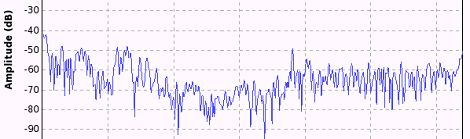
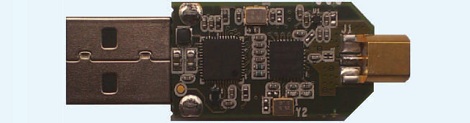
[Raivis] lives in the country, so even his voice reception on GSM is terrible, let alone data. Inspired by an earlier post, [Raivis] built a discone antenna to improve his cell signal. Now everything is crystal clear and his Huawei E1752 USB/GSM modem improved from 3 mbps down to 5 mbps down.

CNC halftone photos

[Dana] sent in a few pics of a project he’s working on. He’s making halftone prints with a CNC and metal. We’ve seen this before, but we’re really loving [Dana]’s take on it. He’s using two-layer engraving plastic with a .005” engraving tool on his CNC. There’s a gallery of his work after the break; [Dana]’s portrait is 14000+ dots and took 6 hours, his bosses kids are 16000+ dots and took 4 hours, and [Dana]’s niece is 5500 dots and took 35 minutes. Very awesome work, and now [Dana] has fulfilled a lifelong dream of machining his face.

Continue reading “Hackaday Links: May 29, 2012”

Hackaday Links: May 21, 2012

Turning anything into a touch sensor

Makey Makey is a small board with a USB plug and bunch of contact points for alligator clips. Plug the Makey into your computer and attach just about anything to the contacts, and you can make anything into a video game controller, a keyboard, a piano, or pretty much anything you can imagine. If [Sprite_tm] copied it, you know it has to be cool.

RepRaps will finally cost a million dollars

The Pentagon is throwing money at 3D printers. It’s “only” $60 Million the DoD is putting into 3d printer research, but hopefully our most brilliant researchers will help refine some of the ‘unsolved problems’ – like metal and circuit printing – the 3D printer community is facing.

Getting started with FPGAs

[Tim] found a neat little $40 FPGA board aimed right at the hobby hacker. The good news: It’s compatible with Arduino shields, and it’s very cheap. The bad news: it only has 1280 logic cells, so you probably won’t be emulating CPUs on this thing. If anyone has a teardown / project with this board, send it in.

Improving a Bluetooth dongle with a bit of wire

Unsurprisingly, the extremely cheap Bluetooth dongle [Mike] bought on eBay didn’t have great reception or range. No problem, because you can just replace the internal antenna with a piece of wire cut to length. Now bluetooth devices are recognized instantly, and there are no Bluetooth ‘dead spots’ around [Mike]’s computer.

Come to France, make stuff

The Toulouse Hackerspace is having a little shindig this coming weekend (May 25-27) featuring a conference, workshop, concerts and performances. If you’re in the area, drop on by,

Hackaday Links May 13th 2012

Amazing ass… for a robot

Yep, Japan still has the creepy robotics market cornered. Case in point is this robotic posterior. Don’t worry, they’ve included a dissection so you can see how the insides work too. [via Gizmodo]

Time-lapse camera module results

As promised, [Quinn Dunki] sent in a link to the photo album from her time lapse camera module. In case you missed it, she built it in a Tic Tac container and stuck it to the side of a racecar.

Kinect controlled killbot

Didn’t we learn anything from RoboCop? We could totally see this Kinect controlled robot (which happens to weigh five tons) going out of control and liquefying an unsuspecting movie extra standing near it. [via Dvice]

Laser popping domino balloons

apparently [Scott] has set a world record by using a laser to pop a line of 100 red balloons. We enjoy seeing the size of the 1W laser that does the popping… it can’t be long now before we get a hold of handheld laser pistols. [via Gizmodo]

Laser balloon targeting

If that last one was a bit of a let down, you might enjoy this automatic targeting system more. The blue triangle shaped icon is setting a target, the amber triangles have already been targeted. Once all the balloons are identified a laser quickly zaps each in order. Quite impressive, although no details have been provided. [Thanks everyone who sent in a link to this]

http://gizmodo.com/5909007/we-hope-lasers-popping-hundreds-of-balloons-is-the-new-dominos-fad

Hackaday Links: May 11, 2012

Three days of work in 5 minutes

[Celso] bought himself a Ultimaker kit and put together a time-lapse video of him putting it together. There’s a lot of work that goes into these machines, but being able to print a nearly perfect cube on the first run is nearly magical.

How about a CNC mill, too?

The folks over at Inventables have put together a tiny CNC mill kit designed from the fruitful mind of [Edward Ford]. The Shapeoko mill is designed around the Makerslide linear bearing system, so you’re getting a lot of precision very easily. Here’s some more info on the Shapeoko

Update the firmware on your RasPi

[Hexxeh] has been playing around with the Linux images for his Raspberry Pi, so he needs to reinstall the firmware on an image quite a lot. He wrote a tool to automate this task, but it should be useful for RasPi users that want to keep kernel and firmware up to date. You can get the rpi-updater at [Hexxeh]’s GitHub.

Your robotic barista is still always on the phone

Zipwhip is a company that provides a bridge from your phone to your computer so text messages can be displayed on your desktop. To show off their tech, they created a text enabled espresso machine. Everything on this robotic barista is automatic: the cups are grabbed from a warming tray with a servo arm, coffee is automatically brewed, and the last three digits of your cell phone number are printed on the foam to identify each cuppa. Check out the video; action starts at 1:30.

Awesome reading material

If you’re looking for something to read on that fancy tablet computer of yours, here’s every issue of New Scientist from 1956 to 1985. The early 60s issues say fusion power plants are about 50 years away, so we should be just fine in a couple of years.

Hackaday Links May 9th 2012

Homecut – CNC Cutting Directory

homecut

So you have a CNC machine that you use as a hobby, but would like to do some actual work on the side? Or maybe you have an idea you’d like made. Homecut is a map directory where you can maybe hook up with the right person.

The Curta Mechanical Calculator

curta calculator

As [leehart] mentioned in our comments section, the Curta mechanical calculator is a truly ingenious piece of engineering. A quick Google search should find all kinds of information on it, but this article could be a good place to start for some mechanical hacking inspiration!

Luxman Amplifier DAC Upgrade

nand-dac

[R. Barrios] wasn’t happy with using the sound card for his HTPC setup, so decided to add a DAC module onto his reciever. The resulting audio quality was very good, and the build came out quite clean.  Check it out if you’re thinking of a hack-upgrade to your stereo equipment.

3D Printable Tilt-Shift Adapter

tilt-shift-lens

A tilt-shift lens a neat piece of equipment that is used to make a large scene look like they were miniatures. It’s a cool effect, but professional lenses to do this can cost thousands of dollars. This Instructable tells you how to go about printing your own. For more info on the technique itself, check out this Wikipedia article.

New 3D Printer on the Block

3d-printer

If you would like to take the plunge into 3D printing, but are looking for somewhere to get a parts kit, the [ORD Bot Hadron 3D Printer] may be worth a look.  The build quality looks great, and the price for the mechanical components is quite reasonable at $399. You’ll need to provide the electronics and extruder. Thanks [comptechgeek]!

Hackaday Links: April 29, 2012

More old computers on FPGAs!

[Andy] loves his Memotech MTX computer. It’s an oldie with a Z80 running at 4MHz; the perfect target for an FPGA port. The ReMemotech has everything the old one has – cassette interface and all – and can run up to six times faster than the original.

Also found in 10-forward

If you’re going to build a jukebox, why not go all out? Here’s a touch screen jukeboxwith an LCARS skin. Yep, the same interface found on Star Trek: The Next Generation.

New desktop wallpaper for you

[McMonster] found a great pair of blog posts (1, 2) showing what ancient ICs look like without their casing. Since these were CERDIP packages (two ceramic plates glued together) they were exceptionally easy to take apart leaving the entire chip intact. Pages are in Polish, but there’s a Google Translate button on the sidebar

Cheap and easy Arduino wi-fi

Quick quiz: what’s the easiest way to get data onto an Arduino wirelessly? XBees? GSM modules? Nope, just get a wireless router and an Ethernet shield. The Ethernet module only cost [Doss] $20, and we’re sure Hackaday readers have a spare wireless router around somewhere.

Chiptunes! Chiptunes I say!

[mdmoose29] has been working on making a custom SNES cartridge for a dubstep artist (tell us more, [moose]…). In his search for programming tools, he found theSNES Game Maker. We tried it out for a bit and it’s still a very unrefined beta. Still, making SNES programming easier is awesome.

You people are awesome. Here’s six things for a links post.

[Valentin] made a night vision monocular from an old VHS camcorder, a small spy camera, and a handful of infrared LEDs. Here’s a video of [Valentin]‘s build in action.

Hackaday Links: April 20, 2012

Introducing Hackaday: how it’s made edition

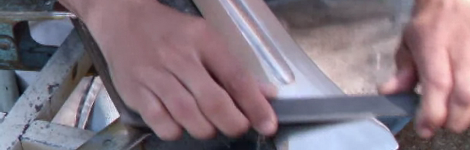
Ever wonder how the make the forms for marine propellers? Now you have. It turns out they use a bunch of plywood, Bondo, and sandpaper. Awesome viewing for a coffee break.

Finally a new way to hurt yourself!

[Darrell]’s solder flux pen was filled and capped at sea level. When this pen made it to his work bench high in the mountains of Colorado there was a significant amount of pressure in that pen. The flux squirted out right into [Darrell]’s eye. Better get some Visine on that, man.

The most accurate television portrayal of hacking ever

[Russell] was watching TV last night and saw an interesting commercial. It’s a bunch of electronic components, then a nook color showing the front page of Make: Projects, an Arduino schematic, and finally a happy robot. Two observations: firstly, someone in media and advertising doesn’t think ‘hacking’ is WarGames stealing bank accounts. Secondly, an ad exec looked into current users.

Here’s the official YouTube video of the commercial.

In a world… where components aren’t soldered… one man… uses a soldering station.

Adafruit linked to the most outrageous promo video ever. This Weller soldering station provides 240 watts, battles alongside Agamemnon at Troy,  has rework tweezers, and travels to Italy to wage war against the Latins.

An IDE for the 21st century

[Chris] is currently developing a new paradigm for programming. He calls it Light Table, and it’s designed to be an improvement over a simple text editor and project manager. All the documentation is at your fingertips, you can make changes on the fly. It reminds us of the zzstructure emulator we saw last year. It’s something to keep an eye on at least.