DIY Electrolysis Machine Removes Hair Permanently

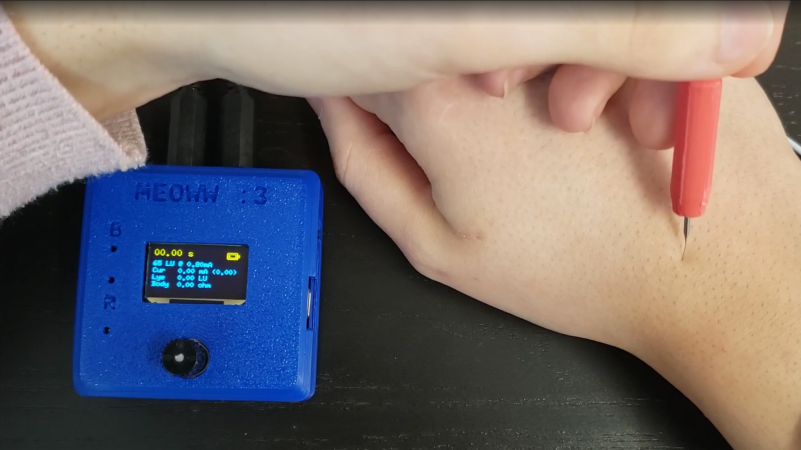
If you talk to the FDA, there’s only one permanent method of hair removal—electrolysis. This involves sticking a needle into a hair follicle, getting it very hot or running a current through it, and then letting heat and/or the lye generated kill the root of the hair dead. Normally, you’d pay someone with a commercial machine to do this for you at great expense. Or, you could do it yourself with a home-built machine, as [n3tcat] did.

Based on the available information out in the wild, [n3tcat] decided to build a galvanic electrolysis machine. This specifically passes current through a needle in the hair follicle to generate lye at the hair bulb, which kills it. The amount of lye generated depends on the amount of current and the time over which it is applied. More lye is more likely to kill a follicle permanently, though there are limits with regards to avoiding scarring, other skin damage, and excessive pain.

Continue reading “DIY Electrolysis Machine Removes Hair Permanently”
E-paper Dashboard Reimagines Smart Home’s Connection With Technology

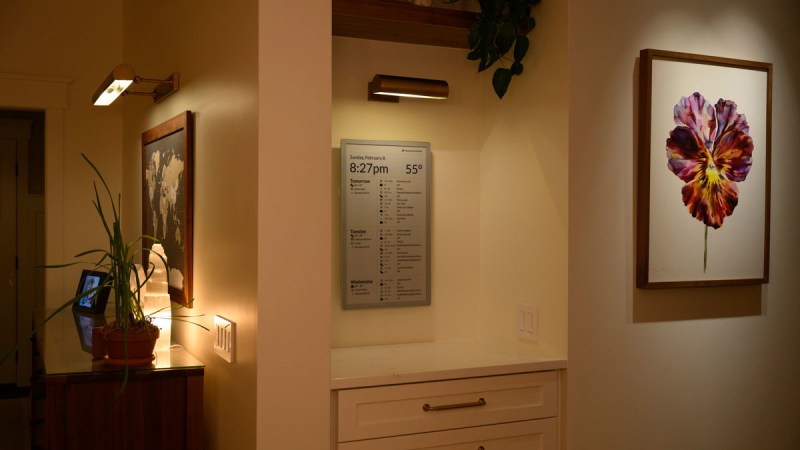
When [Joel Hawksley] and his partner got married, they had a goal to create a home with a healthy relationship to technology, which largely means avoiding smartphone use. Smartphones aren’t without their benefits, though, like being clocks and calendars, so [Joel] started looking for other options to replace these capabilities. At first he went with a “magic mirror” solution, but quickly pivoted to a wall-mounted e-paper solution he calls Timeframe which has evolved into a respectable overview for his home and life.

E-paper has a number of advantages over LCD and LED displays, one of which being that its resemblance to real paper makes it feel more organic. The first e-paper iterations of Timeframe used multiple displays in wooden frames, and [Joel] had a few different ones stationed around the house. They received their data from a custom-built Rails backend which sent pictures to the devices. This made the refresh rate possible fairly low, but a new 23.5″ display from Boox eventually enabled an acceptably high resolution and refresh rate which could support more traditional display uses. But this display required that [Joel] rewrite the entire back-end, an effort that took quite a bit of time but resulted in an impressive final product.

Like any custom-built project like this, [Joel] still has plans for improvements including those around further integration with his Home Assistant and reducing costs for future platforms. E-paper displays are popular pieces of technology for home dashboards like this, in the past we’ve seen similar, smaller builds which coincidentally have the same name.

IR Device Control That Lives Off The Cloud

There are lots of smart home systems that will let you blast your older dumb appliances with infrared to control them. However, many are tied to ugly cloud systems that can frustrate you on a regular basis. [Steelcuts] whipped up a cloudless solution to this problem instead.

IR2MQTT does pretty much exactly what it says in the name. It allows integrating things like air conditioners and televisions into a Home Assistant setup with the use of an IR blaster and a neat, tidy web app. You use it with an ESP32 or ESP8266 running a firmware based on ESPHome to actually do the IR blasting. In turn, IR2MQTT is a back-end plus a web interface that lets you setup all your IR devices without having to manually capture IR codes and create YAML files to do everything. It’s also integrated with large databases of IR codes for common appliances so in many cases, you can just look up your gear and get it working the easy way.

Sometimes all you need to get the job done is an IR LED and the will to use it. If you’re cooking up your own infrared hacks, don’t hesitate to let us know on the tipsline.

A Smart Thermostat For 120V Fan Coil Systems

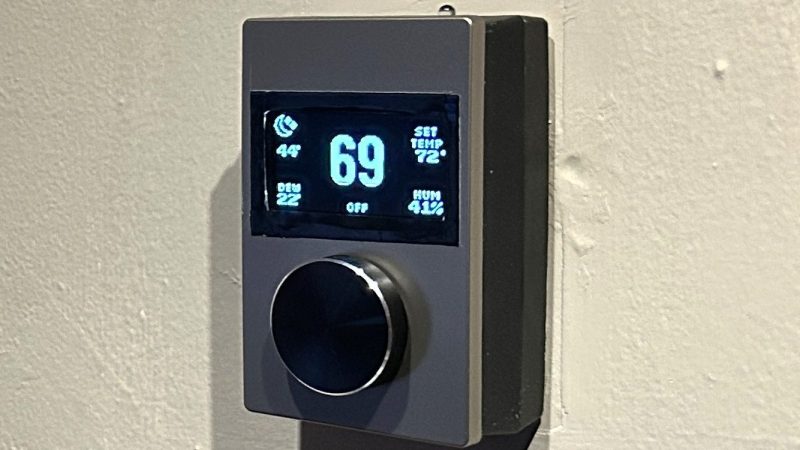
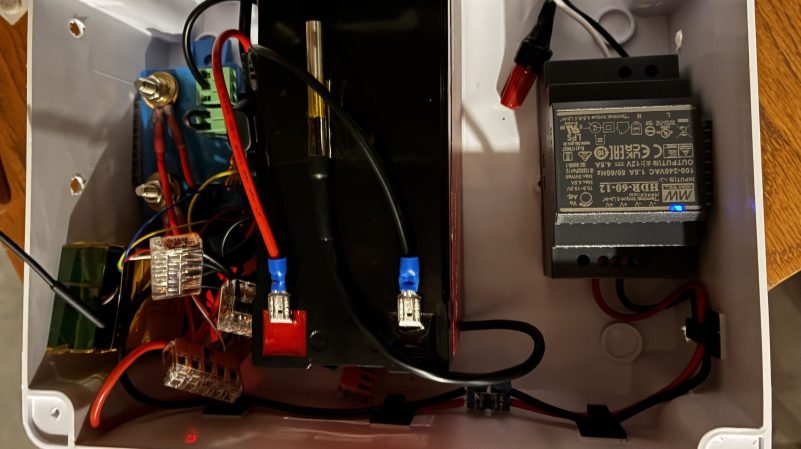
Many HVAC systems in North America operate off 24V systems, which can be readily upgraded with off-the-shelf  smart thermostats quite easily. However, there are many people living in buildings with 120-volt fan coil units who aren’t so lucky. [mackswan] is one such individual, who set about building a smart thermostat to work in these situations.

The build is based around an ESP32 running ESPHome firmware. It rocks a 2.42″ OLED screen with automatic brightness adjustment for showing temperature and control parameters. There’s a rotary encoder on the front with an integrated button for control, with [mackswan] building the physical device to look as clean and neat as possible. The device uses a relay to switch the fan coil system on and off to heat or cool as needed, with an SHTC3 temperature and humidity sensor used to monitor current conditions in the home.

If you’re in an apartment building or live in a condo with this kind of setup, [mackswan’s] build might be just what you’re after to improve your HVAC control. We’ve featured plenty of other DIY thermostat hacks over the years, too. Meanwhile, if you’re finding creative ways to better heat and cool your living space, we’d love to hear about it on the tipsline!

DIY UPS Keeps Home Assistant Running

If you put a bunch of computers in charge of your house, it’s generally desirable to ensure their up-time is as close to 100% as possible. An uninterruptible power supply can help in this regard. To that end, that’s why [Bill Collis] whipped one up for his Home Assistant setup.

[Bill]’s UPS is charged with one job—keeping the Home Assistant Green hub and an Xfinity XB7 cable modem online when the grid goes dark. The construction is relatively straightforward. When the grid is up, everything is powered via a Mean Well AC-DC 12 V power supply, while the power is also used to charge a 12.8 V 10 Ah lithium iron phosphate battery pack. When the grid goes out, the system switches over to running the attached hardware on pure battery power. A Victron BatteryProtect is used to automatically disconnect the load if the battery voltage drops too low. Meanwhile, a Shelly Plus Uni module is used to monitor battery voltage and system status, integrated right into Home Assistant itself.

If you want to keep the basics of your smart home going at all times, something like this is a pretty simple way to go.  We’ve featured some other great UPS builds in the past, too. If you’re whipping up your own hardware to keep your home or lab alive in the dark of night, don’t hesitate to notify the tipsline.

2001: An Air Quality Odyssey

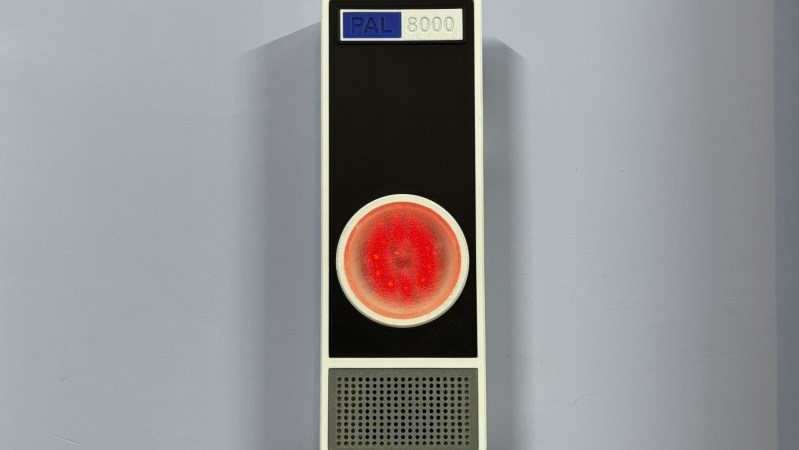
2001: A Space Odyssey not only pushed the boundaries of filmmaking, but introduced us to one of the most enduring villains in all of media. The HAL 9000 artificial intelligence was human-like but inhuman, a singular uncanny red light on a wall, tasked not only with control of a spaceship and its inner workings but also with being a companion for its occupants. It’s gone on to be the inspiration and basis of many projects around here, where it is generally given much less scope than control of a space ship and instead is tasked with something like monitoring air quality in a home.

Called the PAL 8000 by its creator [Arnov], this uses a Raspberry Pi Pico 2 at its core which monitors a volatile organic compound (VOC) sensor to take air quality measurements. The device features a custom 3D printed enclosure with glowing LEDs and plays contextual audio responses based on air quality levels, completing the HAL 9000 theme. The project also includes a local web dashboard which reports on its data, allowing users to see information in real time rather than relying on HAL’s voice reports alone.

For those looking to build other HAL-inspired projects, [Arnov] has made many of the printing files available on the project’s site. It’s a well-polished build faithful to the source material and could be a great addition to any home automation system for many other tasks beyond air quality monitoring. Perhaps something like a more general-purpose voice assistant, minus the megalomania.

Continue reading “2001: An Air Quality Odyssey”

Perfecting The Shape-Changing Fruit Bowl

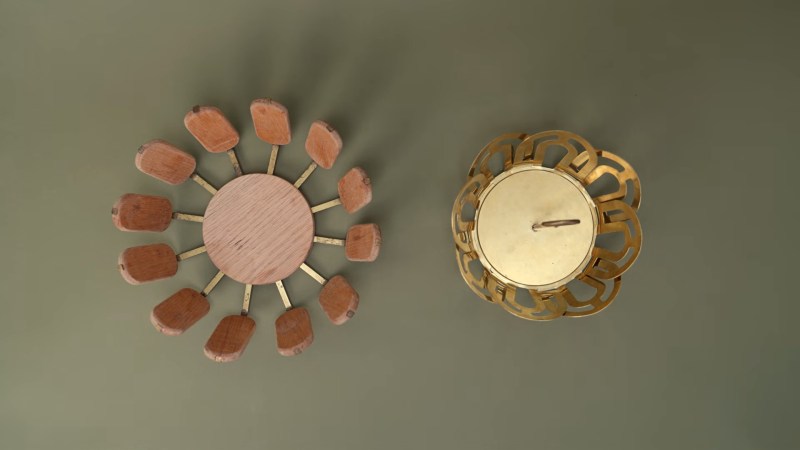
Fruit bowls have an unavoidable annoyance– not flies and rotten fruit, those would be avoidable if your diet was better. No, it’s that the bowl is never the right size. Either your fruit is sad and lonely in a too-large bowl, or it’s falling out. It’s the kind of existential nightmare that can only be properly illustrated by a late-night infomercial. [Simone Giertz] has a solution to the problem: a shape-changing fruit bowl.

See, it was one thing to make a bowl that could change shape. That was easy, [Simone] had multiple working prototypes. There are probably many ways to do it, but we like [Simone]’s use of an iris mechanism in a flat base to allow radial expansion of the walls. The problem was that [Simone] has that whole designer thing going on, and needs the bowl to be not only functional, but aesthetically pleasing. Oh, and it would be nice if expanding the bowl didn’t create escape routes for smaller fruits, but that got solved many prototypes before it got pretty.

It’s neat to see her design process. Using 3D printing and CNC machining for prototyping is very familiar to Hackaday, but lets be honest — for our own projects, it’s pretty common to stop at “functional”. Watching [Simone] struggle to balance aesthetics with design-for-manufacturing makes for an interesting 15 minutes, if nothing else. Plus she gives us our inspirational quote of the day: “As much as I feel like I’m walking in circles, I know that product development is a spiral”. Something to keep in mind next time it seems like you’re going around the drain in your own projects. Just be warned, she does have a bit of a potty mouth.

We’ve featured [Simone]’s design decisions here, if you’re interested in seeing how she goes the rest of the way from project to product. We’re pretty sure her face-slapping-alarm clock never made it into the SkyMall catalog, though.

Continue reading “Perfecting The Shape-Changing Fruit Bowl”