Build An AM Radio Transmitter From A CPLD

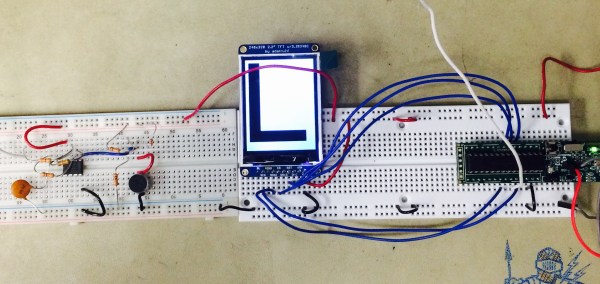
[Alex Lao] has been playing around with the CPLD-like parts of a PSoC. Which is to say, he’s been implementing simple logic functions “in hardware” in software. And after getting started with the chip by getting accustomed to the different clock sources, he built a simple AM radio that transmits at 24 MHz.

The device that [Alex] is learning on is a Cypress PSoC 5LP, or more specifically their (cheap) prototyping kit for the part. The chip itself is an ARM microprocessor core with a CPLD and some analog tidbits onboard to make interfacing the micro with the outside world a lot easier. [Alex] doesn’t even mess around with the microprocessor, he’s interested in learning the CPLD side of things.

PRS-CircuitHe starts off with a 24 MHz carrier and a 1 kHz tone signal, and combines them with a logical AND function. When the tone is on, the carrier plays through; that’s AM radio at its most elemental. Everything is logic (square waves) so it’s a messy radio signal, but it’ll get the job done.

Adding a multiplexer up front allows [Alex] to play two tones over his “radio” station. Not bad for some simple logic, and a fantastic Hello World project for a CPLD. We can’t wait to see what [Alex] is up to next!

If you’re interested in getting your feet wet with either CPLDs in general or a CPLD + micro system like Cypress’s, the development kit that [Alex] is using looks like a cheap and painless way to start. (Relatively speaking — PSoCs are a step or two up a steep learning curve from the simpler 8-bit micros or an Arduino.) Hackaday’s own [Bil Herd] has a video on getting started with another member of the Cypres PSoC family, so you should also check that out.

Nvidia Brings Computer Vision And Deep Learning To The Embedded World

Today, Nvidia announced their latest platform for advanced technology in autonomous machines. They’re calling it the Jetson TX1, and it puts modern GPU hardware in a small and power efficient module. Why would anyone want GPUs in an embedded format? It’s not about frames per second; instead, Nvidia is focusing on high performance computing tasks – specifically computer vision and classification – in a platform that uses under 10 Watts.

For the last several years, tiny credit card sized ARM computers have flooded the market. While these Raspberry Pis, BeagleBones, and router-based dev boards are great for running Linux, they’re not exactly very powerful.  x86 boards also exist, but again, these are lowly Atoms and other Intel embedded processors. These aren’t the boards you want for computationally heavy tasks. There simply aren’t many options out there for high performance computing on low-power hardware.

Nvidia
The Jetson TX1 and Developer Kit. Image Credit: Nvidia

Tiny ARM computers the size of a credit card have served us all well for general computing tasks, and this leads to the obvious question – what is the purpose of putting so much horsepower on such a small board. The answer, at least according to Nvidia, is drones, autonomous vehicles, and image classification.

Image classification is one of the most computationally intense tasks out there, but for autonomous robots, there’s no other way to tell the difference between a cyclist and a mailbox. To do this on an embedded platform, you either need to bring a powerful general purpose CPU that sucks down 60 or so Watts, or build a smaller, more efficient GPU-based solution that sips a meager 10 Watts.

Continue reading “Nvidia Brings Computer Vision And Deep Learning To The Embedded World”

A Square Inch Of Nyan

Over on Hackaday.io, there’s an unofficial contest to cram as much electronics and awesome as possible into a single square inch of PCB. While the measurement system is logical, the Internet is not: it feeds on cats and is entertained by rainbows. [Radomir]’s project feeds into this bizarre fixation with the Nyan Board, a Pop Tart cat that poops rainbows, all the while playing bleeps and boops that would fit well in a Nintendo game.

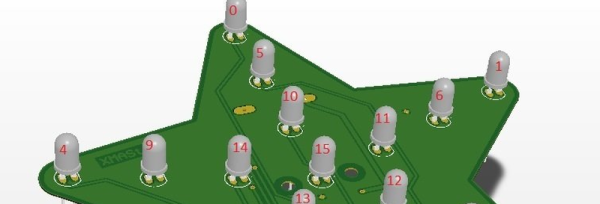
[Radomir] built this square inch of twee for the square inch project, an unofficial contest to fit the coolest project on a 1×1 inch square PCB. Prizes are credits for the Hackaday Store and OSHPark. This entry uses an ATtiny85 microcontroller, a few resistors, LEDs,  and a buzzer to play the strange, syncopated Nyan theme song. Power is delivered over a colorful ribbon cable that emulates the rainbow tail of the Pop Tart cat.

This isn’t the only project in the Square Inch Project, or even the most blinky; there’s also a RRROYYYYgYgGGBgBPW LED, a square inch quadcopter, and a device that detects the world’s smallest bat. All very interesting projects, and we can’t wait to see all the entries finished.

Continue reading “A Square Inch Of Nyan”

Turning A Teensy Into A U2F Key

Last month, GitHub users were able to buy a special edition Universal 2nd Factor (U2F) security key for just five bucks. [Yohanes] bought two, but wondered if he could bring U2F to other microcontrolled devices. he ended up building a U2F key with a Teensy LC, and in the process brought U2F to the unwashed masses.

Universal 2nd Factor is exactly what it says on the tin: it doesn’t replace your password, but it does provide a little bit of extra verification to prove that the person logging into an account is indeed the person that should. Currently, Google (through Gmail and Google Drive), Github, Dropbox, and even WordPress (through a plugin) support U2F devices, so a tiny USB key that’s able to provide U2F is a very useful device.

After digging into the U2F specification [Yohanes] found the Teensy LC would be a perfect platform for experimentation. A U2F device is just a USB HID device, which the Teensy handles in spades. A handy library takes on ECC for both AVR and ARM platforms and [Yohanes’] finished U2F implementation is able to turn the Teensy LC into something GitHub was selling for $5.

It should be noted that doing anything related to security by yourself, with your own code is dumb and should not be considered secure. Additionally, [Yohanes] didn’t want to solder a button to his Teensy LC, so he implemented everything without a button press, which is also insecure. The ‘key handle’ is just XOR encryption with a fixed key, which is also insecure. Despite this, it’s still an interesting project and we’re happy [Yohanes] shared it with us.

Measuring Tire Pressure By Cutting A Hole In An Inner Tube

RFID tags are really very primitive pieces of technology. Yes, they harvest energy from an RFID reader and are able to communicate a few bits of data, but for a long time these tags have been unable to provide useful data beyond a simple ID number. [CaptMcAllister] found a new RFID sensor platform from TI and managed to make a wireless pressure sensor that fits in the inner tube of his bike.

The sensor [Capt] is using comes from TI’s RF430 series that include a few neat sensors that don’t require batteries, but are still able to communicate sensor data to a cell phone or other RFID reader. With a pressure sensor, this tiny microcontroller can receive power from an RFID reader and send it back to a phone app, all without wires.

[CaptMcAllister] cut open an inner tube for his bike, epoxied his PCB to a patch, and sealed everything back up again. After a quick test for leaks, [Capt] found the data coming from the sensor was extraordinarily accurate, and should hold up well enough to be used in his bike.

Low Power And Pin-Constrained

We’ve all been there. You’re building up a microcontroller project and you wish that you could just add “one more feature” but you’re limited by the hardware. Time to start thinking. (Or, arguably, buy the next model up.)

[Sam Feller] found himself in this position, adding a knob to set the time and a button to arm the alarm for his Analog Voltmeter Clock, and he came up with a way to implement an on-off switch, and poll a button and a potentiometer with only two pins of a microcontroller.

The problem with potentiometers in low-power designs is that they’re always leaking power. That is, unless you switch them off when you’re not using them. So the ideal solution is to power the potentiometer from one GPIO pin on the microcontroller, and read its value with another. That’s two GPIO pins just for the potentiometer. But [Sam] needed to read input from a button too, and he was out of pins.

His clever solution is to switch two resistors in or out of the circuit depending on the status of the pushbutton, so that the voltage range at the potentiometer is between either VCC and VCC/2 when the switch is pressed, or between VCC/2 and GND when the switch is not pressed.

If the ADC reads something higher than VCC/2, the microcontroller knows that the button is pressed, and vice-versa. The potentiometer’s setting determines exactly where the voltage lies within either range.

Done and done. If you find yourself in the similar situation of needing to read in values from a whole bunch of buttons instead of a potentiometer, then you can try using an R-2R DAC wired up to the pushbuttons and reading the (analog) value to figure out which buttons are pressed. (If you squint your eyes just right, this solution is the same as the R-2R DAC one with the potentiometer replacing all but the most-significant bit of the R-2R DAC.)

Another tool for the toolbox. Thanks [Sam].

The Latest, Best WiFi Module Has Been Announced

A little more than a year ago, a new product was released onto the vast, vast marketplace of cheap electronics. It was the ESP8266, and this tiny and cheap WiFi module has since taken over the space of hobbyist electronics and become the de facto standard for connecting tiny microcontrollers to the Internet.

Now there’s an upgrade on the horizon. [John Lee], the public face of Espressif, the makers of the ESP8266, has announced the next product they’re working on. It’s called the ESP32, and if the specs given are correct, it looks to be the next great thing for the Internet of Things.

The ESP32 will now contain two Tensilica processors running at 160MHz, compared to the ‘8266’s one processor running at 80 MHz. The amount of RAM has been increased to 400 kB, Bluetooth LE has been added, WiFi is faster, and there are even more peripherals tucked away in this tiny piece of silicon.

The new ESP32 includes new, simplified APIs and unlike when the ESP8266 was announced, documentation in English.

Right now, Espressif is beta testing the ESP32, with about 200 boards manufactured so far. If you’re one of the few lucky people who have one of these boards on your workbench, we’d love to see your take on it.