

Taking a cue from the jog wheel we posted last week, [42ndOddity] has built an improved version. The design is based around a solid state rotary encoder instead of an optical encoder. The rotary encoder is far easier to attach and position properly. The knob is milled from scrap aluminum-it was a copier foot. To make the motion smooth, it’s sitting in a bearing from the same copier.
Misc Hacks4161 Articles
Rebooting The Magic SysRq Way

[Cory Wright] shares a tip on how to reboot a system with a failed hard drive remotely. The magic SysRq key is a linux kernel feature that lets you perform a number of interesting operations. If you’re working on a remote system where the disk has failed, you won’t have access to the reboot or shutdown commands. You can issue keystrokes to the magic SysRq device in /proc though, so you can send a hard reboot directly to the kernel with no disk access required.
The Wikipedia entry includes a handy tip on how to properly restart a otherwise frozen machine. It should save you from having to fsck the next time around.
[photo: Joshua Davis]
Best Firefox 3 Extensions

We generally try to limit the number of extensions we install for security, performance, and because we use a lot of different systems. That’s not to say there aren’t a lot of interesting addons out there and Mozilla has recently announced the winners of their Extend Firefox 3 Contest. Lifehacker has a full rundown of each of the winners. Nothing really stands out in our eyes (although we might try Last.fm’s toolbar).
The three extensions we always end up installing are Firebug, Greasemonkey, and Flashblock. What are yours?
MySQLgame, Playing With Database Queries

mySQLgame is a quirky App Engine game that has decided to forgo flashy UIs and just stick with the core of the system: a database. You start the game by creating your own row in the shared game database. Game time increments your fuel and money resources every ten seconds. Fuel is spent on scanning other rows and for attacking. Money is used for upgrades and building units. Build up resources and attack your neighbors using database queries, just like any other game. Like a bit more gloss on your internet metagames? Have a look at trolling simulator Forumwarz.
[via Waxy]
Furbies Transformed Into A Furby Gurdy
[David Crammer] must really like nightmares. The hurdy gurdy is a stringed musical instrument, dating as far back as the eleventh century A.D., where the strings are sounded via a rosined wheel that is turned with a crank. [Crammer] took this unique instrument, applied his circuit-bending and Furby-scalping skills to generate a Furby Gurdy that sound like Kraftwerk on acid.
[via Gizmodo]
Kindle Screen Transplant
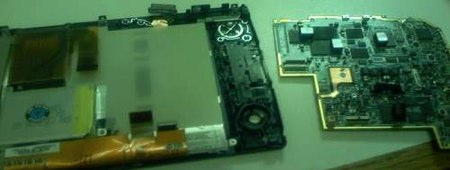
[blakebevin]’s sister shattered the screen on his Amazon Kindle, so he decided to try replacing it with the screen from a Sony Reader. He disassembled the Sony Reader and used a Dremel to mill down most of the aluminum tabs on the E Ink screen. The screen plugs into the same harness as the original Kindle screen the only problem is fit. The new screen interferes with some of the button movement and without trimming the case will bulge a little. Performance wise the screen ghosts on page turn and [blakebevin] assumes this is due to older technology. We’d hope to never have to do this, but it’s good to know the transplant option is there and not very difficult.
Cutting Pizza With A Laser

In an act of delicious over kill, these guys threw a pizza into an industrial laser cutter. The result? Exactly what you would expect. Smoke, giggles and perfectly cut pizza. It looks like the cheese stuck together a bit after the laser cut, but that happens with normal pizza cutters too.
[via DVICE]









