The Raspberry Pi 3 Compute Module Is On Its Way

The Raspberry Pi Foundation founder Eben Upton has revealed in an interview with PCWorld that there will be a new version of the organisation’s Compute Module featuring the faster processor from the latest Raspberry Pi 3 boards, and it will be available “In a few months”.

The Compute Module was always something of an odd one out among the Raspberry Pi range, being a stripped-out Raspberry Pi chipset on a SODIMM form factor card without peripherals for use as an embedded computer rather than the standalone card with all the interfaces we are used to in the other Pi boards. It has found a home as the unseen brains behind a selection of commercial products, and though there are a few interface boards for developers and experimenters available for it we haven’t seen a lot of it in the world of hackers and makers. Some have questioned its relevance when the outwardly similar Pi Zero can be had for a lower price, but this misses the point that the two boards have been created for completely different markets.

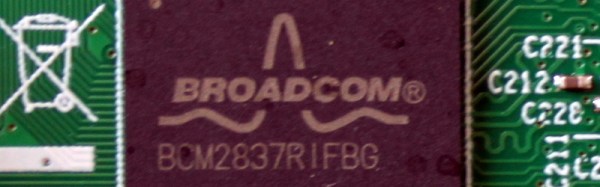
The Pi 3’s 1.2 GHz 64-bit quad-core ARM Cortex-A53 BCM2837 SoC will certainly up the ante in the Compute module’s market, but it will be interesting to see what changes if any they make to its form factor. The Foundation’s close ties with Broadcom mean that they have done an impressive job in maintaining backward compatibility at a hardware level between the different generations of their product, but it is unclear whether this extends to the possibility of the new module maintaining a pin-for-pin compatibility with the old. We’d expect this to be an unlikely prospect.

It is certain that we will see a new generation of exciting commercial products emerging based around the new module, but will we see it making waves within our domain? This will depend on its marketing, and in particular the price point and quantity purchase they set for it. The previous board when added to a Compute Module Development board was an expensive prospect compared to a Raspberry Pi Model B that became more unattractive still as newer Pi boards gained more capabilities. If they price this one competitively and perhaps if any cheaper open hardware breakout boards emerge for it, we could have a valuable new platform on our hands.

Here’s our coverage of the original Compute Module launch, back in 2014.

[via Liliputing and reddit].

BCM2837 image: By Jose.gil (Own work) [CC BY-SA 4.0], via Wikimedia Commons.
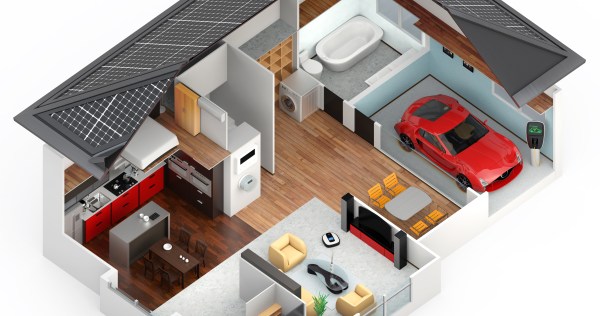
What Is Home Automation?

Perhaps the buzziest among buzzwords when it comes to electronics is Home Automation. This is a branch of IoT where you can actually go to the home store and come out with bags filled with products. The current Hackaday Prize round challenges you to automate your life and setting your sights on the home seems like an area open to everyone. But we’re having trouble putting our finger on what exactly makes a home automated, and more importantly, the best ways to benefit those who live beside that technology. So we want to know what you think.

Do you have a great idea for what makes an automated home more than a buzz word? Perhaps you are already sold and have been building your own; tell us about it! We want to know how (and when) you think this will turn from a buzzword to something most people want running their house. We’ll round up the best from this discussion for a future post. As a thank you, we’ll select some of the best comments and send you a T-shirt from the Hackaday store.

automatic-ice-maker
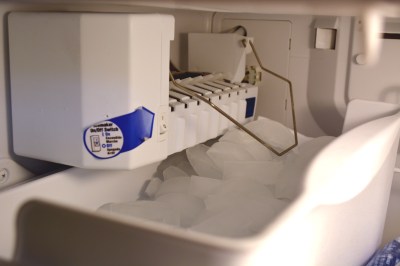
Who doesn’t love an automatic ice maker?

You can go back fifty years to the cartoons of the 1960’s and see that home automation was just around the corner. The Flintstones had dinosaurs to handle the mundane, and The Jetsons had a robot maid reigning over a cadre of whimsical gadgets in the home. At that point in time the home was already moving into the automation realm with thermostatically controlled air conditioning and water heaters. This was around the same time that automatic ice makers started to appear in a home’s freezer and remote garage door openers came into use.

Beginning in the 1970’s and 80’s it became common to find a dishwasher under the counter in the kitchen. The porch light option of dusk-until-dawn sensors came into use and were followed later by motion detecting lights which used PIR sensors. Automatic lawn sprinklers started to appear in the yards surrounding the home, and security systems that monitor doors, windows, and often motion (using PIR sensors again) became a thing.

These are great examples of home automation which is often overlooked. Even smarter thermostats are all the rage today, and security system add-ons that let you monitor cameras and locks over the Internet.

Which brings us back to the question. Where is this all going? What kind of automation will be developed now in our time, and looked back in 50 years as obvious technology wanted in every home? Do we already have the automated hardware in place and just need something to stitch it all together? Let us know what you think below, and if you’re already working on your own automation project don’t forget to enter it in the Hackaday Prize.

MIT Thinks It Can One-Up TOR With New Anonymity Network: Riffle

Tor is the household name in anonymous networks but the system has vulnerabilities, especially when it comes to an attacker finding out who is sending and receiving messages. Researchers at MIT and the École Polytechnique Fédérale de Lausanne think they have found a better way in a system called Riffle. You can dig into the whitepaper but the MIT news article does a great job of providing an overview.

The strength at the core of Tor is the Onion Routing that makes up the last two letters the network’s name. Riffle keeps that aspect, building upon it in a novel way. The onion analogy has to do with layers of skins — a sending computer encrypts the message multiple times and as it passes through each server, one layer of encryption is removed.

Riffle starts by sending the message to every server in the network. It then uses Mix Networking to route the message to its final destination in an unpredictable way. As long as at least one of the servers in the network is uncompromised, tampering will be discovered when verifying that initial message (or through subsequent authenticated encryption checks as the message passes each server).

The combination of Mix Networking with the message verification are what is novel here. The message was already safe because of the encryption used, but Riffle will also protect the anonymity of the sender and receiver.

[via Engadget]

Micropython Binaries For The ESP8266 To Be Released

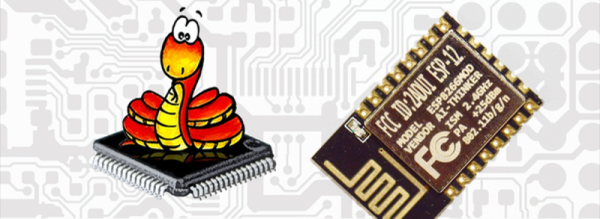
MicroPython is a Kickstarted project that brings Python to small, embeddable devices. As part of the terms of the Kickstarter, supporters were to get exclusive access to binary builds, with a few exceptions. Now it looks like the ESP8266-version is going to be added to the binary list. This is awesome news for anyone who enjoys playing around with the popular WiFi chip.

But even more heartwarming is the overwhelming response of the Kickstarter’s backers for making the binary builds public. Basically everyone was in favor of opening the binaries up to the general public, and many wrote that they wanted public binaries all along. People can be so giving.

But there’s also something in it for them! The more people get behind MicroPython, the more (free and paid) development support it will warrant, and the more bug reports it will garner. Wins all around. So keep clicking refresh on the binary list until you see it live. Or better yet, if you’re interested, head over to the forum. (Or just wait for us to cover it here. You know we will.)

3D Printering: Makerbot’s Class Action Suit Dismissed

This time last year, Stratasys, parent company of Makerbot, was implicated in a class action suit. Investors claimed Stratasys violated securities laws, and overstated both the performance of the 5th generation of Makerbot printers and the performance of the company itself. Court docs received by Adafruit have revealed this case has been dismissed with prejudice. Makerbot won this one.

The case presented by Stratasys investors relied on two obvious facts. First, the price of Stratasys shares fell far beyond expectations. Second, the extruder for the 5th generation of Makerbot printers – the ‘Smart Extruder’ – was terrible. No one can reasonably dispute these claims; shares of SYSS fell from $120 in September of 2014 to $30 in September of 2015. With many returns to handle, Makerbot quickly redesigned the Smart Extruder.

Both of these indisputable facts are in stark contrast to statements made by Stratasys and Makerbot at the time. In a press release for the 4th quarter 2013 financial results, Stratasys’ expected sales to grow at least 25% over 2013 and stated it was experiencing “strong sales” of its desktop 3D printer. Concerning the Smart Extruder, Makerbot stated this new feature of the 5th generation Makerbots would make them easy to use, and “define the new standard for quality and reliability.”

The facts of this case are not in dispute – Stratasys did not see the growth they expected in late 2013. The Smart Extruder certainly did not make printers more reliable. These facts, however, are not sufficient to violate securities law.  In a wonderful legal turn of phrase, the judge deciding this case called the statements about the quality of the 5th generation Makerbots consisted of, “non-actionable puffery,” and a ‘statement so vague and such obvious hyperbole than no reasonable investor would rely on them.’

Statements made by Stratasys on their financial performance were also found not to be sufficient to violate securities laws. Stratasys did make several statements about negative performance in late 2014 and 2015, and positive statements made earlier did not have an intent to deceive investors.

This is good news for Makerbot. The claims brought by investors in this case had little merit. The case cannot be appealed, and Stratasys is no longer facing a class action suit. Does this news actually matter? Not really; Makerbot is a dead man walking, and 2016 sales will be at levels not seen since 2010 or 2011.

The consumer 3D printing industry is booming, despite the Makerbot bellwether though.

Don Eyles Walks Us Through The Lunar Module Source Code

A couple weeks ago I was at a party where out of the corner of my eye I noticed what looked like a giant phone book sitting open on a table. It was printed with perforated green and white paper bound in a binder who’s cover looked a little worse for the wear. I had closer look with my friend James Kinsey. What we read was astonishing; Program 63, 64, 65, lunar descent and landing. Error codes 1201, 1202. Comments printed in the code, code segments hastily circled with pen. Was this what we thought we were looking at? And who brings this to a party?

Continue reading “Don Eyles Walks Us Through The Lunar Module Source Code”

Bridging The Air Gap; Data Transfer Via Fan Noise

When you want to protect a computer connected to the Internet against attackers, you usually put it behind a firewall. The firewall controls access to the protected computer. However, you can defeat any lock and there are ways a dedicated attacker can compromise a firewall. Really critical data is often placed on a computer that is “air gapped.” That is, the computer isn’t connected at all to an insecure network.

An air gap turns a network security problem into a physical security problem. Even if you can infect the target system and collect data, you don’t have an easy way to get the data out of the secure facility unless you are physically present and doing something obvious (like reading from the screen into a phone). Right? Maybe not.

Researchers in Isreal have been devising various ways to transmit data from air walled computers. Their latest approach? Transmit data via changing the speed of cooling fans in the target computer. Software running on a cellphone (or other computer, obviously) can decode the data and exfiltrate it. You can see a video on the process below.

Continue reading “Bridging The Air Gap; Data Transfer Via Fan Noise”