What’s worse than coming in from the workbench for a sandwich only to discover that the bread has molded? That red bread mold–Neurospora crassa–can transform manganese into a mineral composite that may improve rechargeable batteries, according to a recent paper in Current Biology.
Researchers used the carbonized fungal biomass-mineral composite in both lithium ion cells and supercapacitors. The same team earlier showed how fungi could stabilize toxic lead and uranium. Mold, of course, is a type of fungus that grows in multi-cellular filaments. Apparently, the fungal filaments that form are ideal for electrochemical use of manganese oxide. Early tests showed batteries using the new material had excellent stability and exceeded 90% capacity after 200 discharge cycles.
The team plans to continue the use of fungus in various metallurgical contexts, including recovering scarce metal elements. This is probably good news for [Kyle]. This is quite an organic contrast to the usual news about graphene batteries.
Red Hat is the world’s largest open source company. Run as a for profit company, it manages to give every line of code away and still rake in a cozy 1.5 to 2 billion US dollars a year. So, quite provably, Red Hat knows how to run an open source business. Despite being a software company, as a corporation, Red Hat has hopes for the future of open hardware, and they put their money where their ethos is.
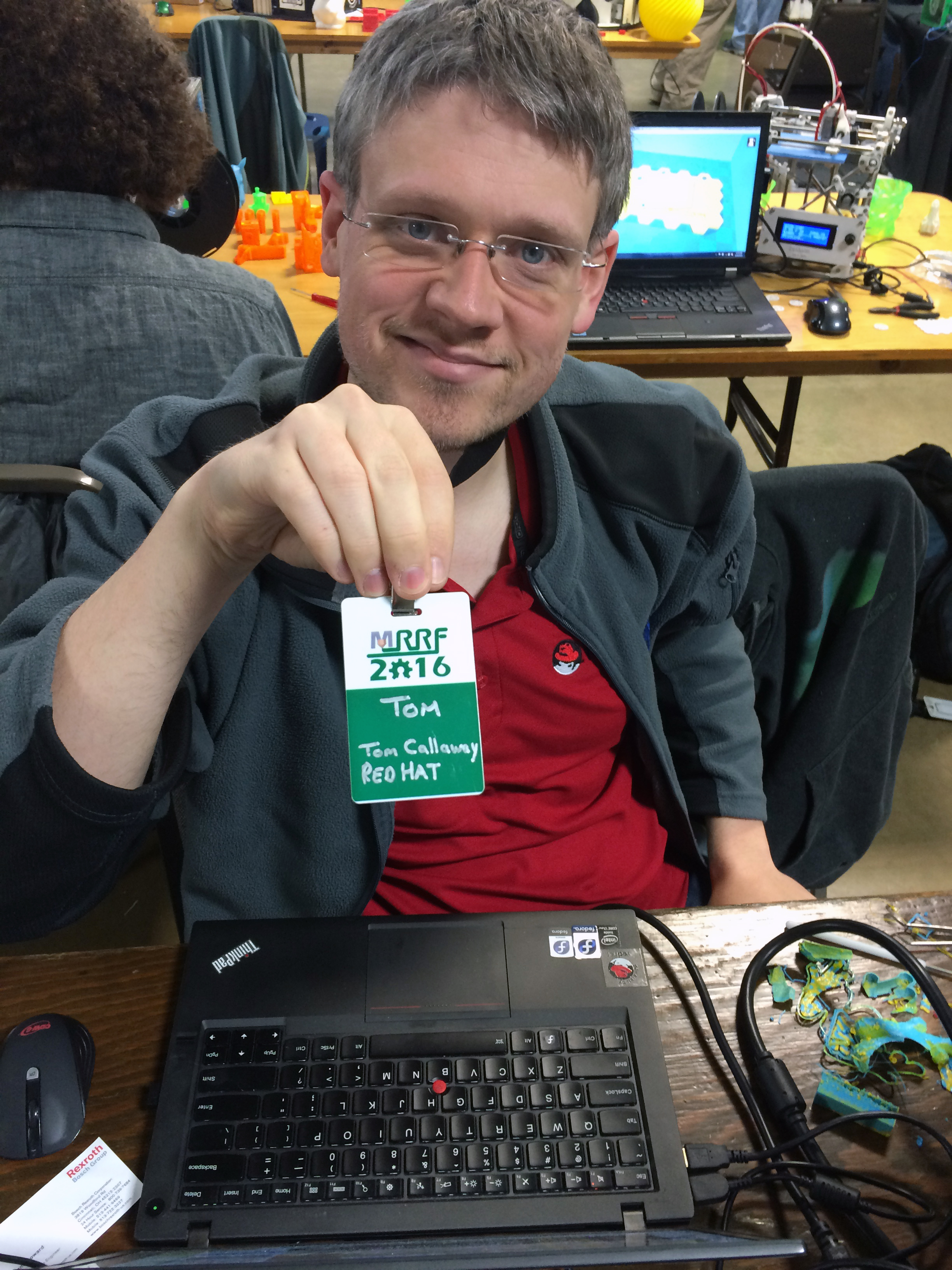
[Tom Callaway] is Red Hat’s full time 3d Printer guy. He works at Red Hat headquarters in Raleigh, North Carolina. We had a chance to talk to him at MRRF and figure out what it is that Red Hat does for 3D printing anyway.
Red Hat’s first interest is that anyone who uses their software to run a 3D printer or interacts with the files involved has an easy time of it in Linux. To that end Tom regularly tests the latest versions of the software we regularly use. He makes sure that the software is nicely packaged for Red Hat. On top of that he also contributes to the projects themselves. He has submitted patches for Cura and Slic3r to name a few.
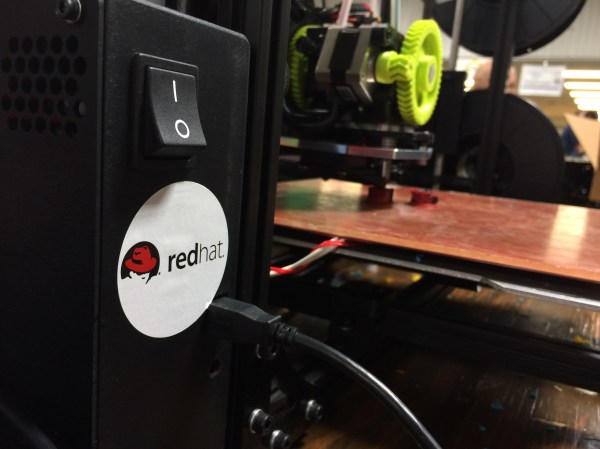
To run the software through its paces, and as a nice perk for Red Hat employees, [Tom] runs Red Hat’s 3D printing lab. Employees can print anything they like in it, but it also gives Red Hat an opportunity to test the software for failure points. If you are a 3D printer manufacturer (open or closed) you can send them a printer and they’ll make sure it has a profile and runs faultlessly with each version update, not bad!
The face of 3D printing at Red Hat.
[Tom] also participates in the Red Hat Fedora 3D printing special interest group. This lets Red Hat Fedora users come together and work out problems they find in the wild. It’s also one of the best ways for him to stay ahead of the new software packages that come out as 3d printing develops.
The coolest thing about all this, is Red Hat’s support for manufacturers. Red Hat will make sure any software that supports a printer will run, for free. So if you’ve written a custom driver for your printer that only runs on windows. As long as you give Red Hat access to the source code, they’ll make sure it can run on Linux as well. Though, apparently none of the closed source printer manufacturers have taken them up on the offer. Red Hat does have a partnership with open manufacturers such as Lulz Bot.
Being primarily a software company, Red Hat has no personal interest in entering the open hardware market at this time. They do want to see it succeed, and to that end, their last and most interesting service is their willingness to talk about what has and hasn’t worked in running an open source business. People in the open hardware business can reach out to people like [Tom] and ask for advice on the every day aspects of the open source business. Red Hat has undoubtedly learned many lessons over the years, and like their software, they’re willing to share every line.
Edit: Lastly, thanks to [Miro] in the comments, who also works for Red Hat and contributes to 3d Printing. Cool! I just wanted to be clear that most of these things translate into the Fedora Project, which oversees Fedora Linux, a very popular distro (Apparently Linus Torvald’s preferred.) If you’d like to participate in any of this the Fedora Linux 3d Printer SIG (I mistakenly called it Red Hat SIG, which implies that it is only for paying customers of Red Hat Enterprise Linux, which is not true) is the place to go. It makes Fedora better and helps the 3d printing community as a whole:)
The little board that has at times seemed so plagued with delays as to become the Duke Nukem Forever of small computers has finally shipped. A million or so British seventh-grade schoolchildren and their teachers will today start receiving their free BBC micro:bits.
Announced early last year, the plan was to rekindle the learning of code in schools through handing out a powerful and easy to program small computer to the students. The hope is that it will recapture the spirit of the 1980s, when school computing meant programming Acorn’s BBC Micro rather than learning how to use Microsoft Word.
Sadly the project has been delayed multiple times, the original target of last October was missed, and a revised estimate from January suggested they might ship at half-term (about four weeks ago). With only a few days to go before the Easter school holidays the kids will have to try them out at home, but at least they’re arriving. Continue reading “British Kids Finally Get Their Micro:Bits”→
As circuits find their way into more and more real-world environments, the old standard circuitry isn’t always up to the task. It wasn’t that long ago that a computer needed special power, cooling, and a large room. Now those computers wouldn’t cut it for the top-of-the-line smartphone. However, most modern circuits don’t bend well and don’t like getting wet.
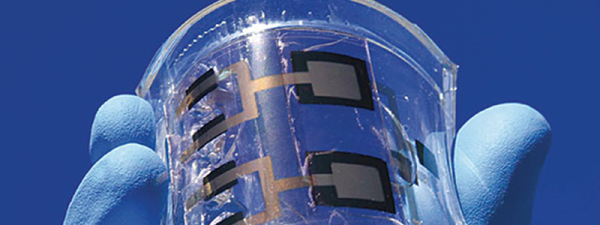
An international team of researchers is developing chemical-based circuitry that uses gold nanoparticles and electrically charged organic molecules to build circuit elements that behave like semiconductor diode junctions. It’s simple to make flexible circuits that don’t mind being wet using this chemical soup.
In an interview with IEEE Spectrum, the developers mentioned that other circuit elements similar to transistors and light sensors should be possible. The circuits aren’t perfect, however. The switching speed needs improvement. Also, while conventional circuits don’t like to get wet, these chemical circuits have difficulties if things get dry. Still, like all technology, things will probably improve over time.
This technology needs a good bit of engineering refinement before it is practical. If you need flexible photosensitive circuits in the near term, you might try here. Meanwhile, waterproof circuitry just needs the right kind of enclosure.
The Hackaday Prize meetup at the Dallas Makerspace is this weekend: Saturday March 19th. We will be kicking things off at 7pm with food and drinks followed by lightning talks. If you want to come but have yet to RSVP you can do that via Meetup, please do this so we can have enough food and drinks on site for everyone.
We’ve already lined up a number of lightning talks (5-7 minutes each) to get things started so we aren’t sitting and staring at one another like a junior high dance. But we encourage you to show up and sign up for one on on the night of the meetup. Even if you don’t give a talk you should bring a project to show off afterward.
Lightning Talks Primed With:
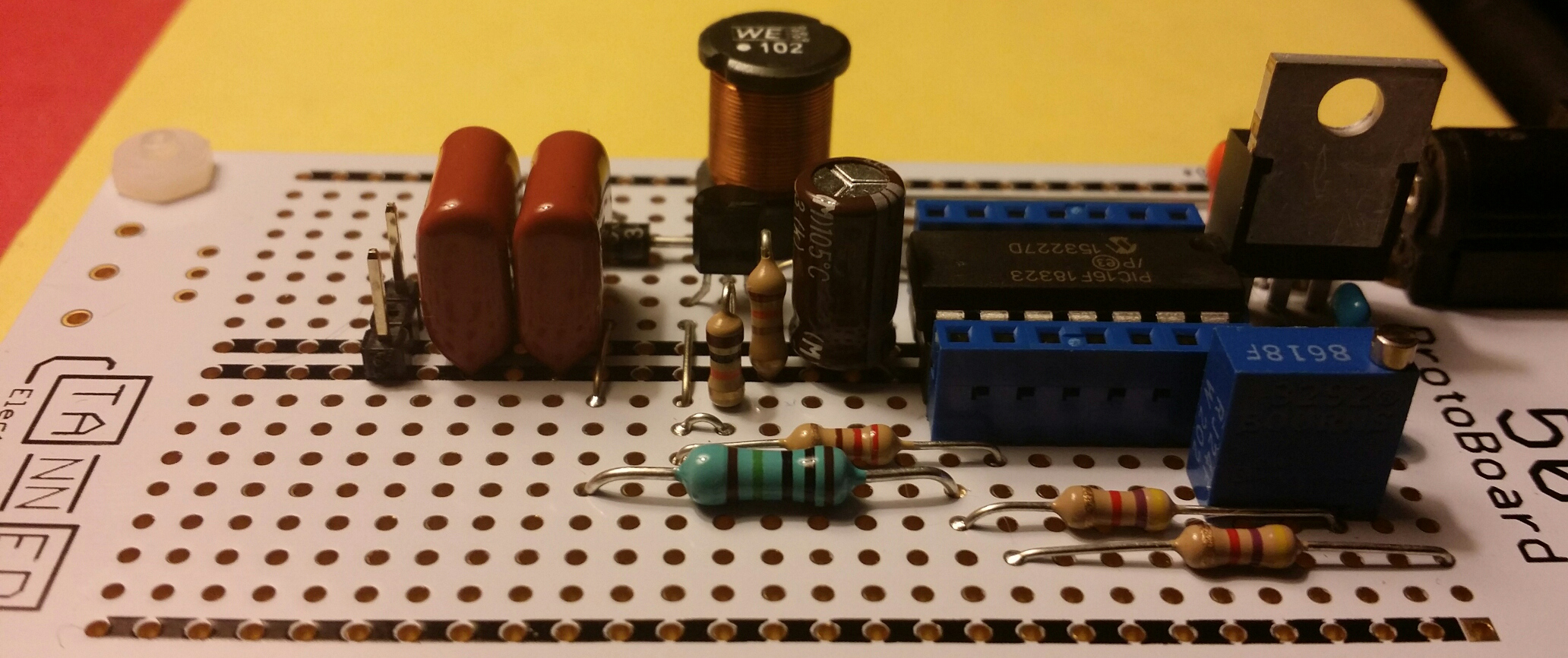
450V 1mA PIC boost converter by [Bradley Mahurin][Brandon Dunson] giving a talk about the 2016 Hackaday Prize, [Mike Szczys] will be giving a talk about the Hackaday | Belgrade hardware badge. [Dave Anders] will be talking about his WITCH-E Project and [Bradley Mahurin] is bringing his 450V 1mA PIC based boost converter. Not to discredit the Hackaday talks, but I’ve seen [Dave] and [Bradley]’s work before and you’ll want to see this stuff first hand and get a chance to talk with these guys.
To start with, he built a prototype PCB and tested out the concept. It worked so he began on the real thing. He tore out the guts from a broken Game Gear, saving some parts like those responsible for supplying power. Impressively, he etched his own replacement boards for the Game Gear’s control pads; surprising himself at how simple it ended up being. He fit a 16×4 LCD into the space previously occupied by the Game Gear’s screen.
The program itself is a simple text adventure of his own creation. He even added little 8-bit sprites. The story is classic, a princess has gotten herself in some trouble and a brave hero has been coerced into saving her. Last, he added some music and sound effects from Zelda with a piezo buzzer.
This project is guaranteed to disappoint a visiting younger cousin or relative, but we like to think of that as a feature and not a bug. Great work!
Every year, Congress passes bills directing the funding for various departments and agencies. Sometimes, this goes swimmingly: congress recently told NASA to attempt a landing on Europa, Jupiter’s ice-covered moon. Sometimes, it doesn’t go as well. The draft of the FAA Reauthorization act of 2016 (PDF) includes provisions for drones and model airplanes amid fears of privacy-encroaching quadcopters.
As would be expected, the 2016 FAA Reauthorization act includes a number of provisions for unmanned aerial systems, a class of aircraft that ranges from a Phantom quadcopter to a Predator drone. The draft of the act includes provisions for manufacturers to prevent tampering of modification of their product, and provide the FAA with a statement of compliance, and prohibit these devices from being sold unless these conditions are met.
For a very long time, the Congress and the FAA have had special rules for model aircraft. Since 2012, the special rules for model aircraft have been simple enough: model aircraft are flown for hobby or recreational use, must operate in accordance with community-set safety guidelines, weigh less than 55 pounds, give way to manned aircraft, and not be flown within five miles of an airport. The 2016 FAA Reauthorization bill adds several updates. No model aircraft may be flown higher than 400 feet above ground level, and the operator of a model aircraft must pass a knowledge and safety test administered by the FAA. Under this draft of the FAA Reauthorization bill, you will have to pass a test to fly a quadcopter or model plane.
While this is only a draft of the 2016 FAA Reauthorization bill, there is a considerable risk flying model planes could quickly go the way of amateur radio with a Morse requirement for the license. This, of course, is due to Congress’ fears of the impact drones and model airplanes could have on safety, despite recent studies that show a 2kg drone is likely to cause injury to a human passenger once every 187 million years of operation. In other words, politicians don’t understand statistics.