RC Transmitter Does Everything

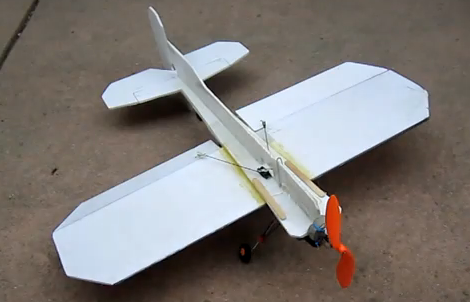
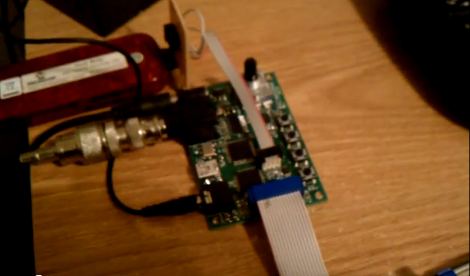
[Demetris] sent in a tip about a project he’s working on: an Open Source Remote Control transmitter. This is one of the most impressive looking RC transmitters we’ve ever seen. The OSRC could be great for a small UAV – just get the GPS position from the aircraft and map it with the transmitter’s screen. There’s also support for a video downlink so flying around New York City is possible with a single device.

Continue reading “RC Transmitter Does Everything”

[Jeri Ellsworth] Builds A Software Radio

[Jeri Ellsworth] has been working on a direct conversion receiver using an FPGA as an oscillator and a PC sound card DSP. Being the excellent presenter she is, she first goes through the history and theory of radio reception (fast forward to 1:30), before digging into the meat of the build (parts 2 and 3 are also available).

Continue reading “[Jeri Ellsworth] Builds A Software Radio”

Building A Simple FM Transmitter Bug

simple_fim_transmitter_hack_a_week

[Dino] got his hands on an FM transmitter “bug” kit via a friend, and thought it would make for an easy and fun Hack a Week project. The kit is simple two transistor half-wave FM transmitter, which the manufacturer suggests could be used to bug a room, hence the name. After poking a bit of fun at the instructions, [Dino] gets to work building the transmitter, wrapping things up in a little less than an hour.

Once he finished soldering everything together, he takes a few moments to test out the bug and to explain how various parts of the board work together in order to transmit the FM signal. He mentions that adding a dipole antenna would make it easy to extend the range of the transmitter, and briefly teases next week’s episode, where he plans on constructing a similar dual-stage transmitter.

This sort of FM circuit is one of the first few simple projects you would see in a beginner’s electronics class, so if you know anyone that is just starting to get their feet wet, be sure to pass this Hack a Week episode along.

Continue reading to see [Dino] explain the ins and outs of his FM bug transmitter.

Continue reading “Building A Simple FM Transmitter Bug”

Waterfall Signal Visualizer From Arduino And Cellphone LCD

[Leigh] is a HAM operator (you may know him as wa5znu). He is familiar with a signal visualization tool called a waterfall which plots signal strength and frequency over time. He wanted to build his own waterfall and ended up with this Arduino-based version which he calls Cascata. Cascata means waterfall in Italian which meshes nicely with Arduino’s country of origin

The display he chose is a Nokia LCD shield from SparkFun. It’s easy to plug in and there were already libraries available to drive the display. The audio input just connects to a headphone plug (you can just make it out at the bottom right in the image above) using some electrical tape. A free-formed resistor divider ensures that the signal is within a measurable range. [Leigh] found that signal noise was a bit of a problem but was able to improve his results by adding a capacitor to the Arduino headers between the VREF and GND pins.

See it in action after the break.

Continue reading “Waterfall Signal Visualizer From Arduino And Cellphone LCD”

Retro-radio: Building On Another WiFi Radio Hack

[Jay Collett] likes listening to Internet radio stations and decided to build his own standalone hardware that lets him listen without being at his computer. But he wasn’t starting from square one on this project. [Jay] built on the epic instruction set that [Mighty Ohm] published when he first built his own WiFi radio.

Both of these radios used the same method of getting onto the internet; a hacked router. We kind of like this because it means you should be able to use the radio as a bridge for wired Ethernet devices. But we digress. [Jay] departs from the instructions by using an Arduino and its IDE to interface an LCD screen with a different line/column orientation than the original, and to implement a different control scheme. This makes the project a bit more approachable if you prefer not to roll your own electronics.

Take a look at the video after the break. The router takes quite a while to boot, but once it does it seems that the controls are both intuitive and responsive.

Continue reading “Retro-radio: Building On Another WiFi Radio Hack”

2005 Subaru Aux-in Hacking

2005_subaru_outback_aux_in

The CD player in [mukmuk’s] 2005 Subaru Outback gave up the ghost, and faced with a long road trip ahead of him, he was desperate to find a way to listen to something other than static-filled radio. He considered a 3rd party auxiliary input solution, but after seeing a similar aux-in hack here, he figured he could give it a go himself.

The stereo head unit design was changed between the 2004 and 2005 model years, so while he had a good idea of what to look for, he had to find the proper components on his own. Once he identified the radio module, he was able to locate the left an right input pins through trial and error. He carefully soldered a 3.5” audio jack to the head unit’s input lines, wiring it to cut off the audio signal from the radio whenever his Zune was plugged in.

Everything was reassembled, and the input jack was inconspicuously mounted in a cubby hole just above the stereo. [mukmuk] is quite happy with his modification, and we’re guessing his road trip was far more pleasurable as a result of his work.

A Suitcase For All Your Wardriving Needs

[Corrosion] sent in a tip about the Weaponised Auditing Response System he built inside a suitcase that, “has all the tools (and then some) for a wireless assault”.

The WARS is equipped with two WiFi adapters and two bluetooth adapters for all the wardriving and bluejacking anyone could ever want. [Corrosion] also included a 4 channel, 2.4GHz video scanner for warviewing. Everything runs off of a 12 inch netbook that will eventually run linux, and we’re really liking the 1970s suitcase aesthetic the WARS has – it looks like [Corrosion] is about to step into the set of a Beastie Boys video.

We were wondering about including a long range RFID sniffing antenna (PDF warning) behind the monitor of the suitcase’s monitor and asked [Corrosion] about it. He said it sounded doable, but is out of funds at the moment, so if you know how to build a cheap RFID antenna with a 50 foot range, drop [Corrosion] a line.

There’s a video demo with some stills of the build included after the break.

Continue reading “A Suitcase For All Your Wardriving Needs”