There’s Gold In That There Graphene

There’s gold all around us, embedded in our electronics. There are people who collect e-waste and use various methods to extract gold from them. However, it is hard to qualify it as a “get rich quick” scheme because the amount of gold recovered is usually minute. Still, if you can do volume, you can make some money and recycling is always a good idea. At the University of Manchester, they have a better way to extract gold from e-waste using graphene. You can see a brief video about the process below, or read the full paper.

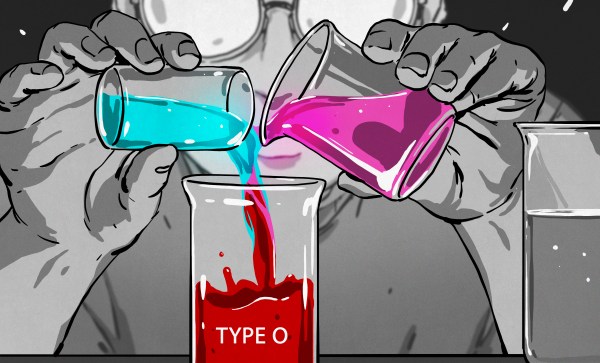
The process is relatively simple. You dissolve the e-waste in a solvent, add some graphene oxide, and the gold appears bound to the graphene. You pull out the graphene and burn it off to result in the gold you want. A gram of graphene can grab 2 grams of gold and graphene is relatively cheap per gram compared to gold.

Graphene oxide nanosheets are processed using ascorbic acid into a colloid suspension. The chemical process converts gold bound with chlorine into elemental gold. After diving into why the process works, they were able to increase the selectivity of the process by manipulating the pH so that the majority of the residue is actually gold.

The team believes they can build a continuous process that takes liquefied e-waste and extracts gold as it flows through the system. If you’d rather go with the traditional method, here’s a start for you. Then again, there are other metals to recover besides gold.

Continue reading “There’s Gold In That There Graphene”

Optimizing The Mining Of Uranium From Coal Ash And Seawater

Of all the elements that make up the Earth’s crust, uranium is reasonably abundant, coming in at 49th place, ahead of elements such as tin, tungsten and silver. Ever since humankind began to exploit uranium for its fissile properties in energy production, this abundance has also translated into widespread availability for mining. As of 2019, Kazakhstan, Canada and Australia formed the world’s main producers, accounting for about 68% of output.

Considering the enormous energy density of uranium when used as fuel in a nuclear fission reactor, the demand for uranium is relatively low, especially combined with the long (two years on average) refueling cycles of commercial reactors. The effect is that even with the very inefficient once-through fuel cycle – which only uses a fraction of the uranium fuel’s potential energy – uranium market prices have remained relatively low and stable even amidst geopolitical crises.

Despite this, the gradual rise in uranium market prices ($10/lb in 2003, $49/lb in 2022), as well as the rapid construction of new reactors is driving new exploration. Here recent innovations may make uranium fuel even more accessible to all nations, by unlocking the billions of tons of uranium found in plain seawater as well as the many tons of fly ash produced by coal plants every single day.

Continue reading “Optimizing The Mining Of Uranium From Coal Ash And Seawater”

Magic Mirror Isn’t Transparent Metal

One of the Star Trek movies has a McGuffin called “transparent aluminum.” While magic mirrors aren’t really transparent, it appears that way to a casual observer. If you haven’t seen one of these, they are polished metal mirrors with a pattern embossed on the back. When you shine a point source of light on the mirror, however, the reflection matches what is on the back of the mirror. Is it transparent? No, and the video by [Steve Mould] below explains what’s really going on.

The reality is that very subtle variations of the surface produce the image. You need some understanding of optics and calculus to fully understand what’s going on.

Continue reading “Magic Mirror Isn’t Transparent Metal”

Batteries Get Tiny

Steve Martin had a comedy routine that focused on the idea of “getting small.” That probably didn’t inspire the researchers at the Institute for Integrative Nanoscience when they set out to create a sub-square-millimeter microbattery. As you might expect, you won’t be starting your car with a battery the size of a grain of sand anytime soon, but these batteries do have a surprising capacity.

The key is creating what they call “micro-swiss rolls” where the electrodes are wrapped in a tiny cylinder. This isn’t a new idea. However, creating workable rolls at the scale where a grain of rice looks huge isn’t trivial.

Continue reading “Batteries Get Tiny”

Replace An AA Battery With Paper

Paper is an ubiquitous part of society; so much so that the incredible engineering behind it often goes unnoticed. That isn’t the case for [Robert], though, who has a deep appreciation for the material and all its many uses far beyond recording information. In this particular video, he recreates a method found by researchers to turn a piece of paper into a battery with equivalent performance to a AA-sized alkaline battery. (Video, embedded below the break.)

The process involves the creation of a few different types of ink, each of which can be made with relatively common materials such as shellac, ethanol, polyethylene glycol, and graphite. Each of these materials are mixed in different proportions to create the inks. Once the cathode ink and anode ink are made, a third ink is needed called a current collector ink which functions essentially as a wire. The paper is dipped into a salt solution and then allowed to dry, given a partial waterproof coating, and when it is needed it can be activated by wetting it which allows the ion flow of the battery to happen.

The chemistry of this battery makes a lot of sense once you see it in action, and the battery production method also has a perk of having a long shelf life as long as the batteries stay dry. They also don’t damage the environment as much as non-rechargable alkaline cells do, at least unless you want to go to some extreme measures to reuse them.

Continue reading “Replace An AA Battery With Paper”

Reduced Sulfur Emissions Could Cause Climate Shock

When we talk about emissions these days, we typically talk about cutting them back for the good of the environment. However, the climate system is a complex beast, and one we’re still learning to understand.

As it turns out, cutting back on emissions may have unexpected or undesirable effects. Some scientists are concerned that cuts to human-induced sulfur emissions may actually be warming the Earth.

Continue reading “Reduced Sulfur Emissions Could Cause Climate Shock”

Stentrodes: A Way To Insert Brain Electrodes Without Invasive Surgery

When we think of brain-computer interfaces (BCIs) that use electrodes, we usually think of Utah arrays that are placed directly on the brain during open brain surgery, or with thin electrodes spliced into the exposed brain as postulated by Neuralink. While Utah arrays and kin as a practical concept date back to the 1980s, a more recent concept called Stentrodes – for stent-electrode array – seeks to do away with the need for invasive brain surgery.

As the name suggests, this approach uses stents that are inserted via the blood vessels, where they are expanded and thus firmly placed inside a blood vessel inside the brain. Since each of these stents also features an electrode array, these can be used to record neural activity in nearby neural clusters, as well as induce activity through electrical stimulation.

Due to the fact that stents are already commonly used by themselves in the brain’s blood vessels, and the relatively benign nature of these electrode arrays, human trials have already been approved in 2018 by an ethics committee in Australia. Despite lingering concerns about the achievable resolution and performance of this approach, it may offer hope to millions of people suffering from paralysis and other conditions.

Continue reading “Stentrodes: A Way To Insert Brain Electrodes Without Invasive Surgery”