This Service Life Study Really Grinds Our Gears

3D printing is arguably over-used in the maker community. It’s just so easy to run off a quick prototype and then… well, it’s good enough, right? Choosing the right plastic can go a long way to making sure your “good enough” prototype really is good enough for long term use. If you’re producing anything with gearing, you might want to cast your eyes to a study by [Mert Safak Tunalioglu] and [Bekir Volkan Agca] titled: Wear and Service Life of 3-D Printed Polymeric Gears.

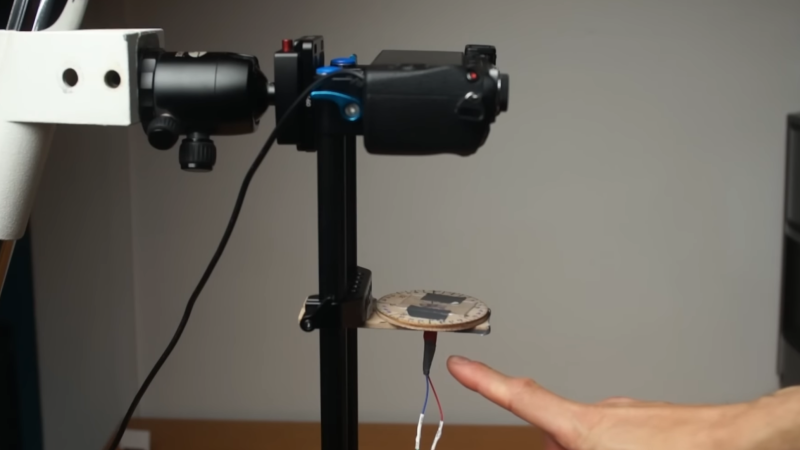
Photograph of the test rig used in the study.
No spin doctoring here, spinning gears.

The authors printed simple test gears in ABS, PLA, and PETG, and built a test rig to run them at 900 rpm with a load of 1.5 Nm against a steel drive gear. The gears were pulled off and weighed every 10,000 rotations, and allowed to run to destruction, which occurred in the hundreds-of-thousands of rotations in each case. The verdict? Well, as you can tell from the image, it’s to use PETG.

The authors think that this is down to PETG’s ductility, so we would have liked to see a hard TPU added to the mix, to say nothing of the engineering filaments. On the other hand, this study was aimed at the most common plastics in the 3D printing world and also verified a theoretical model that can be applied to other polymers.

This tip was sent in by [Benjamin], who came across it as part of the research to build his first telescope, which we look forward to seeing. As he points out, it’s quite lucky for the rest of us that the U.S. government provides funding to make such basic research available, in a way his nation of France does not. All politics aside, we’re grateful both to receive your tips and for the generosity of the US taxpayer.

We’ve seen similar tests done by the community — like this one using worm gears — but it’s also neat to see how institutional science approaches the same problem. If you need oodles of cycles but not a lot of torque, maybe skip the spurs and print a magnetic gearbox. Alternatively you break out the grog and the sea shanties and print yourself a capstan.

Opening A Six-Lock Safe With One Key Using Brunnian Links

Brunnian links are a type of nontrivial link – or knot – where multiple linked loops become unlinked if a single loop is cut or removed. Beyond ‘fun’ disentanglement toys and a tantalizing subject of academic papers on knot theory, it can also be used for practical applications, as demonstrated by [Anthony Francis-Jones] in a recent video. In it we get a safe that is locked with multiple padlocks, each of which can unlock and open the safe by itself.

This type of locked enclosure is quite commonly used in military and other applications where you do not want to give the same key to each person in a group, yet still want to give each person full access. After taking us through the basics of Brunnian links, including Borromean rings, we are introduced to the design behind the safe with its six padlocks.

As a demonstration piece it uses cheap luggage padlocks and Perspex (acrylic) rods and sheets to give a vibrant and transparent view of its workings. During the assembly it becomes quite apparent how it works, with each padlock controlling one direction of motion of a piece, each of which can be used to disassemble the entire locking mechanism and open the safe.

Brunnian links are also found in the braids often made by children out of elastic bands, which together with this safe can be used to get children hooked on Brunnian links and general knot theory.

Continue reading “Opening A Six-Lock Safe With One Key Using Brunnian Links”

Mach Cutoff: Bending The Sonic Boom

Supersonic air travel is great if you want to get somewhere quickly. Indeed, the Concorde could rush you from New York to London in less than three and a half hours, over twice as fast as a conventional modern airliner. Despite the speed, though, supersonic passenger service has never really been sustainable thanks to the noise involved. Disruption from sonic booms has meant that supersonic travel over land is near-universally banned. This strictly limits the available routes for supersonic passenger jets, and thus their economic viability.

Solving this problem has been a hot research topic for some time. Now, it appears there might be a way forward for supersonic air travel over land, using a neat quirk of Earth’s atmosphere.

Continue reading “Mach Cutoff: Bending The Sonic Boom”

Caltech Scientists Make Producing Plastics From CO2 More Efficient

For decades there has been this tantalizing idea being pitched of pulling CO2 out of the air and using the carbon molecules for something more useful, like making plastics. Although this is a fairly simple process, it is also remarkably inefficient. Recently Caltech researchers have managed to boost the efficiency somewhat with a new two-stage process involving electrocatalysis and thermocatalysis that gets a CO2 utilization of 14%, albeit with pure CO2 as input.

The experimental setup with the gas diffusion electrode (GDE) and the copolymerization steps. (Credit: Caltech)

The full paper as published in Angewandte Chemie International is sadly paywalled with no preprint available, but we can look at the Supplemental Information for some details. We can see for example the actual gas diffusion cell (GDE) starting on page 107 in which the copper and silver electrodes react with CO2 in a potassium bicarbonate (KHCO3) aqueous electrolyte, which produces carbon monoxide (CO) and ethylene (C2H4). These then react under influence of a palladium catalyst in the second step to form polyketones, which is already the typical way that these thermoplastics are created on an industrial scale.

The novelty here appears to be that the ethylene and CO are generated in the GDEs, which require only the input of CO2 and the potassium bicarbonate, with the CO2 recirculated for about an hour to build up high enough concentrations of CO and C2H4. Even so, the researchers note a disappointing final quality of the produced polyketones.

Considering that a big commercial outfit like Novomer that attempted something similar just filed for Chapter 11 bankruptcy protection, it seems right to be skeptical about producing plastics on an industrial scale, before even considering using atmospheric CO2 for this at less than 450 ppm.

View inside the vacuum vessel of Wendelstein 7-X in Greifswald, Germany. (Credit: Jan Hosan, MPI for Plasma Physics)

Wendelstein 7-X Sets New Record For The Nuclear Fusion Triple Product

Fusion product against duration, showing the Lawson criterion progress. (Credit: Dinklage et al., 2024, MPI for Plasma Physics)

In nuclear fusion, the triple product – also known as the Lawson criterion – defines the point at which a nuclear fusion reaction produces more power than is needed to sustain the fusion reaction. Recently the German Wendelstein 7-X stellarator managed to hit new records here during its most recent OP 2.3 experimental campaign, courtesy of a frozen hydrogen pellet injector developed by the US Department of Energy’s Oak Ridge National Laboratory. With this injector the stellarator was able to sustain plasma for over 43 seconds as microwaves heated the freshly injected pellets.

Although the W7-X team was informed later that the recently decommissioned UK-based JET tokamak had achieved a similar triple product during its last – so far unpublished – runs, it’s of note that the JET tokamak had triple the plasma volume. Having a larger plasma volume makes such an achievement significantly easier due to inherently less heat loss, which arguably makes the W7-X achievement more noteworthy.

The triple product is also just one of the many ways to measure progress in commercial nuclear fusion, with fusion reactors dealing with considerations like low- and high-confinement mode, plasma instabilities like ELMs and the Greenwald Density Limit, as we previously covered. Here stellarators also seem to have a leg up on tokamaks, with the proposed SQuID stellarator design conceivably leap-frogging the latter based on all the lessons learned from W7-X.

Top image: Inside the vacuum vessel of Wendelstein 7-X. (Credit: Jan Hosan, MPI for Plasma Physics)

Quasi-Quantifying Qubits For 100 Quid

As part of his multi-year project to build a quantum computer, hacakday.io poster [skywo1f] has shared with us his most recent accomplishment — a Nuclear Magnetic Resonance Spectrometer, which he built for less than $100.

The NMR spectrometer is designed to disturb protons, which naturally line up according to the Earth’s magnetic field, using an electric coil. Once disturbed, the protons nutate (a fancy physics word for wobble), and flip quantum spin states. [skywo1f]’s NMR device can detect these spin state changes, as he demonstrates with a series of control experiments designed to eliminate sources of false positives (which can be annoyingly prevalent in experimental physics). His newest experimental device includes a number of improvements over previous iterations, including proper shielding, quieter power topology, and better coil winding in the core of the device. Everything was assembled with cost in mind, while remaining sensitive enough to conduct experiments — the whole thing is even driven by a Raspberry Pi Pico.

Here at Hackaday, we love to see experiments that should be happening in million-dollar laboratories chugging along on kitchen tables, like this magnetohydrodynamic drive system or some good old-fashioned PCB etching. [skywo1f] doesn’t seem to be running any quantum calculations yet, but the NMR device is an important building block in one flavor of quantum computer, so we’re excited to see where he takes his work next.

Citizen Science Is All Fun And Games

You are probably familiar with initiatives like Seti@Home, where you donate unused computer power to some science project that needs computer cycles. [Jeff Yoshimi] wants to borrow your most powerful computer: your brain. The reason: cancer research.

[Jeff’s] recent book, Gaming Cancer, has three examples: Eterna, Foldit, and Nanocrafter. All three make games out of creating biological molecules. With Foldit, you create proteins in a bonsai-like fashion. EteRNA is more like Sudoku for RNA. Nanocrafter used DNA strands as puzzle pieces, although it is no longer operational. Their website, amusingly, looks like it was taken over by a slot machine site and a probably AI-generated text tries to convince you that slot machines are much like fusing DNA strands.

What can these projects do? Eterna’s open vaccine challenge used gameplay to help design RNA molecules for vaccines that don’t require ultra-cold storage, and the results drove improvements in real-life vaccines.

There have been several science fiction stories that center on the idea that a game of some sort might be an entrance test to a super-secret organization (The Last Starfighter or Stargate: Universe, for example). Maybe a future science game will trigger scholarship or job offers. It could happen.

We like citizen science. Zooniverse does a good job of making it fun, but maybe not to the level of a game. You can make contributions in space, or even right here on Earth.