Peeking Underground With Giant Flying Antennas

Helicopters are perhaps at their coolest when they’re being used as flying cranes — from a long dangling cable, they can carry everything from cars, to crates, to giant hanging saws.

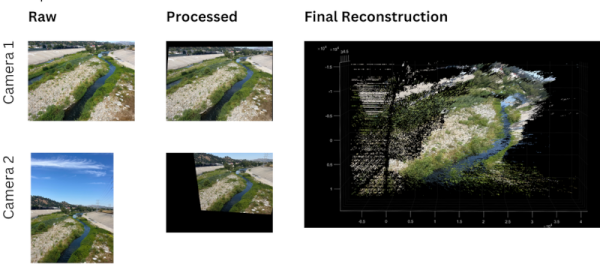
What you might find altogether more curious are the helicopters that fly around carrying gigantic flat antenna arrays. When you spot one in the field, it’s not exactly intuitive to figure out what they’re doing, but these helicopters are tasked with important geological work!

Continue reading “Peeking Underground With Giant Flying Antennas”

Möbius String Robot Goes Round And Round

While it doesn’t look like a traditional robot, the hydrogel robot from [Zi Liang Wu] forms a möbius strip and can be activated by light. They also experimented with shaping the hydrogels as a Seifert ribbon.

The key is that the hydrogels contain gold nanoparticles. Light heats the gold particles and this causes the hydrogels to move. The connections between the strips of hydrogels causes them to move in predictable ways. You can see a video about the experiments below.

These robots aren’t going to be for warehouse or factory work. But they can do tasks like collecting plastic beads, something difficult for conventional robots to do. They also hope to demonstrate that these soft robots could work in the body for taking samples or delivering a drug, although it isn’t apparent how light would get to them inside your body.

The dark side of the material tends to turn towards the light. The continuous loop structure means it never runs to the end of its travel. Watching it move on a string is pretty impressive.

Crawling and slithering robots may be the answer for certain specialized applications. After all, it works well in nature.

Continue reading “Möbius String Robot Goes Round And Round”

Nature Vs Nurture In Beethoven’s Genome

When it comes to famous musicians, Beethoven is likely to hit most top ten charts. Researchers recently peered into his genome to see if they could predict his talent by DNA alone.

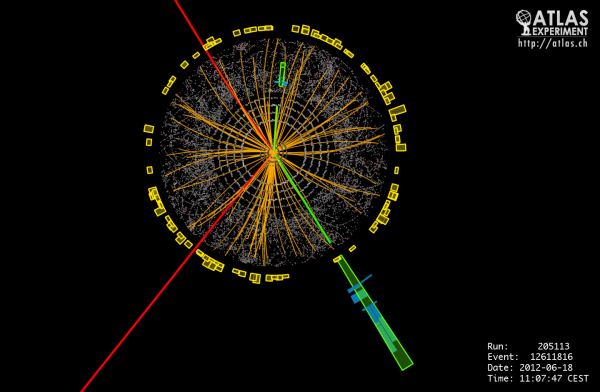
Using a previously-identified polygenetic index (PGI) for musical talent, which finds the propensity of certain genes to influence a given trait after a genome-wide association study (GWAS), the researchers were able to compare samples of Beethoven’s DNA to that of two separate population studies with known musical achievement data.

Much to the relief of those who saw Gattaca as a cautionary tale, the scientists found that Beethoven scored only around the tenth percentile for the ability to keep a beat according to his genetic markers. According to the researchers, using genetic markers to predict abilities of an individual can lead to incorrect conclusions, despite their usefulness for group level analyses.

Curious about more musical science? How about reconstructing “Another Brick in The Wall (Part I)” from brainwaves or building a Square Laser Harp?

Is The Frequency Domain A Real Place?

When analyzing data, one can use a variety of transformations on the data to massage it into a form that works better to tease out the information one is interested in. One such example is the application of the Fourier transform, which transforms a data set from the time domain into the frequency domain. Yet what is this frequency domain really? After enticing us to follow the white rabbit down a sudden plummet into the intangible question of what is and what is not, [lcamtuf] shows us around aspects of the frequency domain and kin.

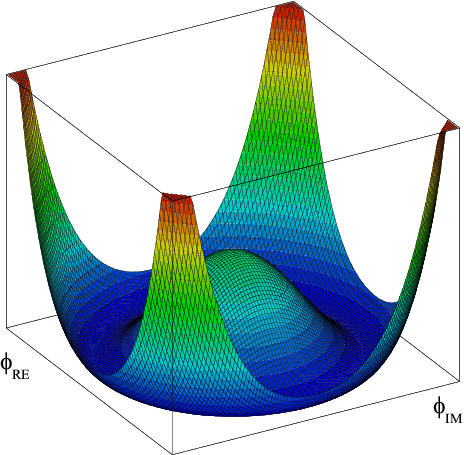
One thing about the (discrete) Fourier transform is that it is excellent at analyzing data that consists out of sinewaves, such as audio signals. Yet when using the Fourier transform for square waves, the resulting output is less than useful, almost as if square waves are not real. Similarly, other transforms exist which work great for square waves, but turn everything else into meaningless harmonics. Starting with the discrete cosine transform (DCT), this gets us into Walsh and Hadamard matrices and the Walsh-Hadamard Transform (WHT), and their usage with transforming data from the time into the frequency domain.

Ultimately it would seem that the frequency domain is as real as it needs to be, albeit that its appearance is wholly dependent on the algorithm used to create it, whether this the DFT, DCT, WHT or something else entirely.

Introduction To MOSFET Switching Losses

Metal-oxide semiconductor field-effect transistors (MOSFETs) see common use in applications ranging from the very small (like CPU transistors) to very large (power) switching applications. Although its main advantage is its high power efficiency, MOSFETs are not ideal switches with a perfect on or off state. Understanding the three main sources of switching losses is crucial when designing with MOSFETs, with a recent All About Circuits article by [Robert Keim] providing a primer on the subject.

As it’s a primer, the subthreshold mode of MOSFET modes of operation is omitted, leaving the focus on the linear (ohmic) mode where the MOSFET’s drain-source is conducting, but with a resistance that’s determined by the gate voltage. In the saturated mode the drain-source resistance is relatively minor (though still relevant), but the turn-on time (RDS(on)) before this mode is reached is where major switching losses occur. Simply switching faster is not a solution, as driving the gate incurs its own losses, leaving the circuit designer to carefully balance the properties of the MOSFET.

For those interested in a more in-depth study of MOSFETs in e.g. power supplies, there are many articles on the subject, such as this article (PDF) from Texas Instruments.

The Great Green Wall: Africa’s Ambitious Attempt To Fight Desertification

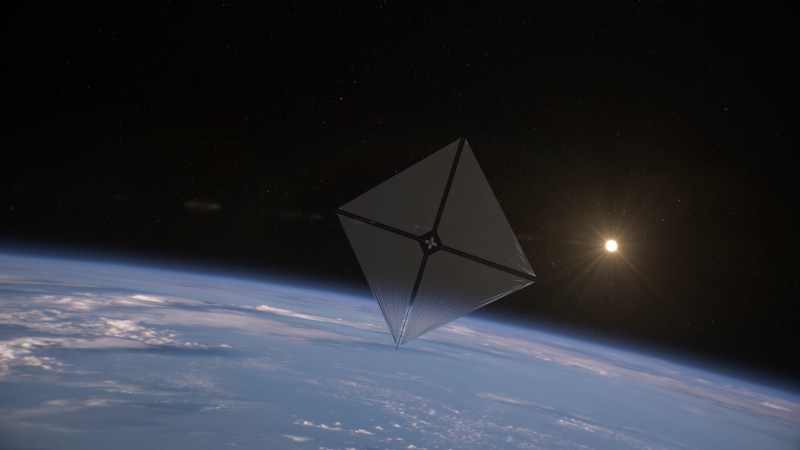
As our climate changes, we fear that warmer temperatures and drier conditions could make life hard for us. In most locations, it’s a future concern that feels uncomfortably near, but for some locations, it’s already very real. Take the Sahara desert, for example, and the degraded landscapes to the south in the Sahel. These arid regions are so dry that they struggle to support life at all, and temperatures there are rising faster than almost anywhere else on the planet.

In the face of this escalating threat, one of the most visionary initiatives underway is the Great Green Wall of Africa. It’s a mega-sized project that aims to restore life to barren terrain.

Continue reading “The Great Green Wall: Africa’s Ambitious Attempt To Fight Desertification”

ArdEEG Lowers The Cost Of Brain-Computer Interfaces

Considering the incredible potential offered by brain-computer interfaces (BCIs), it’s no wonder there are so many companies scrambling to make their mark in the field. Some see it as an assistive technology, while others imagine it as the future of interactive entertainment. Regardless of the application, the technology has yet to make much inroads with the DIY crowd — largely due to the complexity and cost of the hardware involved.

But that might change in the near future thanks to projects like ardEEG from [Ildar Rakhmatulin]. This open source shield mounts to the top of the Arduino UNO R4 WiFi and features eight channels for collecting electroencephalogram (EEG) data, such as from a dry electrode cap. The signals can then be processed on the computer using the provided Python example code. From there, the raw data can be visualized or plugged into whatever application you have in mind.

Why target the relatively uncommon WiFi version of the Uno? It’s probably obvious for those with experience with this kind of hardware, but for safety, the system needs complete electrical isolation. The Arduino and shield are powered by a common USB battery bank, and all communication is done over WiFi. Even still, the documentation is clear that the ardEEG is not a medical device, and hasn’t been certified by any regulatory agency — its use is entirely at your own risk.

[Ildar] tells us the hardware will be available soon and should cost under $250, making it one of the most affordable BCI development platforms out there. As with his earlier PiEEG project, the hope is that basing the system around a common device in the hacker and maker scene will help democratize access to BCI research.

Continue reading “ArdEEG Lowers The Cost Of Brain-Computer Interfaces”