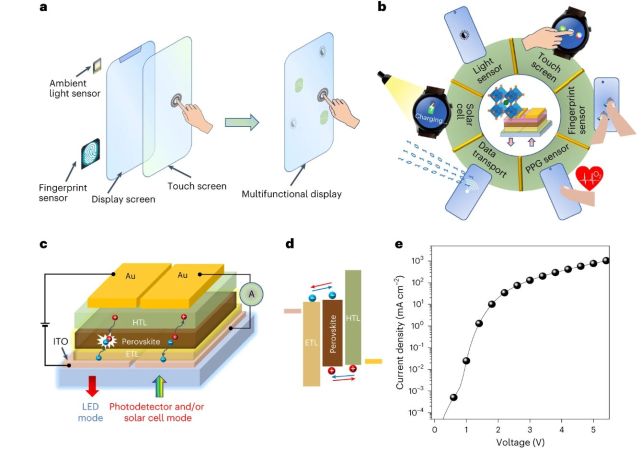
With both of the dominant display technologies today – LCD and OLED – being far from perfect, there is still plenty of room in the market for the Next Big Thing. One of the technologies being worked on is called PeLED, for Perovskite LED. As a semiconductor material, it can both be induced to emit photons as well as respond rather strongly to incoming photons. That is a trick that today’s displays haven’t managed without integrating additional sensors. This technology could be used to create e.g. touch screens without additional hardware, as recently demonstrated by [Chunxiong Bao] and colleagues at Linköping University in Sweden and Nanjing University in China.
Their paper in Nature Electronics describes the construction of photo-responsive metal halide perovskite pixels, covering the typical red (CsPbI3−xBrx), green (FAPbBr3), and blue (CsPbBr3−xClx) wavelengths. The article also describes the display’s photo-sensing ability to determine where a finger is placed on the display. In addition, it can work as an ambient light sensor, a scanner, and a solar cell to charge a capacitor. In related research by [Yun Gao] et al. in Nature Electronics, PeLEDs are demonstrated with 1 microsecond response time.
As usual with perovskites, their lack of stability remains their primary obstacle. In the article by [Chunxiong Bao] et al. the manufactured device with red pixels was reduced to 80% of initial brightness after 18.5 hours. While protecting the perovskites from oxygen, moisture, etc. helps, this inherent instability may prevent PeLEDs from ever becoming commercialized in display technology. Sounds like a great challenge for the next Hackaday Prize!

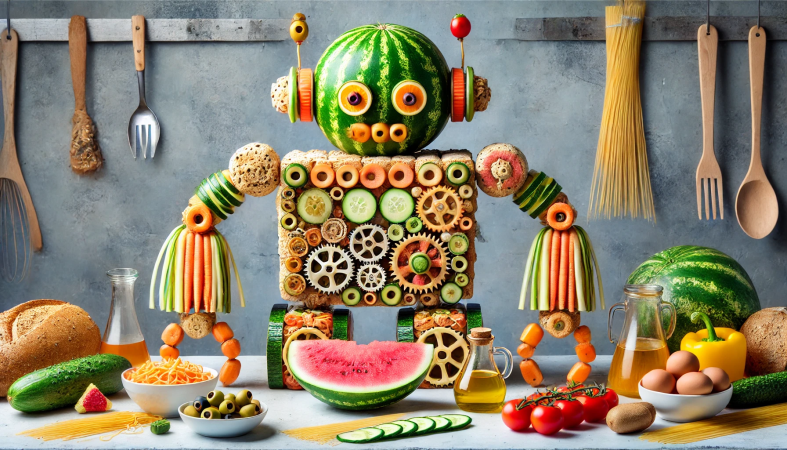
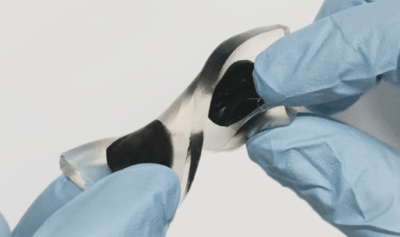 their lifespan. While the concept of food-based robots may seem unusual, the potential applications in medicine and reducing waste during food delivery are significant driving factors behind this idea.
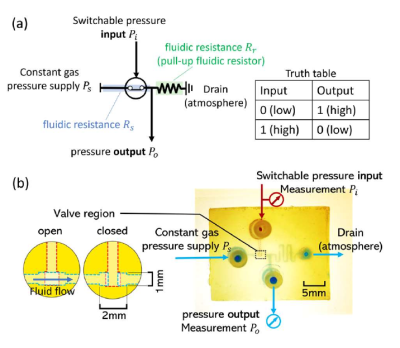 activated charcoal (AC) electrodes on a gelatin substrate. Water is split into its constituent oxygen and hydrogen by applying a voltage to the structure. These gasses adsorb into the AC surface and later recombine back into the water, providing a usable one-volt output for ten minutes with a similar charge time. This simple structure is reusable and, once expired, dissolves harmlessly in (simulated) gastric fluid in twenty minutes. Such a device could potentially power a GI-tract exploratory robot or other sensor devices.