2022 Hackaday Prize: Congratulations To The Winners Of The Hack It Back Challenge

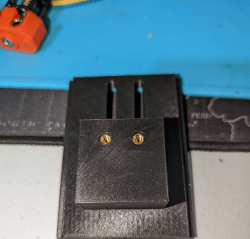
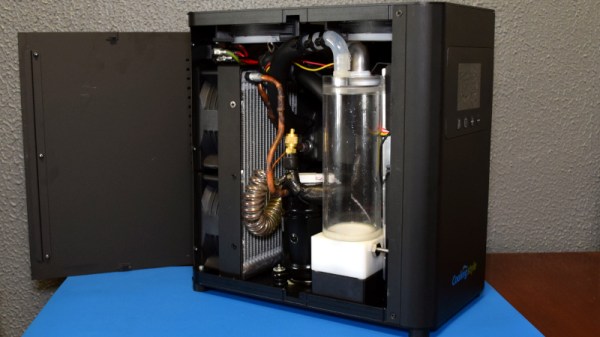
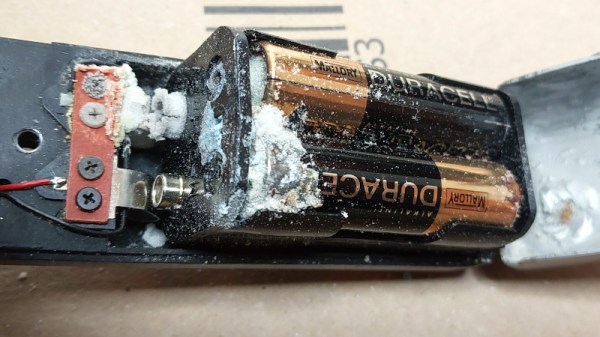
Wow! We knew that the Hack it Back Challenge round of the Hackaday Prize would bring out the clever repairers among you, but we’re still impressed to see the results! This was a tough round for the judges, but they came up with a short list of ten finalists, and we’re pleased to bring them to you here.

The Hack it Back Challenge aimed to keep old gear from being thrown away by performing a heroic repair, giving it a new purpose in life, or otherwise bringing it back to a useful state. Of course, once you’ve got the box open, you start thinking of how to improve whatever the gadget is, and some of our finalists took that in unexpected directions. Continue reading “2022 Hackaday Prize: Congratulations To The Winners Of The Hack It Back Challenge”

AI Creates Your Spreadsheets, Sometimes

We’ve been interested in looking at how AI can process things other than silly images. That’s why the “Free AI Bot that Generates the Excel Formula for Any Problem” caught our eye. Based on GPT-3, it supposedly transforms your problem description into a formula suitable for Excel or Google Sheets.

Our first prompt didn’t work out very well. But that was sort of our fault. When they say “Excel formula” they mean that quite literally. So trying to describe the actual result you want in terms of columns or rows seems to be beyond it. Not realizing that, we asked:

If the sum of column H is greater than 50, multiply column A by 0.33

And got:

=IF(SUM(H:H)>50,A*0.33,0)

A Better Try

Which is close, but not really how anyone even mildly proficient with Excel would interpret that request. But that’s not fair. It really needs to be a y=f(x) sort of problem, we suppose.

Continue reading “AI Creates Your Spreadsheets, Sometimes”

Load Your Icebreakers, The 2022 Cyberdeck Contest Starts Now

TL;DR: Enter the 2022 Cyberdeck Contest, starting right now!

When William Gibson first described the “cyberspace deck” used by the protagonists in Burning Chrome and Neuromancer, he offered only a few concrete details: they allow the user to explore cyberspace, are generally portable, and more adept owners often modify them to fit their particular needs. Anything else was left to the individual’s imagination, due in no small part to the fact that he author himself didn’t exactly know what the things would look like at the time. Still, not bad for a guy who was hammering it all out on a typewriter at the time.

Build your deck like Gibson is watching, because he is.

Now 40 years later, fact has caught up with fiction. The hacker and maker community have embraced the cyberdeck idea in a big way, and we’ve been blown away by the incredible creativity that goes into these bespoke computing devices.

Which is why we’re happy to announce the first, but very likely not the last, 2022 Cyberdeck Contest. Impress the judges with your Sprawl-ready rig, and you could claim one of three $150 USD Digi-Key shopping sprees to help fund your next cyberpunk masterpiece. You’ve got until Sept. 30, 2022.

So what is a cyberdeck, exactly? That’s a surprisingly difficult question to answer, but since we’re running a contest here, we’ll have to give it a shot…

It needs to be a computer of some sort, certainly. It should also serve a practical purpose; as impressive as your cosplay prop might be, we’re really looking for functional devices here. Nominally that means it will have a keyboard and some kind of display, but  figuring out how it all connects and what form the components will take is where things get interesting.

Above all, it needs to be personal. What would your dream computer look like? What features would it have? There’s no right or wrong answer here — a good cyberdeck should be a reflection of the person who built it, and no two should ever be quite the same.

Need some inspiration? Not to worry, you’ve come to the right place. We’ve seen dozens of these custom machines over the last couple of years if you need some help to get moving in the right direction.

Continue reading “Load Your Icebreakers, The 2022 Cyberdeck Contest Starts Now”

Cyberdeck Brainstorming Hack Chat

Join us on Wednesday, August 10 at noon Pacific for the Cyberdeck Brainstorming Hack Chat!

If there’s one thing for sure about Hackaday, it’s that we keep a finger on the pulse of the hardware hacking community. Trends come and go, but they rarely slip by us, thanks to the constant supply of tips to hot projects that our loyal readers send in. It’s great to get a first look at these projects and see what kind of trends they represent, and to see how the community reacts to them. Some trends fade quickly, some catch on for a bit, and some really catch fire.

One trend that’s gotten pretty hot lately is the cyberdeck. Finding ways to squeeze a computer into a compact, field-ready package and make it useable is a challenge right off the bat. Adding the suite of sensors and peripherals that have become de rigueur for cyberdecks adds another level of complexity, and taking the build across the finish line with the proper cyberdeck aesthetic makes these gadgets super-fun to build and (hopefully) to use.

If cyberdecks sound like fun, you’re right! And to help us all get onboard the cyberdeck train, we’re going to mix things up with this Hack Chat. Rather than putting one person in the hot seat for our usual AMA-style discussion, we thought it would be fun to get everyone into a chat and brainstorm some cyberdeck designs. And to help seed the discussion, we’ve invited a bunch of hackers whose cyberdeck builds we’ve featured before:

join-hack-chatWe’re not sure everyone will be able to make it, but we are sure that the more cyberdeck-adjacent people we have in the chat, the better. Whether you’re a veteran builder or just starting your first build, you’re going to want to stop by this Hack Chat and get in on the discussion. Particularly because we’re just kicking off our new Cyberdeck Design Contest in about an hour (spoiler!), and this’ll be a great way to get going!

Our Hack Chats are live community events in the Hackaday.io Hack Chat group messaging. This week we’ll be sitting down on Wednesday, August 10 at 12:00 PM Pacific time. If time zones have you tied up, we have a handy time zone converter.

Martian Successes Reshape Sample Return Plans

For as long as humans have been sending probes to Mars, there’s been a desire to return rock, soil, and atmosphere samples back to Earth for more detailed analysis. But the physics of such a mission are particularly demanding — a vehicle that could land on the Martian surface, collect samples, and then launch itself back into orbit for the return to Earth would be massive and prohibitively expensive with our current technology.

Mars sample return tube

Instead, NASA and their international partners have been working to distribute the cost and complexity of the mission among several different vehicles. In fact, the first phase of the program is well underway.

The Perseverance rover has been collecting samples and storing them in 15 cm (6 inch) titanium tubes since it landed on the Red Planet in February of 2021. Considerable progress has also been made on the Mars Ascent Vehicle (MAV) which will carry the samples from the surface and into orbit around the planet, where they will eventually be picked up by yet another vehicle which will ultimately return them to Earth.

But there’s still some large gaps in the overall plan. Chief among them is how the samples are to be transferred into the MAV. Previously, the European Space Agency (ESA) was to contribute a small “fetch rover” which would collect the sample tubes dropped by Perseverance and bring them to the MAV launch site.

But in a recent press release, NASA has announced that those plans have changed significantly, thanks at least in part to the incredible success of the agency’s current Mars missions.

Continue reading “Martian Successes Reshape Sample Return Plans”

Hackaday Links Column Banner

Hackaday Links: August 7, 2022

If you ever needed proof that class-action lawsuits are a good deal only for the lawyers, look no further than the news that Tim Hortons will settle a data-tracking suit with a doughnut and a coffee. For those of you who are not in Canada or Canada-adjacent, “Timmy’s” is a chain of restaurants that are kind of the love child of a McDonald’s and a Dunkin Donut shop. An investigation into the chain’s app a couple of years ago revealed that customer location data was being logged silently, even when they were not using the app, and even far, far away from the nearest Tim Hortons. The chain is proposing to settle with class members to the tune of a coupon good for one free hot beverage and one baked good, in total valuing a whopping $8.68. The lawyers, on the other hand, will be pulling in $1.5 million plus taxes. There’s no word if they are taking that in cash or as 172,811 coffees and doughnuts, but we think we can guess.

Continue reading “Hackaday Links: August 7, 2022”

Learning By Playing

Summer break has started over here, and my son went off to his first of a few day-camp-like activities last week. It was actually really cool – a workshop held by our local Fablab where they have the kids make a Minecraft building and then get to 3D-print it out. He loves playing and building in Minecraft, so we figured this would be right up his alley.

TinkerCAD model of a Lego Minecraft fox. Kiddo trifecta!

I had naively thought that it would work something like this: the kids build something in Minecraft, and then some software extracts the build and converts it into an STL file. Makes sense, because they already are more-or-less fluent in Minecraft modelling. And as I thought about that, it was a pretty clever idea.

But the truth was even sneakier. They warmed up by making something in Minecraft, then they opened up TinkerCAD, which was new to all of the kids, and built a 3D model there. Then they converted the TinkerCAD models into Minecraft, and played with what they had just built while the 3D printers hummed away.

The kids didn’t even flinch at having to learn a new 3D modelling tool, and the parallels to what they were already comfortable doing in Minecraft were obvious to them. My son came home and told me how much easier it was to do your 3D modelling in “this other Minecraft” – he meant TinkerCAD – because you don’t need to build everything out of single blocks. He thought he was playing games, but he’d secretly used his first CAD tool. Nice trick!

Then I look back and realize how much I must have learned about computers through playing as a kid. Heck, how much I still learn through playing. And of course I’m not alone – that’s one of the things that shines through in a large number of the projects we feature. Hack on and have fun!