Uncovering The Echo Dot’s Hidden USB Port

If you upgraded to Amazon’s latest Echo Dot, you might have been surprised to find that the diminutive voice assistant had shed its USB port. Earlier models of the Dot used a garden variety micro USB port for power, which hackers eventually figured out also provided a helpful way to snoop around inside the device’s firmware. The fact that the USB port was deleted on the latest Echo Dot in favor of a simple barrel connector for power was seen by some as a sign that Amazon was trying to keep curious owners out of their hardware.

But as [Brian Dorey] shows, all they did was put a bump in the road. While they removed the external USB connector, the traces for it are still on the board waiting to be accessed. Even better, it turns out the USB data lines are connected to the test points located on the bottom of the Dot. All you need is a simple breakout that will connect through the existing opening in the device’s case, and you’ve got your USB port back.

So what can you do with USB on the Echo Dot? Well, not much right now. [Brian] found that the Dot shows up as a Mediatek device under Linux using lsusb, and fastboot can see it and even confirms the presence of a locked bootloader. It’s going to take some work from the community to see how deep this particular rabbit hole goes.

Even if you’re not interested in restoring its USB port, [Brian] has uncovered a wealth of fascinating hardware information about the Echo Dot during his deep-dive. He’s mapped out many of the test points located throughout the device’s PCBs, and found a few interesting points that might be worth further investigation. For example, he found that driving one of the pins high would trigger the Dot to mute its microphones; which could be useful for anyone looking to cover Alexa’s ears.

[Brian] first cracked open the Echo Dot last month, after scoring one for cheap during Amazon’s Prime Day sale. It looks like he’s making fairly rapid progress on unraveling the mysteries of this popular gadget, and we’re very interested in seeing where this research takes us.

India Launched A Moon Orbiter, Lander, And Rover All In One Shot With Chandrayaan-2

On July 22nd, India launched an ambitious mission to simultaneously deliver an orbiter, lander, and rover to the Moon. Launched from the Satish Dhawan Space Centre on a domestically-built GSLV Mk III rocket, Chandrayaan-2 is expected to enter lunar orbit on August 20th. If everything goes well, the mission’s lander module will touch down on September 7th.

Attempting a multifaceted mission of this nature is a bold move, but the Indian Space Research Organisation (ISRO) does have the benefit of experience. The Chandrayaan-1 mission, launched in 2008, spent nearly a year operating in lunar orbit. That mission also included the so-called Moon Impact Probe (MIP), which deliberately crashed into the surface near the Shackleton crater. The MIP wasn’t designed to survive the impact, but it still secured India a position on the short list of countries that have placed an object on the lunar surface.

If the lander component of Chandrayaan-2, named Vikram after Indian space pioneer Vikram Sarabhai, can safely touch down on the lunar surface it will be a historic accomplishment for the ISRO. To date, the only countries to perform a controlled landing on the Moon are the Soviet Union, the United States, and China. Earlier in the year, it seemed Israel would secure its position as the fourth country to perform the feat with their Beresheet spacecraft, but a last second fault caused the craft to crash into the surface. The loss of Beresheet, while unfortunate, has given India an unexpected chance to take the coveted fourth position despite Israel’s head start.

We have a few months before the big event, but so far, everything has gone according to plan for Chandrayaan-2. As we await word that the spacecraft has successfully entered orbit around the Moon, let’s take a closer look at how this ambitious mission is supposed to work.

Continue reading “India Launched A Moon Orbiter, Lander, And Rover All In One Shot With Chandrayaan-2”

Cheap Electric Scooter Gets A Big Brake Upgrade; Unlocks Proper Drift Mode

The last few years have seen a huge rise in the prominence of electric scooters. Brushless motors, lithium batteries, and scooter sharing companies have brought them to the mainstream. However, electric scooters of a variety of designs have been around for a long time, spawning a dedicated subculture of hackers intent on getting the best out of them.

One such hacker is yours truly, having started by modifying basic kick scooters with a variety of propulsion systems way back in 2009. After growing frustrated with the limitations of creating high-speed rotating assemblies without machine tools, I turned my eye to what was commercially available. With my first engineering paycheck under my belt, I bought myself a Razor E300, and was promptly disappointed by the performance. Naturally, hacking ensued as the lead-acid batteries were jettisoned for lithium replacements.

Over the years, batteries, controllers and even the big old heavy brushed motor were replaced. The basic mechanical layout was sound, making it easy to make changes with simple hand tools. As acceleration became violent and top speeds inched closer to 40 km/h, I began to grow increasingly frustrated with the scooter’s one glaring major flaw. It was time to fix the brakes.

Continue reading “Cheap Electric Scooter Gets A Big Brake Upgrade; Unlocks Proper Drift Mode”

The Death Of A Weather Satellite As Seen By SDR

What is this world coming to when a weather satellite that was designed for a two-year mission starts to fail 21 years after launch? I mean, really — where’s the pride these days?

All kidding aside, it seems like NOAA-15, a satellite launched in 1998 to monitor surface temperatures and other meteorologic and climatologic parameters, has recently started showing its age. This is the way of things, and generally the decommissioning of a satellite is of little note to the general public, except possibly when it deorbits in a spectacular but brief display across the sky.

But NOAA-15 and her sister satellites have a keen following among a community of enthusiasts who spend their time teasing signals from them as they whiz overhead, using homemade antennas and cheap SDR receivers. It was these hobbyists who were among the first to notice NOAA-15’s woes, and over the past weeks they’ve been busy alternately lamenting and celebrating as the satellite’s signals come and go. Their on-again, off-again romance with the satellite is worth a look, as is the what exactly is going wrong with this bird in the first place.

Continue reading “The Death Of A Weather Satellite As Seen By SDR”

3D Printing Glass

For most of us, 3D printing means printing in plastic of some sort — either filament or photo resin. However, we have all wanted to print in other materials — especially more substantial materials. Metal printers exist but they aren’t cheap. However, it is possible to print molds and cast metal parts using them. [Amos Dudley] prints molds. But instead of metal, he casts parts out of glass.

[Amos] covers several techniques. The first is creating a relief (that is a 3D shape that grows out of a base). According to the post, this prevents difficult undercuts. He then casts a mold from silica and uses a kiln to melt glass into the mold. You might expect to do that with a full-size kiln, but you can actually get an inexpensive small kiln that fits in your microwave oven.

Continue reading “3D Printing Glass”

First Look At DEF CON 27 Official Badge; Kingpin Is Back!

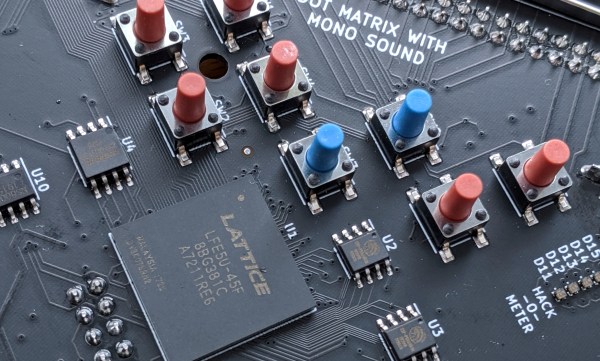
The first big surprise Vegas had in store for everyone is that the DEF CON badge is an electronic badge this year. It’s traditionally been the DC practice to alternate years between electronic and non-electronic badges. Last year we had a fantastic electronic badge designed by the ToyMakers, so I had expected something more passive like the vinyl LP badge from a few years ago. What a pleasant surprise to learn otherwise!

Second up on the surprise list is the badge maker himself. The design is a throwback to days of yore as Joe Grand steps up to the plate once again. Veterans know him as Kingpin, and his badge-making legacy runs deep. Let’s jump in and take a look.

Continue reading “First Look At DEF CON 27 Official Badge; Kingpin Is Back!”

Putting Carbs On A Miata, Because It’s Awesome

Carburettors versus electronic fuel injection (EFI); automotive fans above a certain age will be well versed in the differences. While early EFI systems had their failings, the technology brought with it a new standard of reliability and control. By the early 1990s, the vast majority of vehicles were sold with EFI, and carburettors became a thing of the past.

The Mazda Miata was no exception. Shipping in 1989, it featured not only multiport fuel injection, but also a distributorless ignition system. Consisting of two coilpacks in a wasted spark configuration, with computer-controlled timing, the system was quite advanced for its time, especially for a budget sports car.

Despite the Miata’s technological credentials, those in the modified car scene tend to go their own way. A man by the name of Evan happened to be one such individual and decided to do just this — scrapping the EFI system and going with a retro carburetor setup. It was around this point that this I got involved, and mechanical tinkering ensued.

Continue reading “Putting Carbs On A Miata, Because It’s Awesome”