Show Me The Data: Hackaday.io Year #02

Hackaday.io has just turned two today and we couldn’t be more excited about how far we’ve come. What started out as a simple proof-of-concept, inspired by ye-olde idea of a “virtual hackerspace,” has truly evolved into a global playground for some of the best, brightest, and most creative minds you have ever met. It also became a home and the place to spend sleepless nights for many of us on the team, and we’re excited to share a few ideas on where we are headed going forward.

But before we do that, let’s look at some data.

The Data

We’re thrilled to report that over the last two years, Hackaday.io has grown from zero to a 121,158-member strong community, who have together created a total of 9,736 projects. To put this in context, it is more than a two-fold growth from last year’s milestone of 51,838 users / 4,365 projects. And it doesn’t seem to be showing any signs of slowing down.
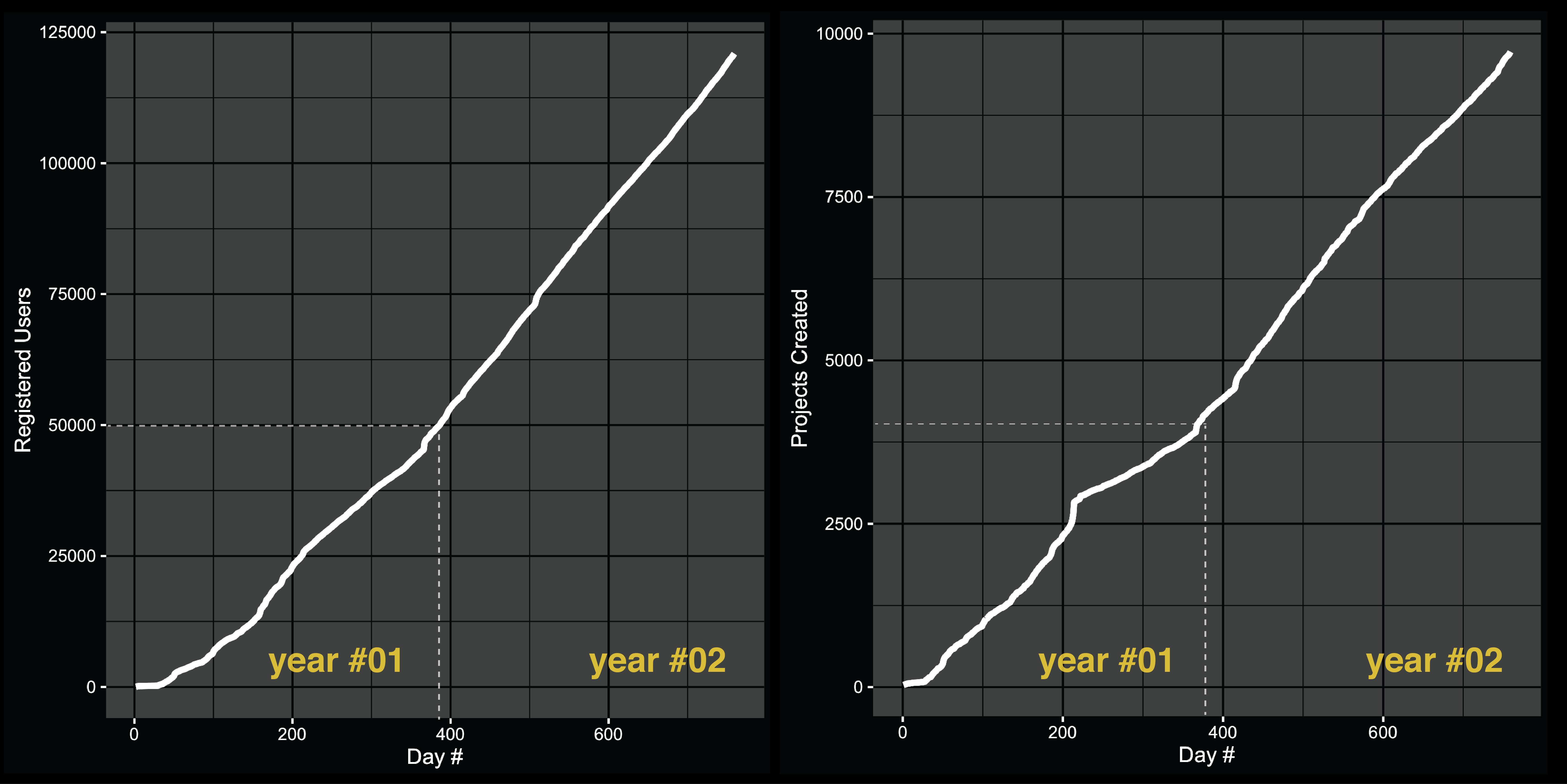
regusers_projects5

Projects

Though these “vanity” metrics sure are a nice validation, the number that gets us the most excited is the fact that the 9,731 projects currently on the site have been created by a total 4,966 different users. What’s even better is the fact that 949 projects are a result of collaboration between two or more people. Altogether, a total of 7,170 different users have participated in the creation of the vast body of engineering knowledge currently residing on Hackaday.io.
Continue reading “Show Me The Data: Hackaday.io Year #02” →

5D Glass Disc Can Store 360TB!

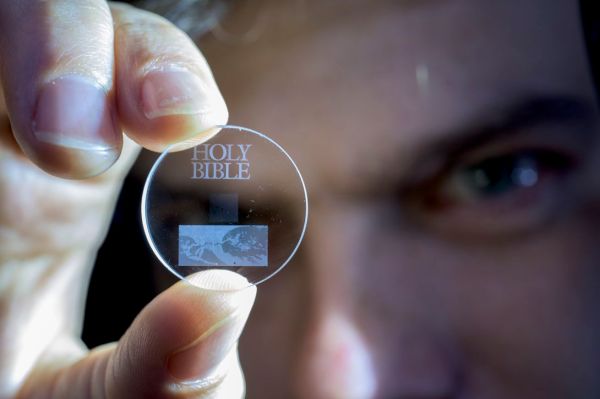
There’s a small subset of hackers out there concerned with the end of the world. What if our entire existence vanished? How would an alien race learn not to do what we did, what resulted in our demise? We’ve all heard of laser etching metal disks with the Bible, accounts of history, and even just names — pretty sure we’ve sent quite a few into space. But researchers at the University of Southampton’s Optical Research Center have come up with an even superior storage method. They call it the 5D Disc.

According to the researchers, each disc could hold a theoretical 360TB. They can withstand temperatures of up to 1000C, and it’s believe that they could last up to 13.8 billion years at room temperature without degrading — if that’s true, our sun would be long dead before the disc degraded! Continue reading “5D Glass Disc Can Store 360TB!” →

Building A Sheet Metal Pistol

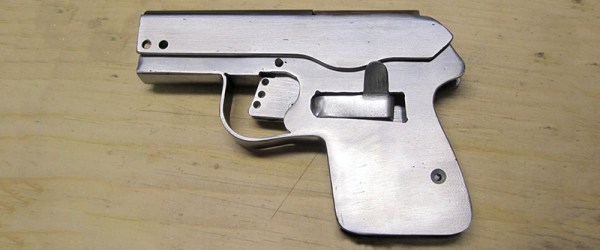
Floating around the Internet are plans for a semi-automatic pistol constructed out of sheet metal. Like so many plans for 3D printed guns, it appears no one has actually built one of these pistols. It exists only as a technological construct, with diagrams you can photocopy, trace onto a few bits of metal, and presumably assemble into a gun. The only proof these parts can be turned into a gun-shaped object are a few random blog posts from two years ago showing a very ugly pistol spray painted matte black.

[Clinton Westwood] decided to take up the challenge of turning these plans into a real, working gun. He’s documented his efforts on YouTube and put a bunch of pictures up of the entire build process. The gun doesn’t work quite yet, but it almost does, and he’s doing this entirely in a garage shop, with tools anyone can pick up from Home Depot.

Most of the construction of this gun is simple enough – it’s just sheet metal, after all. The magazine was constructed by tracing the pattern onto a piece of metal, wrapping it around a mandrel, and welding it together. The side plates of the gun, again, were created with a jigsaw. Rifling the barrel – the thing that makes this gun both accurate and legal – required the construction of a few interesting tools. The rifling tool is just a piece of round bar that fits through the barrel. A small piece of a hacksaw blade was cut to fit inside this round bar, and the barrel was cut very slowly with a shop-built tool.

The finished result is something that looks like it came from the finest post-apocalyptic craftsman. A gun that looks cool is useless if it doesn’t work, and here the DIY pistol falls short. The spent casings don’t eject. It’s still a step up from the first build of this gun that was only rumored to fire blanks.

Recently, the world of gunsmithing has been inundated with 3D printed pistols that don’t work, and 3D printed guns that do work, but are somehow 200 years behind the state of the art. We’re happy to see some people are still building things with their hands, and hope [Clinton] can eventually get this gun to work.

Continue reading “Building A Sheet Metal Pistol” →

About Those Gravitational Waves

It was the year of 1687 when Isaac Newton published “The Principia“, which revealed the first mathematical description of gravity. Newton’s laws of motion along with his description of gravity laid before the world a revolutionary concept that could be used to describe everything from the motions of heavenly bodies to a falling apple. Newton would remain the unequivocal king of gravity for the next several hundred years. But that would all change at the dawn of the 20th century when a young man working at a Swiss patent office began to ask some profound questions. Einstein had come to the conclusion that Newtonian physics was not adequate to describe the findings of the emerging electromagnetic field theories.  In 1905, he published a paper entitled “On the Electrodynamics of Moving Bodies” which corrects Newton’s laws so they work when describing the motions of objects near the speed of light. This new description became known as Special Relativity.

It was ‘Special’ because it didn’t deal with gravity or acceleration. It would take Einstein another 10 years to work these two concepts into his relativity theory. He called it General Relativity – an understanding of which is necessary to fully grasp the significance of gravitational waves.

Continue reading “About Those Gravitational Waves” →

Barcodes That Hack Devices

[virustracker] has been playing around with barcodes lately, and trying to use them as a vector to gain control of the system that’s reading them. It’s a promising attack — nobody expects a takeover via barcodes. The idea isn’t new, and in fact we’ve seen people trying to drop SQL attacks in barcodes long ago, but [virustracker] put a few different pieces together and came up with a viable attack.

The trick is that many POS terminals and barcode readers support command characters in their programming modes. Through use of these Advanced Data Formatting (ADF) modes, [virustracker] sends Windows-Key-r, and then cmd.exe, ftps a file down, and runs it. Whatever computer is on the other side of the barcode scanner has just been owned. ADF even supports a delay function to allow time for the command window to pop up before running the rest of the input.

The article details how they got their payload from requiring more than ten individual barcodes down to four. Still, it’s a suspicious-looking attack to try to pull off where other people (think cashiers) are looking. However, we have many automated machines in our everyday life that use barcodes. How many of these are vulnerable is an open question. [virustracker] suggests lottery machines, package-delivery automats, and even hospitals.

The defense is simple, and it’s the same as everywhere else: disable the debug and configuration modes in your production systems, and sanitize your input. Yes, even the barcodes.

It’s Alive! — Badge For Hackaday Belgrade

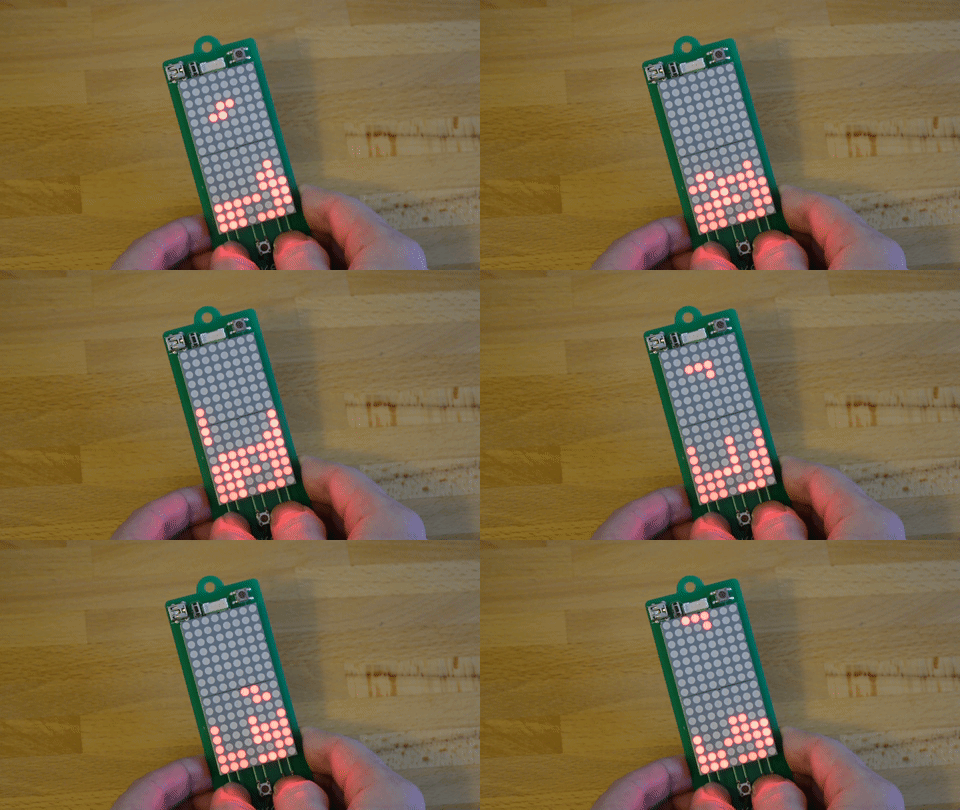
Hackaday Belgrade — our first ever conference in Europe — is coming up fast. One of the really exciting things for me is the hardware badge which [Voja Antonic] designed for the conference. He’s done a great job with hardware choices and I think we’ve hit the sweet spot for badge hacking. Let’s jump into the hardware and firmware details after the break.

Get your ticket now for ten hours of talks and workshops, evening concerts, and of course badge hacking the entire time. Earlybird sales close Monday. We’re still in the process of going through talk proposals but we’ll publish a post next week announcing all of the speakers.

Continue reading “It’s Alive! — Badge For Hackaday Belgrade” →

A Quadcopter Controlled By A Pi Zero

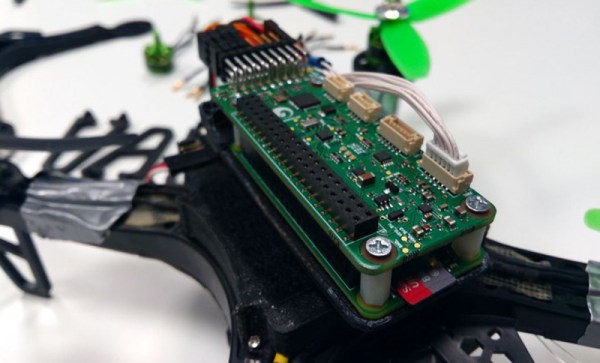
Flight controllers for quadcopters and other drones are incredible pieces of engineering. Not only do these boards keep an aircraft level, they do so while keeping the drone in one place, or reading a GPS sensor and flying it from waypoint to waypoint. The latest of these flight controllers is built on everyone’s favorite $5 computer, the Raspberry Pi Zero.

The PXFmini controller and autopilot shield is the latest project from Erle Robotics that puts eight servo outputs on the Pi, barometer and IMU sensors, a power supply, and all the adapters to turn the Raspberry Pi Zero into a capable flight controller. Since the Pi Zero will have some computational horsepower left over after keeping a quadcopter level, there’s a possibility of some very cool peripherals. Erle Robotics has been working with depth cameras and Lidar on more than a few drones. This makes for some interesting applications we can only imagine now.

The schematics for the PXFmini are open source in the best traditions of the RC and drone community and will be available soon. You can check out a video of the FXPmini flying around an office below.

Continue reading “A Quadcopter Controlled By A Pi Zero” →