Forty Four Hackers And A Hatch: Progress Egress Takes Off

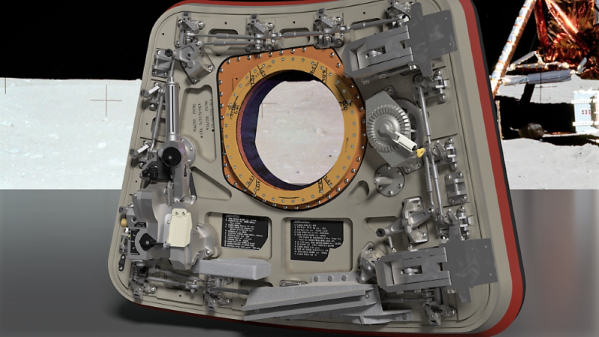
The 50th anniversary of the first Moon landing is rapidly approaching, and uber space-nerd Adam Savage is in the thick of the celebration of all the amazing feats of engineering that made humanity’s first steps out of the cradle possible. And in a grand and very hacker-friendly style, we might add, as his Project Egress aims to build a full-scale replica of the Apollo 11 Command Module Columbia’s hatch.

Continue reading “Forty Four Hackers And A Hatch: Progress Egress Takes Off”

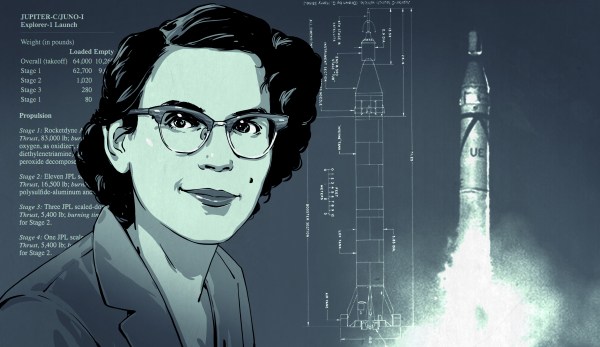
Mary Sherman Morgan, Rocket Fuel Mixologist

In the fall of 1957, it seemed as though the United States’ space program would never get off the ground. The USSR had launched Sputnik in October, and this cemented their place in history as the first nation in space. If that weren’t bad enough, they put Sputnik 2 into orbit a month later.

By Christmas, things looked even worse. The US had twice tried to launch Navy-designed Vanguard rockets, and both were spectacular failures. It was time to use their ace in the hole: the Redstone rocket, a direct descendant of the V-2s designed during WWII. The only problem was the propellant. It would never get the payload into orbit as-is.

The US Army awarded a contract to North American Aviation (NAA) to find a propellant that would do the job. But there was a catch: it was too late to make any changes to the engine’s design, so they had to work with big limitations. Oh, and the Army needed it two days before yesterday.

The Army sent a Colonel to NAA to deliver the contract, and to personally insist that they put their very best man on the job. And they did. What the Army didn’t count on was that NAA’s best man was actually a woman with no college degree.

Continue reading “Mary Sherman Morgan, Rocket Fuel Mixologist”

NASA’s “Green” Fuel Seeks Safer Spaceflight By Finally Moving Off Toxic Hydrazine

Spaceflight is inherently dangerous. It takes a certain type of person to willingly strap into what’s essentially a refined bomb and hope for the best. But what might not be so obvious is that the risks involved aren’t limited to those who are personally making the trip. The construction and testing of space-bound vehicles poses just as much danger to engineers here on the ground as it does to the astronauts in orbit. Arguably, more so. Far more individuals have given their lives developing rocket technology than have ever died in the cockpit of one of them.

Reddish brown exhaust of hydrazine thrusters

Ultimately, this is because of the enormous amount of energy stored in the propellants required to make a rocket fly. Ground support personnel need to exercise great care even when dealing with “safe” propellants, such as the classic combination of kerosene and liquid oxygen. On the other end of the spectrum you have chemicals that are so unstable and toxic that they can’t be handled without special training and equipment.

One of the most dangerous chemicals ever used in rocket propulsion is hydrazine; and yet from the Second World War to the present day, it’s been considered something of an occupational hazard of spaceflight. While American launch vehicles largely moved away from using it as a primary propellant, hydrazine is still commonly used for smaller thrusters on spacecraft.

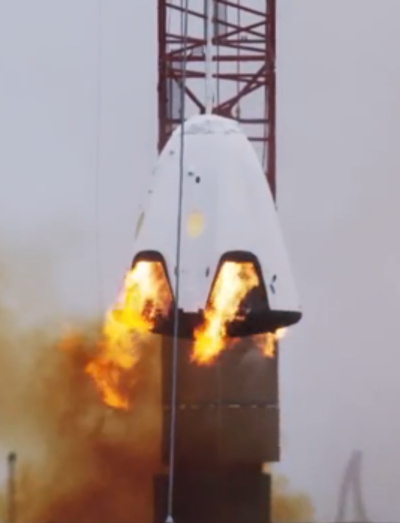
When SpaceX’s Crew Dragon exploded in April during ground tests, the release of approximately one and a half tons of hydrazine and nitrogen tetroxide propellants required an environmental cleanup at the site.

But soon, that might change. NASA has been working on a project they call the Green Propellant Infusion Mission (GPIM) which is specifically designed to reduce modern spacecraft’s dependency on hydrazine. In collaboration with the Air Force Research Laboratory at California’s Edwards Air Force Base, the space agency has spearheaded the development of a new propellant that promises to not just replace hydrazine, but in some scenarios even outperform it.

So what’s so good about this new wonder fuel, called AF-M315E? To really understand why NASA is so eager to power future craft with something new, we first have to look at the situation we’re in currently.

Continue reading “NASA’s “Green” Fuel Seeks Safer Spaceflight By Finally Moving Off Toxic Hydrazine”

The Future Of Space Is Tiny

While recent commercial competition has dropped the cost of reaching orbit to a point that many would have deemed impossible just a decade ago, it’s still incredibly expensive. We’ve moved on from the days where space was solely the domain of world superpowers into an era where multi-billion dollar companies can join on on the fun, but the technological leaps required to reduce it much further are still largely relegated to the drawing board. For the time being, thing’s are as good as they’re going to get.

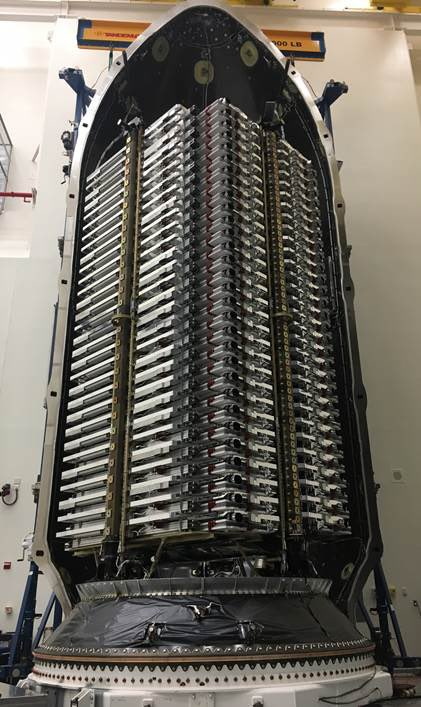
Starlink satellites ready for launch

If we can’t count on the per pound cost of an orbital launch to keep dropping over the next few years, the next best option would logically be to design spacecraft that are smaller and lighter. Thankfully, that part is fairly easy. The smartphone revolution means we can already pack an incredible amount sensors and processing power into something that can fit in the palm of your hand. But there’s a catch: the Tsiolkovsky rocket equation.

Often referred to as simply the “rocket equation”, it allows you to calculate (among other things) the ratio of a vehicle’s useful cargo to its total mass. For an orbital rocket, this figure is very small. Even with a modern launcher like the Falcon 9, the payload makes up less than 5% of the liftoff weight. In other words, the laws of physics demand that orbital rockets are huge.

Unfortunately, the cost of operating such a rocket doesn’t scale with how much mass it’s carrying. No matter how light the payload is, SpaceX is going to want around $60,000,000 USD to launch the Falcon 9. But what if you packed it full of dozens, or even hundreds, of smaller satellites? If they all belong to the same operator, then it’s an extremely cost-effective way to fly. On the other hand, if all those “passengers” belong to different groups that split the cost of the launch, each individual operator could be looking at a hundredfold price reduction.

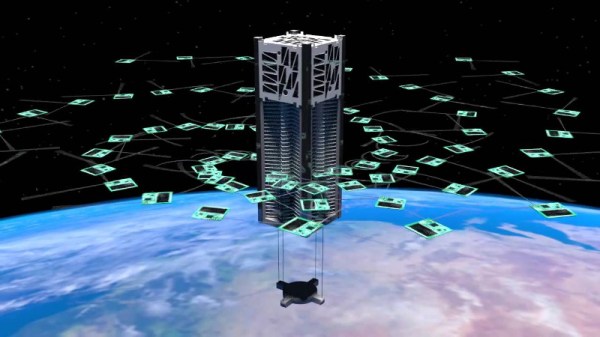
SpaceX has already packed 60 of their small and light Starlink satellites into a single launch, but even those craft are massive compared to what other groups are working on. We’re seeing the dawn of a new era of spacecraft that are even smaller than CubeSats. These tiny spacecraft offer exciting new possibilities, but also introduce unique engineering challenges.

Continue reading “The Future Of Space Is Tiny”

Small Lightsail Will Propel Cubesat

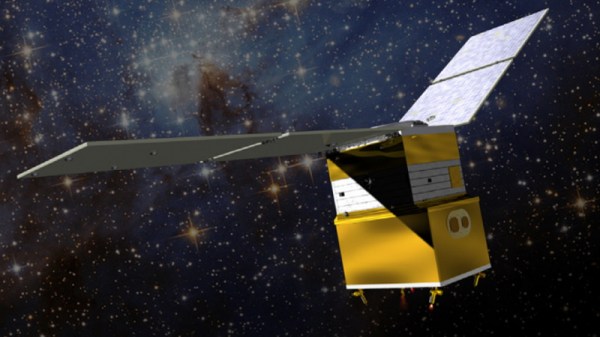
If you read science fiction, you are probably familiar with the idea of a light or solar sail. A very large and lightweight sail catches solar “wind” that accelerates a payload connected to the sail. Some schemes replace the sun with a laser. Like most things, sails have pros and cons. They don’t require you to carry fuel, but they are also maddeningly slow to accelerate and require huge sails since there isn’t much pressure produced by a star at a distance. So far not many real spacecraft have used the technique, IKAROS was the first back in 2010. However, this month should see the launch of a crowdfunded cubesat that will use a solar sail to move to a higher orbit.

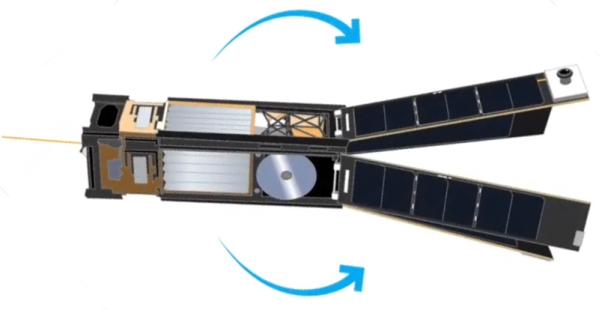
The 5 kg satellite built by Georgia Tech students is about the size of a loaf of bread. Once in orbit, it will deploy solar panels and a square solar sail nearly 20 feet long on each side. Despite the nearly 350 square feet of area, the sail is less than 5 microns thick. You can see more details about the mission in the video below.

Continue reading “Small Lightsail Will Propel Cubesat”

Snoopy Come Home: The Search For Apollo 10

When it comes to the quest for artifacts from the Space Race of the 1960s, few items are more sought after than flown hardware. Oh sure, there have been stories of small samples of the 382 kg of moon rocks and dust that were returned at the cost of something like $25 billion making it into the hands of private collectors, and chunks of the moon may be the ultimate collector’s item, but really, at the end of the day it’s just rock and dust. The serious space junkie wants hardware – the actual pieces of human engineering that helped bring an epic adventure to fruition, and the closer to the moon the artifact got, the more desirable it is.

Sadly, of the 3,000,000 kg launch weight of a Saturn V rocket, only the 5,600 kg command module ever returned to Earth intact. The rest was left along the way, mostly either burned up in the atmosphere or left on the surface of the Moon. While some of these artifacts are recoverable – Jeff Bezos himself devoted a portion of his sizable fortune to salvage one of the 65 F1 engines that were deposited into the Atlantic ocean – those left on the Moon are, for now, unrecoverable, and in most cases they are twisted heaps of wreckage that was intentionally crashed into the lunar surface.

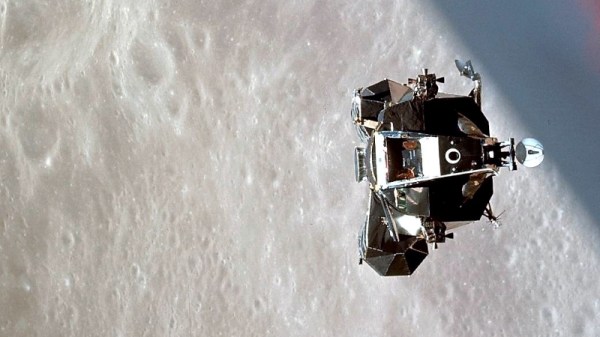
But at least one artifact escaped this ignominious fate, silently orbiting the sun for the last 50 years. This lonely outpost of the space program, the ascent stage from the Apollo 10 Lunar Module, appears to have been located by a team of amateur astronomers, and if indeed the spacecraft, dubbed “Snoopy” by its crew, is still out there, it raises the intriguing possibility of scoring the ultimate Apollo artifact by recovering it and bringing it back home.

Continue reading “Snoopy Come Home: The Search For Apollo 10”

An Evening With Space Shuttle Atlantis

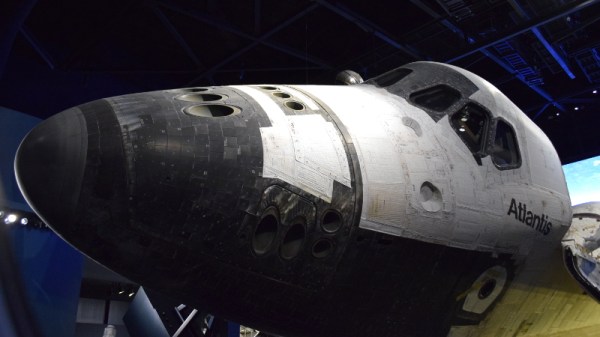
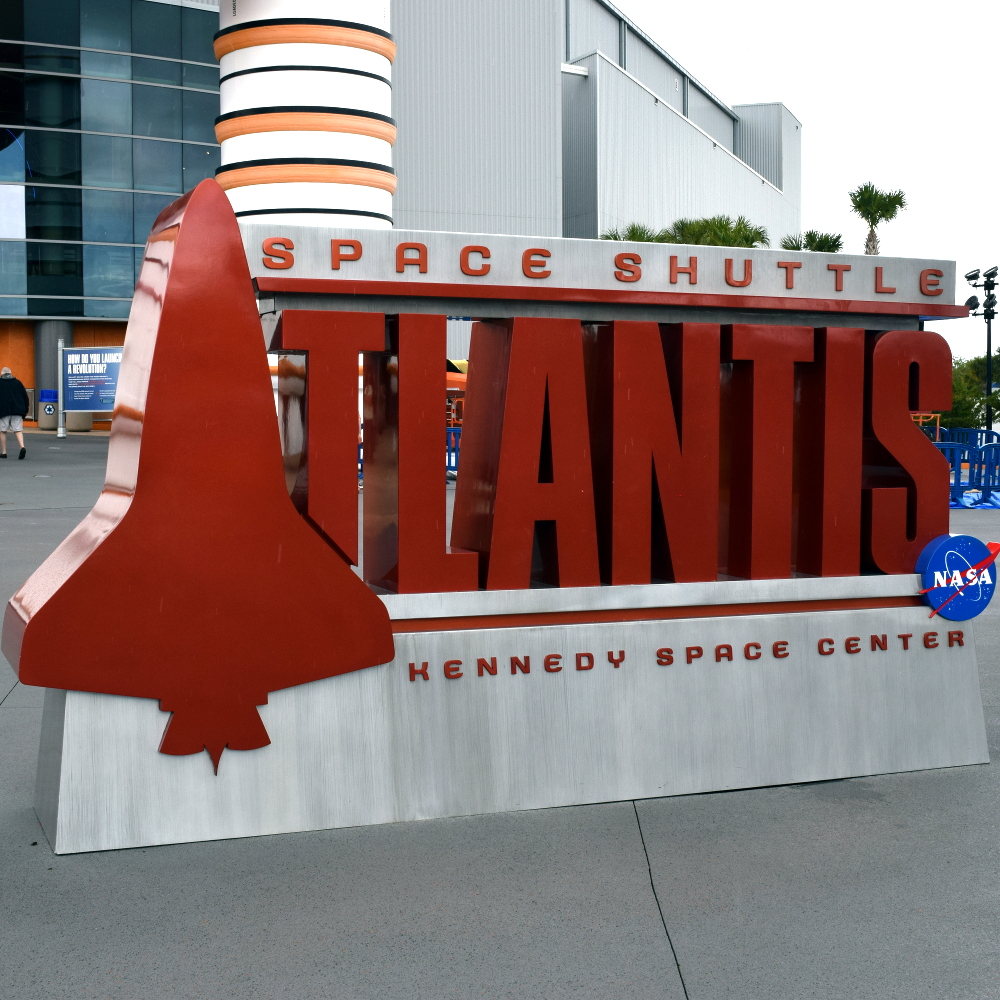
When I got the call asking if I’d be willing to fly down to Kennedy Space Center and cover an event, I agreed immediately. Then about a week later, I remembered to call back and ask what I was supposed to be doing. Not that it mattered, I’d gladly write a few thousand words about the National Crocheting Championships if they started holding them at KSC. I hadn’t been there in years, since before the Space Shuttle program had ended, and I was eager to see the exhibit created for the fourth member of the Shuttle fleet, Atlantis.

So you can imagine my reaction when I learned that the event Hackaday wanted me to cover, the Cornell Cup Finals, would culminate in a private viewing of the Atlantis exhibit after normal park hours. After which, the winners of the competition would be announced during a dinner held under the orbiter itself. It promised to be a memorable evening for the students, a well deserved reward for the incredible work they put in during the competition.
Thinking back on it now, the organizers of the Cornell Cup and the staff at Kennedy Space Center should truly be commended. It was an incredible night, and everyone I spoke to felt humbled by the unique experience. There was a real, palpable, energy about it that you simply can’t manufacture. Of course, nobody sitting under Atlantis that night was more excited than the students. Though I may have come in as a close second.

I’ll admit it was somewhat bittersweet to see such an incredible piece of engineering turned into a museum piece; it looked as if Atlantis could blast off for another mission at any moment. But there’s no denying that the exhibit does a fantastic job of celebrating the history and accomplishments of the Space Shuttle program. NASA officially considers the surviving Shuttle orbiters to be on a “Mission of Inspiration”, so rather than being mothballed in a hangar somewhere in the desert, they are out on display where the public can get up close and personal with one of humanities greatest achievements. Judging by the response I saw, the mission is going quite well indeed.

If you have the means to do so, you should absolutely make the trip to Cape Canaveral to see Atlantis and all the other fascinating pieces of space history housed at KSC. There’s absolutely no substitute for seeing the real thing, but if you can’t quite make the trip to Florida, hopefully this account courtesy of your humble scribe will serve to give you a taste of what the exhibit has to offer.

Continue reading “An Evening With Space Shuttle Atlantis”