ATtiny2313 Prime Number Generator

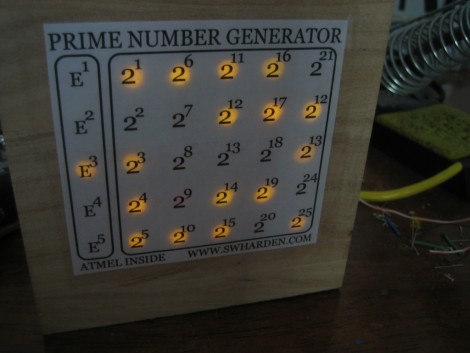
[Scott Harden’s] prime number generator exhibits a great way to use an LED matrix to present readable information. The project resides in a hinged wooden box with a grid of holes on the lid for the LEDs. [Scott] has overlaid the matrix with a printout showing powers of two that represent different prime numbers. Inside you’ll find an ATtiny2313 microcontroller that handles the column scanning and prime number testing. We’ve embedded a video the break where [Scott] explains the project in great detail, but you should also check out his prototyping and construction pages.

Continue reading “ATtiny2313 Prime Number Generator”

FPSLIC Powered LED Matrix

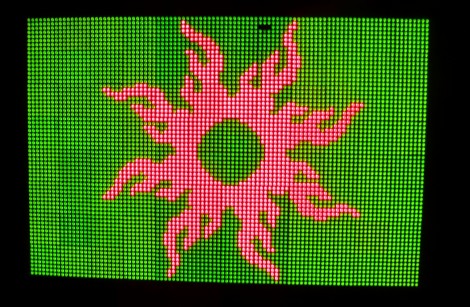
[Mathieu] built this display in hopes that he can play pong on it. You can imagine the headache that awaits when trying to figure out how to drive the 6144 bi-color LEDs. I must have worked out because the thing looks great in the video after the break. The solution he chose was a bit unfamiliar to us though. He used a Field Programmable System Level Integrated Circuit produced by Atmel, or FPSLIC. This is a kind of mash-up of components we’re more accustomed to.

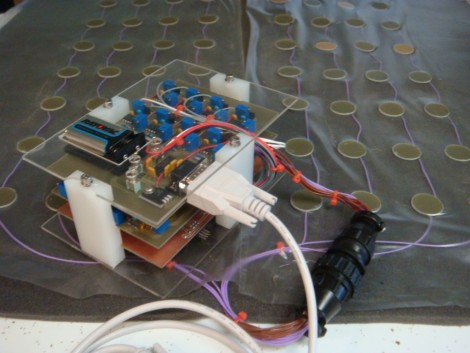
The AT94K is a single chip that houses an 8-bit AVR microcontroller, and FPGA, and SRAM. This project uses that FPGA to handle the multiplexing of the display via code written in VHDL. The AVR core receives data via a USB port, stores two images in the SRAM (one for each LED color), and then outputs it to be drawn on the display. On second thought, this project sounds like fun and it’s a great way to get start learning that VHDL you’ve been putting off. Continue reading “FPSLIC Powered LED Matrix”

Porting Code To MSP430

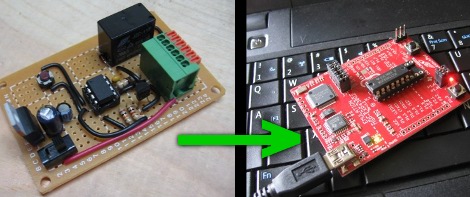
I took a little time to look into porting code written for AVR in order to run it on the MSP430 architecture. It’s easier than you think, being mostly small differences like an extra step to enable pull-up resistors. But there is a lot to be learned in order to transition away from using EEPROM.

Since the TI chips don’t have EEPROM you need to use the Info Flash, a topic which I detail in the article linked at the top. This flash memory must be erased before writing because a write operation can only change high bits to low, not the other way around. And an erase operation clears an entire 64 kB segment, not just the bytes you want to write to. It’s different but manageable.

Oh, and if you were wondering, I ported the code I wrote for the garage door coded entry project.

Save A Baby, Nursery Temperature Monitor

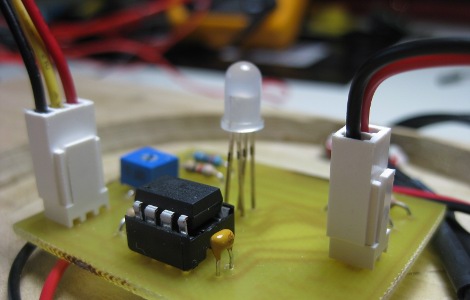
Yes, you could argue this Nursery Room Temperature Monitor is simply an LED and an Arduino with a temperature sensor, but [Jay] really did put more thought into the process. For instance he stuck with AVR, built a wooden base and sanded globe, and even included schematics and source code. Plus, SIDS is no laughing matter and the more you know, the more it can be prevented. Back on point, one thing we would add is PWM for a more gradual change in color. What would you add?

Continue reading “Save A Baby, Nursery Temperature Monitor”

20-channel DMX Controller

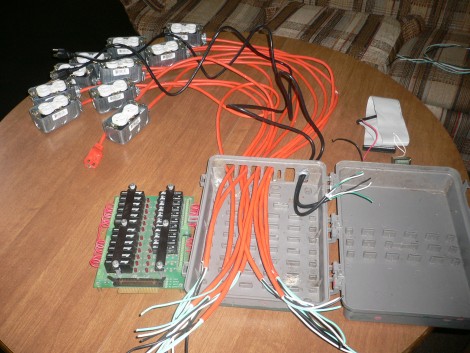
[Joshua] shares his details on building this 20-channel DMX controller. He’s sourced some extension cords to cut up for the complicated wiring project. He plans to drive 120V lights with the system so he’s also using the extension cords to connect a bunch of outlet boxes to the main controller. Inside you’ll find a set of AVR chips ready for your commands. Instead of using jumpers or DIP switches to set their addresses he set them in the firmware and burned a different version to each chip. The key here is writing the address right on the chips to prevent any confusion.

This will be used of Halloween and Christmas displays. We love Halloween hacks just about as much as we love Christmas hacks, so hit the basement and don’t forget to share the result of your labors with us.

Servo Controller Board

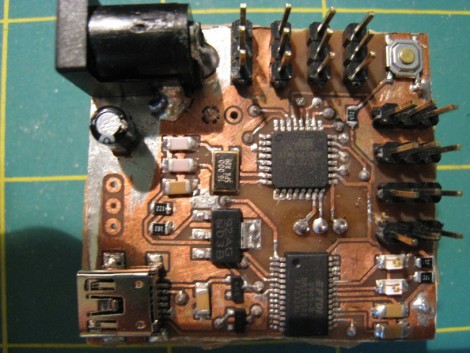
This board is [Eric Seifert’s] venture into working with AVR microcontrollers. He has worked with PIC microcontrollers in the past and used the goal of developing a servo controller board as his motivation to try the grass on the other side of the fence. He found he likes the AVR line for its ease of development under Linux, a feature we also appreciate. What he ended up with is a tiny board that controls up to eight servo motors. If you’ve got a project that is spilling over with servo-controlled limbs, maybe this will save you some development time.

Connecting A Nokia 3310 LCD Using An AVR

In this instructible, [wkter] takes us through the process of running a Nokia 3310 LCD display using an ATmega8.  This instructible isn’t a beginners project as he assumes you already have a strong understanding of how to work with these components and their programming languages. He is very thorough with information though, providing datasheets, pinout diagrams, and source code. Once you get this down, you could go a little further and make  Conway’s game of life.