Window Curtain Moves To Screen Pedestrians

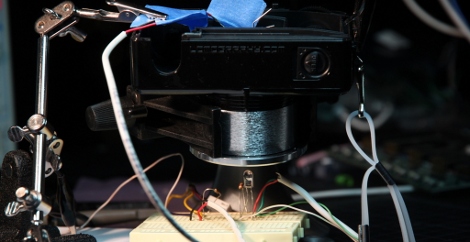
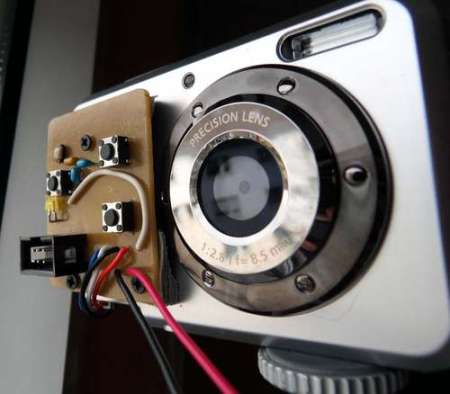
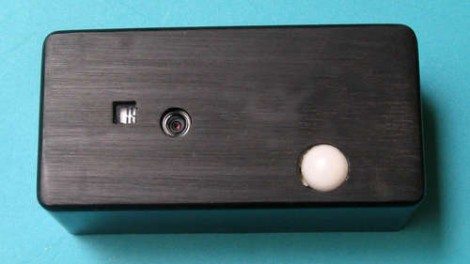
[Niklas Roy] built a motorized window curtain to screen out foot traffic in front of his window. When you hear “motorized curtain” you may think that this will move up and down but it doesn’t. Instead, the small curtain move horizontally to cover passersby as they travel down the sidewalk. This is accomplished using a camera in conjunction with some motion sensing software. In the video after the break you can see that the software also anticipates the movement, and ends up doing a good job of keeping the target covered. That’s thanks to the Processing sketch working in conjunction with a rotary encoder on the hardware setup. Details for both are available on the page linked above.

This harkens to other community involvement hacks we’ve seen like the subway stair piano, or the bottle recycling video game. It’s fun and quirky, which is not too much of a surprise as we saw a glimpse of that when we looked at [Niklas’] public fountain hydropower generator.

Continue reading “Window Curtain Moves To Screen Pedestrians”

Yashica Electro Shutter Mod

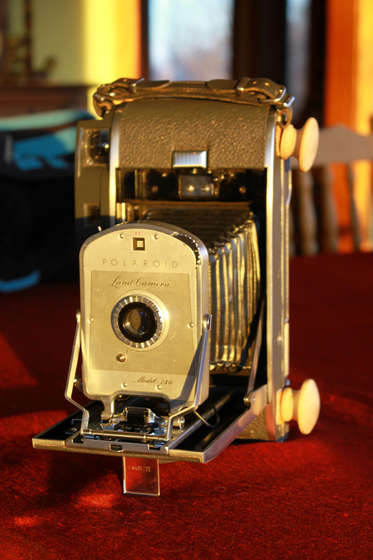
We saw this picture on Flickr this morning and started getting really curious. The caption says that [Steffanhh1] modified the Yashica Electro Shutter camera to be fully manual. We’re not camera experts so we had to do a little research to see what was going on here. The Yashika Electro got its name due to how the shutter speed is controlled. You have two little LEDs that light up depending on which direction you need to turn the dial (based on ambient light?). [Steffanhh1] really wanted full control, so they hacked in a dial with a knot of resistors under it. The first test photographs are downloading developing, so we’ll have to wait to see the results.

A Ride Into Space, But Nothing Fancy

[Luke Geissbuhler] wanted to send something into space, a fun project his kids could get in on too. Instead of sending up a suite of electronic components they went with consumer electronics. The key element, an HD camera to record the event, is protected by a styrofoam shell and soft foam padding. To help ensure that the device was recovered an iPhone also made the trip, running a GPS tracking program that continuously updated the package’s location. To combat the ill-effects of severe cold some chemical hand warming packs also joined the flight.

As you can see after the break, it was a success. The camera documented an incredible ride, with a balloon rupture at 19 miles above the earth (that must be a calculated height as there’s no altimeter in the package). The pod came down gently thanks to a parachute and was recovered just 30 miles from where it launched.

Continue reading “A Ride Into Space, But Nothing Fancy”

From Cinema To Stills, Camera Lens Gets New Life

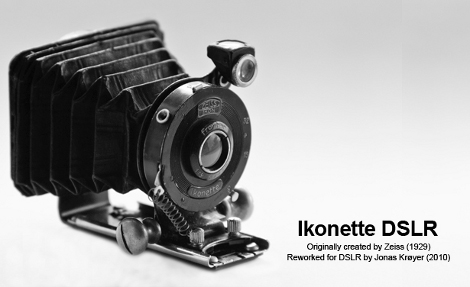
[Timur Civan], with a beautiful merge of past and present, has taken a 102 year old camera lens (a 35mm F5.0 from hand cranked cinema cameras) and attached it to his Canon EOS 5D. While this is not the first time we’ve seen someone custom make a camera lens or attach a lens to a different camera, such as when we brought you plumbing tilt shift or iPhone camera SLR or Pringles can macro photography, the merge of old tech with new warms our empty chest cavities hearts. Catch some additional shots of 1908/2010 New York City after the jump.

Continue reading “From Cinema To Stills, Camera Lens Gets New Life”

Motorcycle Rear-view With In-helmet Display

Want to see what’s behind you when riding your sport bike without taking your eyes off the road? They make rear view cameras for that but [Nescioqd] wanted a rear display right in his helmet (PDF). He started by mounting a rear-pointing camera on the back of the bike, powered from the 12V feed for the taillight. On the display side of things he picked up a Myvu Crystal wearable display. This is like a pair of glasses that have small LCD screens were the lenses should be. [Nescioqd] removed one lens and mounted it inside the helmet.

Since the display resides inside the helmet there is some concern about being able to see at night with a bright screen below your eyeball. [Nescioqd] actually ran into the opposite problem at first, bright sunlight makes it difficult to see the image on the LCD screen. He fixed this by picking up a dark tinted helmet visor (the easiest solution) but we’d love to see a photoresistor used to regulate the backlight level.

It would be interesting to see both screens used, with rear-view on one side and an instrument display on the other.

Snapping Pics At The Right Moment With A Pressure Plate

[BiOzZ] built a pressure sensitive camera accessory to snap pictures at just the right moment. Before turning out all the lights the camera is set up with a twenty-second timer and a three-second exposure. The pressure plate doesn’t take the photo, but fires the flash to catch an image in the middle of the action.

The hack uses a piece of acrylic as the base of the pressure plate. A switch is constructed by placing aluminum tape on the base, and attaching a thin metal strip that is bent to add just a bit of spring. When an object is place on the plate the thin metal contacts the aluminum tape completing the circuit, a change in the weight breaks it. A simple circuit connects to this, using a relay to actuate the flash from a disposable camera. This is perfect for documenting the moment when you exercise that fruit-induced rage that has been consuming you lately.

Light Bulb Form-factor Computer

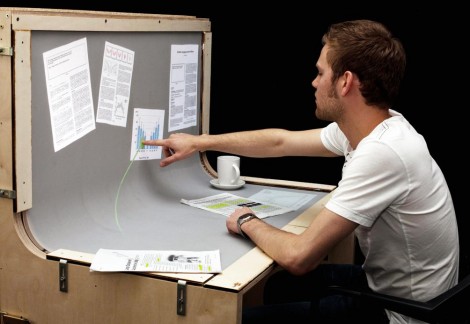
This computer can be mounted in any standard light bulb socket. It uses a pico projector combined with a camera to generate a touch display wherever you shine it. The photo above and the video after the break show the bulb in a motorized lamp arm but that’s just smoke and mirrors, the bulb itself is the core concept. We think there’s real potential for home-built versions. We’ve seen touch displays similar to this that mount on the side of a laptop, but why have the computer around at all? Ditch the USB connection for wireless and have it connect to your home server for processing power. It becomes a perfect solution for places that aren’t traditionally computer friendly. For instance, that kitchen computer you don’t want to touch with dough-encrusted hands becomes washable when the display is projected on a cutting board. Continue reading “Light Bulb Form-factor Computer”