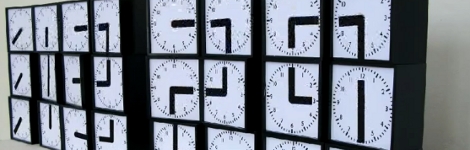
Analog Style LED Clock

Almost named this LED analog clock, like others have... the first comment would have corrected us.

We spied this pretty LED clock this morning and were impressed with how cleanly it was constructed. It was built to mimic an analog clock, so you have the typical hour markings and a minute and hour hand. The minute hand stays in each position for roughly 2 to 3  minutes. The brains behind all those LEDs are a PIC 16f877 with a DS1307 realtime clock. Over all, [WellyBoot] soldered 169 LEDs into place, and did it in a nice clean fashion. We suspect that if we had done it, it would resemble a spaghetti pile. You can see the schematics and build pictures on his site, or watch a video of it in action after the break.

[via HackedGadgets]

Continue reading “Analog Style LED Clock”

Alarm Clock Learns New Trick, Opening Doors

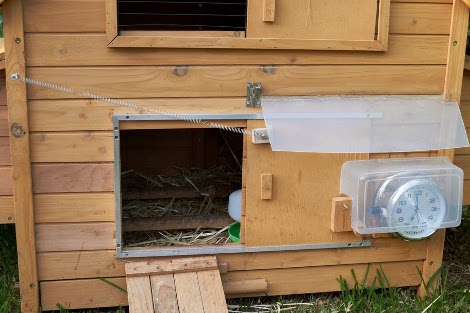
Waking up at 5:30 in the morning. [Mark Stead] didn’t like the idea either when his chickens started crying to be let out. One simple solution obviously is to eat the chickens build an automatic door opener. The mechanism starts out with an old style mechanical alarm clock, add a geared motor with some creative switch work to pull open the door, weather proof the entire thing, and done. [Mark] even modified the setup later to work with vertical doors. No MCU required for either.

Pair this with an automated feeder system, egg gathering and cooking setup, and you’re half way to having your breakfast ready for you when you wake up in the morning – around noon like the rest of us.

[Thanks MS3FGX]

DWex Watch Looks For Future Development

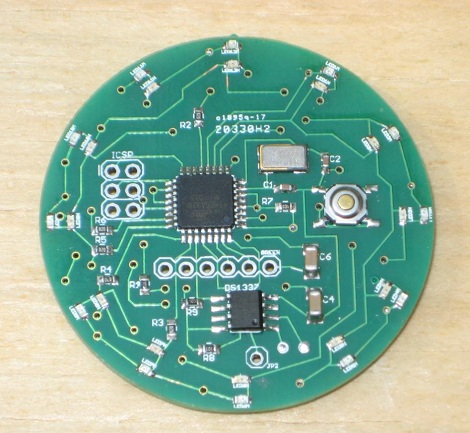
[FlorinC] sent in his DWex Arduino watch, with intentions for it double as an experimenting base. Inspired by the MakerBotWatch, it runs an ATmega328P, DS1337 RTC,and 24 LEDs to display the time. [FlorinC] tells us the (yet to come) case and strap will be similar to Woz’s watch to ensure airport security tackles him. As for experimenting, the PCB contains an ICSP6 and also an FTDI connector for those “other-than-watch purposes”. We’re not all sure what else could be done with a watch; we racked our brains and came up with a compass, but with the source code and Eagle files available maybe you have a better idea?

Prototyping The Bulbdial Clock

Evil Mad Scientist posted a story about what went into developing the Bulbdial clock. We think the Bulbdial is one of the best pieces of kit out there for many reasons; using colored shadows for each hand is a brilliant idea, the design is clever and uses a low parts count, and the concentric rings that make it work also add to the aesthetic. But after seeing the original wood prototype it had crossed our minds that developing those circular PCBs isn’t the easiest thing to pull off. To save on board cost, the first run didn’t have the center routed out, but rather used almost-touching holes drilled during manufacture and finished by hand during assembly. They also go on to discuss the use of Charlieplexing to reduce part count and the search for a suitable diffuser for the clock face.

MSP430 Based Single LED Clock

[Kenneth Finnegan’s] latest clock makes use of the TI Launchpad for programming and debugging MSP430 microprocessors. We took a look at the Launchpad when it was released and we’re glad to see some hacks resulting from availability of that tool. The clock reads out the time using a bi-color LED. Press the button and a series of flashes will tell you the time. A three-position toggle switch is used along with the push button for setting the time. The protocol he developed is outlined in his demo video after the break.

We like [Kenneth’s] use of a plastic electrical box as a project box. They’re cheap and you can find them everywhere in many different sizes. He mentions the difficulty in drilling through the faceplate. We’ve had our share of shattered plastic trying to drill holes in the darn things. If you’ve got some tips on faceplate-modification we’d love to hear them.

This clock is sure the polar opposite from the TTL clock that [Kenneth] showed us back in March, trading jumper wires for lines of code. We’re going to give this one a try, hopefully fixing the button debounce along the way.

Continue reading “MSP430 Based Single LED Clock”

Most Useless Machine Loses Carbon Footprint

[youtube=http://www.youtube.com/watch?v=lxyQ3PFbK9Y]

[Clayton Boyer] took the electricity out of the useless machine, making one that runs like a clock. To this point, we’ve always seen these useless machine use electric motors. [Clayton’s] clever design uses a wind-up spring and a series of wooden gears to bring the fun, making it a great companion for the binary adder you built. The video above shows the inner workings and the design plans are for sale. We’d love to print out the parts or perhaps just laser-cut them from wood like the legs of this spider bot.

[Thanks llwynog]